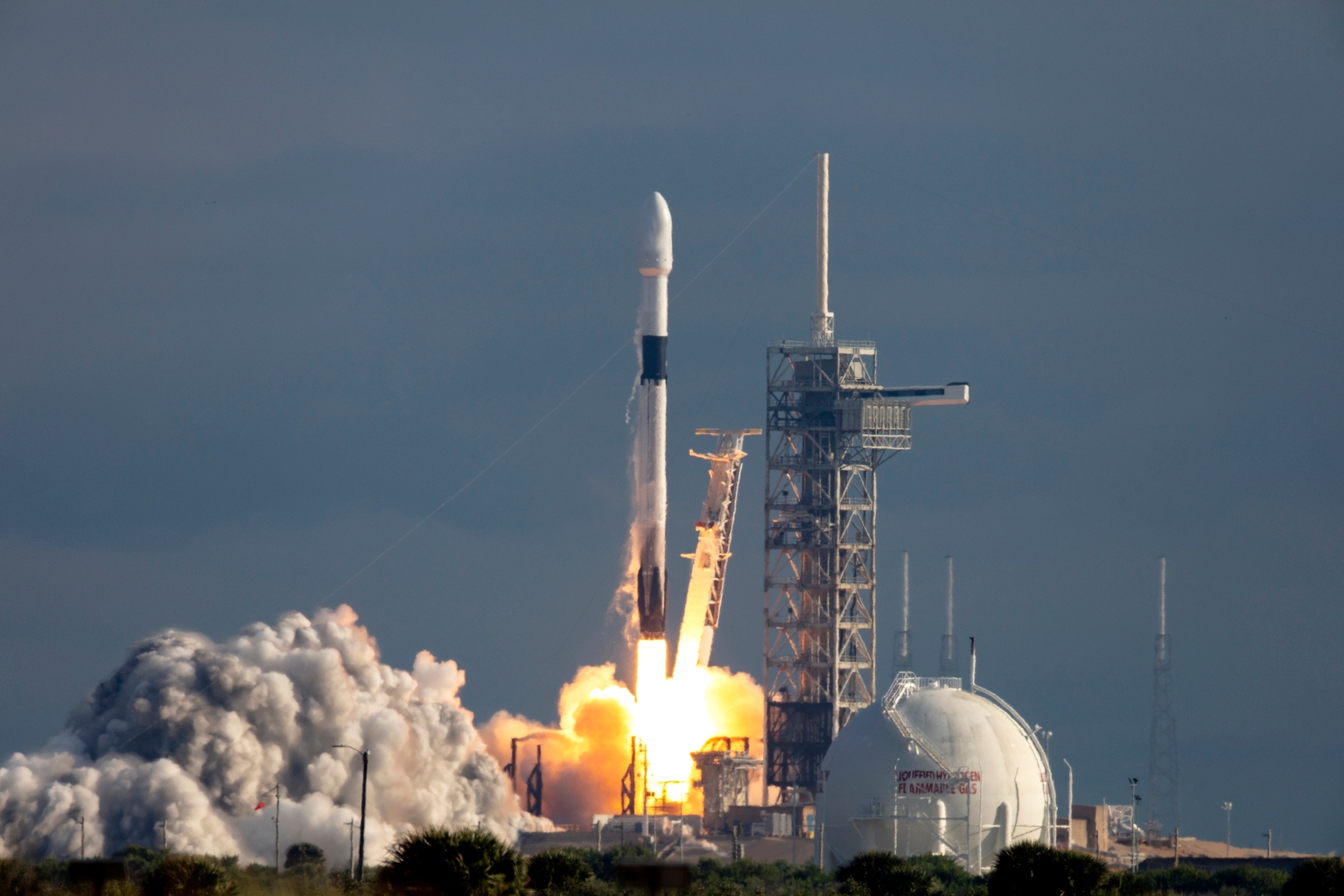
SpaceX opened its first day on the Nasdaq at a $2.1 trillion market cap, making it the most valuable aerospace company in history. The stock rose from its IPO price of $1,200 to above $2,800 in early trading before settling near $2,500.
At $2.1 trillion, SpaceX is worth more than Tesla and roughly 40 times the revenue the company generated last year. The valuation exceeds that of the entire U.S. defense sector combined. The multiple assumes that each of its big bets will pay off without significant delays or competition. That is a high bar.
Starlink is the most mature revenue driver. It has more than 4 million subscribers and a growing enterprise business. The satellite internet market is competitive. Amazon's Project Kuiper is ramping up. Traditional telecom providers are expanding fiber and 5G coverage. Starlink's subscriber growth has already slowed in some regions. If the next quarterly report shows a deceleration in subscriber adds or a decline in average revenue per user, the stock could reprice quickly.
Starship is the bigger swing factor. The rocket has completed several test flights. It is not yet operational for payload delivery. NASA and the Department of Defense have awarded contracts worth billions. Those contracts are contingent on Starship reaching full operational capability. Any delay in the flight test schedule or a major failure would hit the stock hard.
The lockup structure adds another layer of risk. Early investors and employees hold a large block of shares. Those shares become tradable in six months. If insiders sell aggressively, the supply overhang could pressure the stock. The company has not announced any buyback program. SpaceX pays no dividend. The stock's return depends entirely on price appreciation, making it sensitive to changes in growth expectations.
The first few weeks will be about finding a clearing price. The IPO was heavily oversubscribed. The initial pop reflects pent-up demand. The $2.1 trillion level is untested. If the stock holds above $2,000 in the first month, that would signal institutional support. A drop below $1,800 would suggest the valuation is too rich even for the most bullish thesis.
The next catalyst is the Q2 earnings report, expected in late July. Analysts will focus on Starlink's average revenue per user and Starship's launch cadence. They will also watch for new government contracts. Until then, the stock is likely to trade on headline risk and momentum.
The risk event is the valuation itself. A $2.1 trillion market cap leaves little room for error. Any stumble in execution could trigger a sharp correction.