Stocks● Neutral
SpaceX Launches Starship in First Test Since IPO, Stock Slips
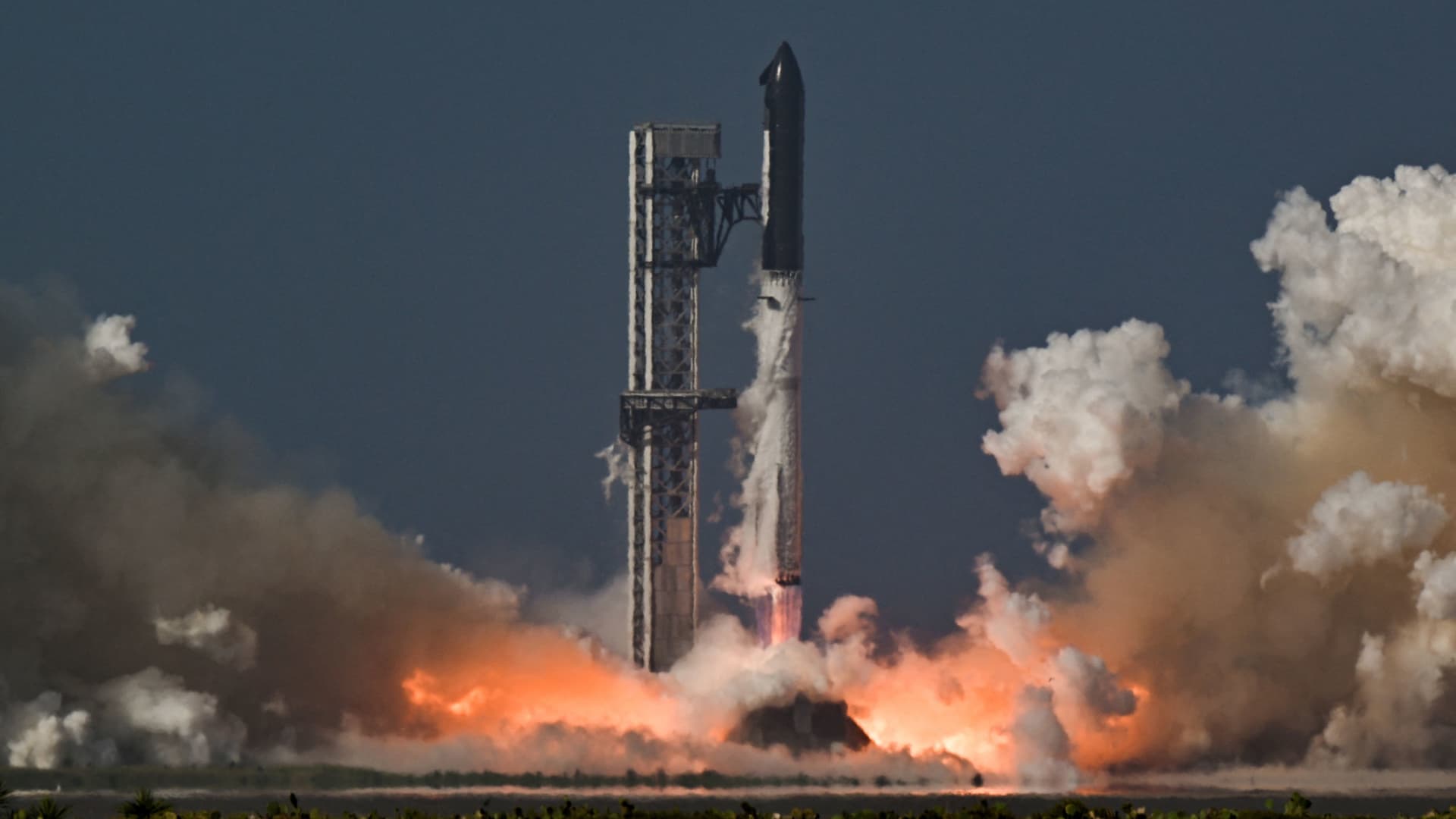
SpaceX launched Starship on its 13th test flight Friday, deploying 20 new Starlink V3 satellites. The stock has fallen 43% from its peak.
Continue with
SpaceX launched its Starship rocket Friday evening from its Starbase facility in Texas, the 13th test flight and the first since the company's IPO last month.
Elon Musk's company designed Starship, the largest rocket ever built, to be fully reusable. The goal is to lift more cargo into orbit at lower cost, enabling expansion of the Starlink network and other missions.
The Super Heavy booster separated from the Starship spacecraft about two minutes into the flight. It made a controlled splashdown in the Gulf of Mexico. The upper stage executed a "soft splashdown" in the Indian Ocean. SpaceX employees called the test flight "lucky number 13" during a livestream.
About 18 minutes into the flight, SpaceX deployed 20 of its new Starlink V3 satellites into orbit. The satellites were the first to be tested in flight. They were intended to burn up after about 20 minutes, offering a limited window for data collection.
The V3 satellites, manufactured at a SpaceX facility in Redmond, Washington, are larger and more powerful than earlier Starlink versions. They carry solar arrays that generate twice the power of prior generations, a SpaceX business analyst said in the livestream.