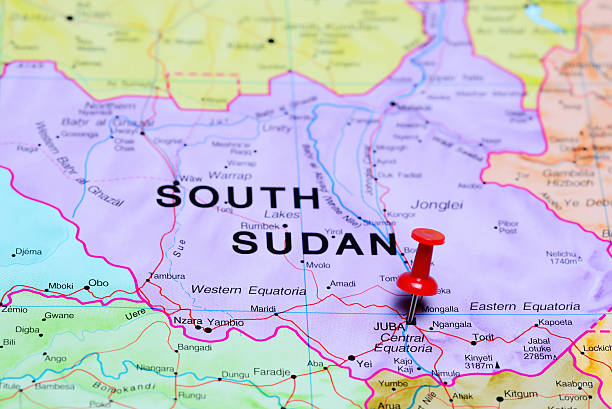
The Bank of South Sudan is pushing mobile money and payment infrastructure, but cash dependence, weak trust and oil-dominated revenue create steep barriers to financial inclusion.
South Sudan's economy is projected to reach $6.1 billion this year, with per-capita GDP of roughly $488, according to the International Monetary Fund. Oil dominates exports and government revenue. Agriculture supports most of the population.
The financial sector remains tiny. Bank branches cluster in Juba and a few other urban centres. Large rural areas operate almost entirely outside the formal system.
Cash is the only practical payment method for most households. Informal savings groups, family networks and local traders perform functions that banks would handle elsewhere. Without transaction histories or formal accounts, individuals and small businesses struggle to access credit, save securely or participate in the wider economy.
The IMF has repeatedly stressed the importance of institutional reform, economic diversification and stronger public financial management. These priorities are closely linked to digital finance development.
Mobile money could change access patterns. A digital wallet does not require a large branch network. It can allow users to receive funds, transfer money, pay merchants and store value through a basic mobile device. For populations living far from Juba, that distinction is critical.
The Bank of South Sudan has increasingly engaged with telecommunications providers to strengthen digital payments. Early this year, it held discussions with MTN South Sudan on expanding the reliability and reach of MTN MoMo, with emphasis on consumer protection, system resilience and wider financial inclusion. If mobile money adoption expands, many South Sudanese could encounter formal financial services through a telecommunications platform before ever entering a bank.
Behind the scenes, the central bank is also investing in the systems that allow institutions to move money securely. The Bank of South Sudan has made development of the National Payment System a priority, aiming to create interoperable infrastructure for electronic transfers, merchant payments and settlement between financial institutions.
This past May, the central bank and the Ministry of Finance reviewed progress on a Real-Time Gross Settlement system intended to improve the speed, transparency and security of government and interbank payments, the central bank said.
These reforms are fundamental. Without dependable settlement systems, digital wallets and electronic-payment services cannot scale safely.
Digital payments could also improve the delivery of government salaries, humanitarian assistance and social transfers, particularly in areas where cash distribution is costly or insecure. Electronic systems could strengthen tax collection, reduce leakage and make public payments easier to track. For small businesses, digital transactions could create a basic financial record that helps merchants demonstrate revenue, manage cash flow and qualify for financing. Farmers and traders could use digital payments to receive money more quickly and improve links with buyers and suppliers.
South Sudan's oil wealth has not translated into widespread access to banking, affordable credit or reliable payment services. The formal economy remains narrow. Many households depend on subsistence activity and informal trade.
The greatest barrier may not be technology. Consumers must trust that digital balances are safe, transactions will be completed and providers will remain operational. Network outages, fraud, weak consumer protection or sudden regulatory changes could quickly undermine confidence. Digital-finance expansion will depend on more than mobile coverage. It will require financial literacy, effective supervision, reliable infrastructure and clear rules for banks, payment providers and mobile-money operators.
South Sudan is unlikely to develop a large fintech start-up ecosystem in the immediate future. Its more urgent task is to make everyday payments safer, faster and easier to access. If mobile money expands and national payment infrastructure becomes more reliable, digital finance could gradually reduce dependence on cash and connect more households and businesses to the formal economy.
For South Sudan, the value of fintech will lie in creating connections where few currently exist.
Drafted by a large language model from the source reporting linked above, then screened by automated publishing checks. It is not read by a journalist before publication. Some articles cite our Alpha Score. Verify prices and figures against the original source. Educational coverage, not personalized advice.