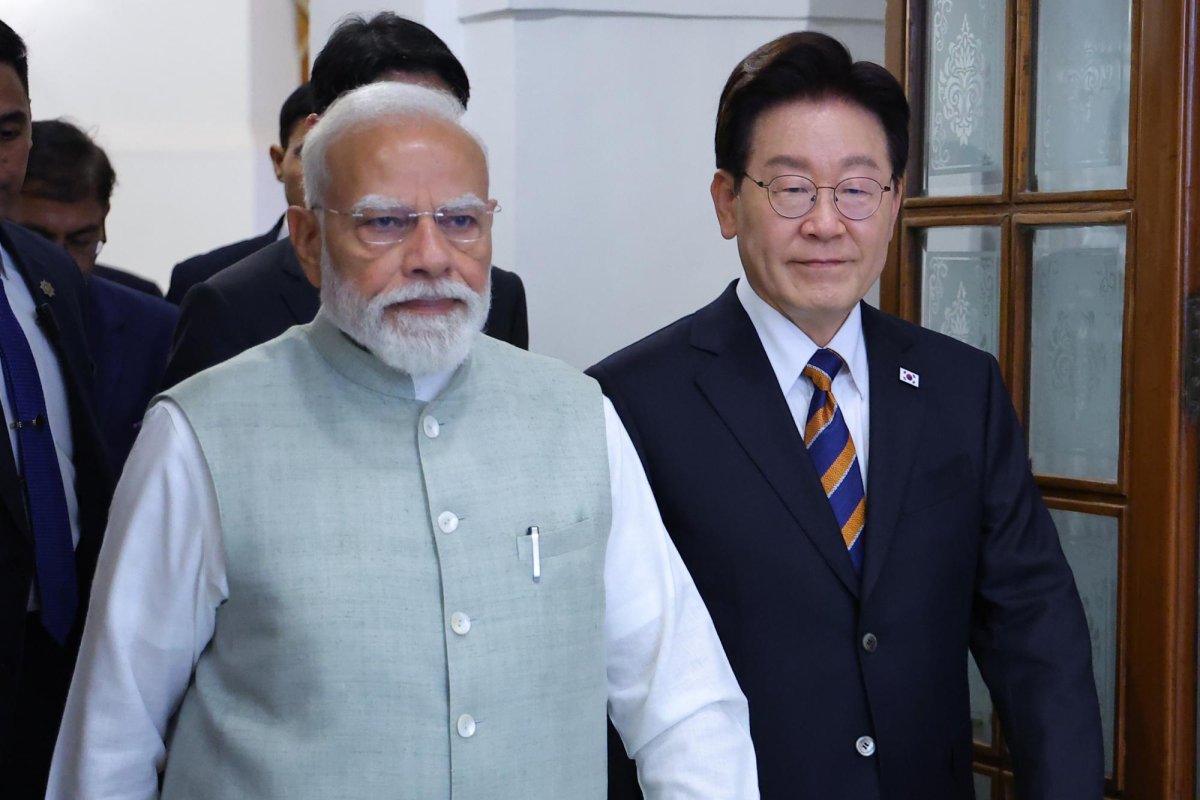
The summit between South Korean President Lee Jae Myung and Indian Prime Minister Narendra Modi signals a formal shift toward deeper industrial alignment between the two nations. By prioritizing economic ties and supply chain resilience, the leadership is responding to the volatility currently impacting global trade routes and manufacturing stability. This meeting at Hyderabad House establishes a framework for bilateral cooperation that moves beyond traditional trade agreements to focus on critical infrastructure and technological interdependence.
Industrial Alignment and Supply Chain Resilience
The discussions centered on securing supply chains that have become increasingly vulnerable to geopolitical friction in the Middle East. For South Korean firms, India represents a critical manufacturing hub and a massive consumer market that can serve as a hedge against regional instability. The focus on strategic partnership suggests a move toward joint ventures in high-tech sectors, where South Korea provides technical expertise and India offers the scale necessary for mass production. This alignment is intended to reduce reliance on legacy manufacturing corridors that are currently facing logistical bottlenecks.
Impact on Regional Manufacturing Hubs
The diplomatic push to synchronize economic policies creates a new variable for companies managing global production footprints. As firms look to diversify their operations, the South Korea-India corridor offers a path to integrate advanced electronics and industrial components into the Indian domestic market. This shift is particularly relevant for the technology sector, where companies like ON Semiconductor Corporation must navigate shifting regulatory and logistical landscapes to maintain efficiency. The AlphaScala data currently reflects a Mixed sentiment for ON with an Alpha Score of 45/100, highlighting the complexity of maintaining supply chain integrity in the current environment.
Market Context and Future Markers
This summit serves as a precursor to more granular industrial policy updates that will likely emerge in the coming months. The primary marker for investors will be the specific sectoral agreements that follow this meeting, particularly those involving semiconductor fabrication and battery technology. These agreements will determine how quickly capital can flow into new manufacturing zones and whether the regulatory environment in India will be sufficiently streamlined to accommodate South Korean industrial standards. The next concrete step involves the release of joint task force reports detailing the timeline for infrastructure projects and the specific incentives offered to firms participating in this strategic pivot. As these details emerge, the focus will shift to how effectively these nations can translate high-level diplomatic commitments into tangible improvements in cross-border trade efficiency.