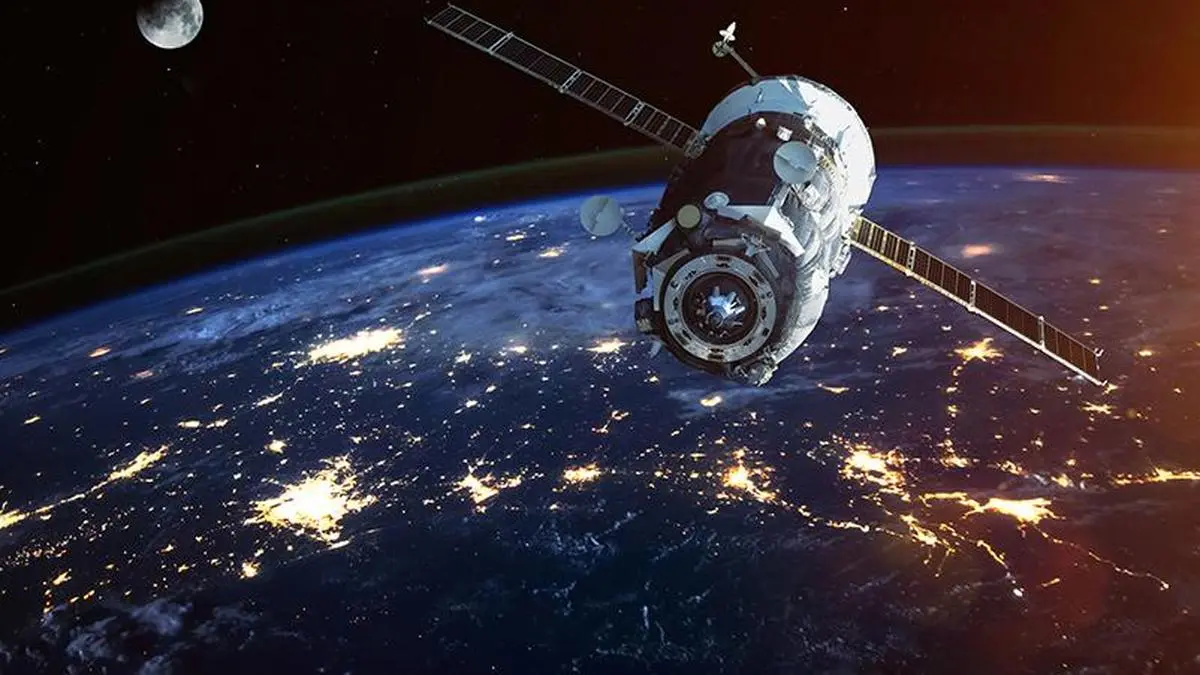
SoftBank Group Corp. founder Masayoshi Son told shareholders Tuesday that building data centers in space, a concept championed by Elon Musk, makes little financial sense. The main draw of orbital facilities would be lower electricity costs. Son argued those savings are trivial next to hardware expenses like chips. Transport costs, maintenance, and communication delays would eat any power savings, he said.
Speaking at SoftBank Corp.'s annual shareholder meeting, Son was asked whether the Japanese telecom giant would pursue anything like Musk's orbital data center plans. He called Musk a "remarkable agent of change" but said SoftBank would focus on building "formidable" data center capacity on Earth. "In the battle for AI, the next few years will be far more important than what might happen a decade or so from now," Son said. "He who strikes first wins."
Son has committed roughly $65 billion to OpenAI and pledged hundreds of billions more for data centers and related infrastructure globally. Both SpaceX and Blue Origin have announced plans to build and launch orbital data centers, betting that energy and space constraints on Earth will eventually make the concept viable. Son disagrees, arguing the AI race will be decided by terrestrial compute capacity in the near term.
He acknowledged that AI competition is intensifying. He said there is room for OpenAI, Anthropic PBC, and Google to grow. AI is still in its early stages with scope for "ten-fold, a hundred-fold" growth, he said.
Separately, SoftBank's telecom unit is preparing to enter the neocloud and data center storage battery markets in the US, according to Junichi Miyakawa, who heads the unit. The Japanese neocloud business is scheduled for launch this year.
Son's dismissal of orbital data centers carries implications for the broader AI infrastructure race. If terrestrial compute wins, the winners are chipmakers like NVIDIA and data center operators that can scale quickly on Earth. The losers would be space logistics firms betting on orbital buildout. The next few years of capital allocation decisions by SoftBank and its peers will determine which path dominates.