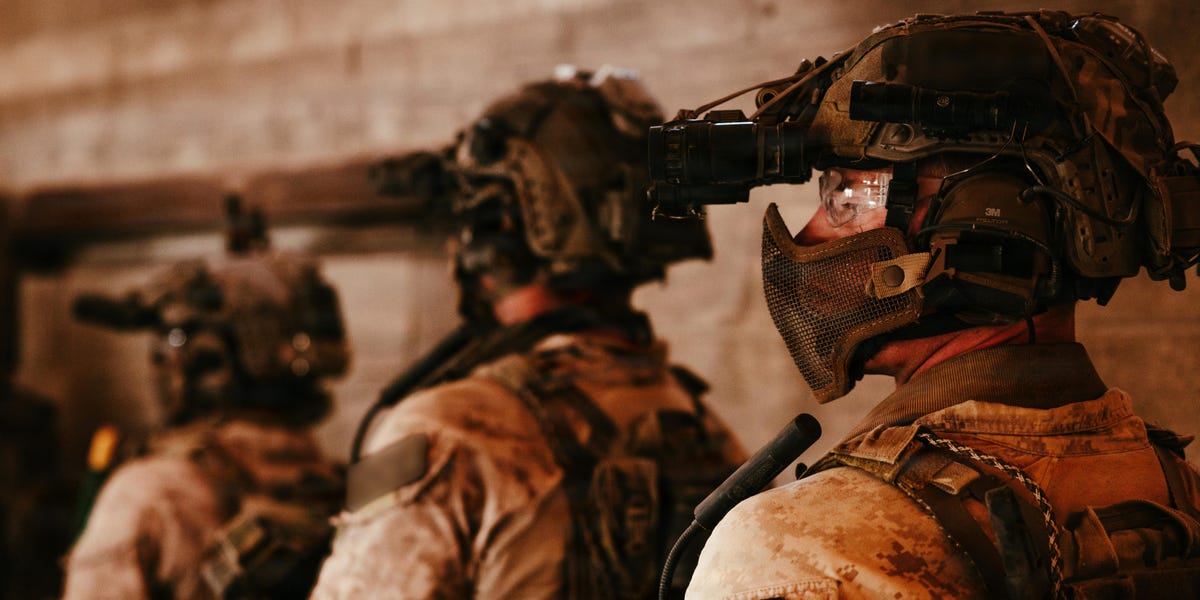
The head of U.S. Special Operations Command said the military must 'creatively destroy' outdated training to make room for drones and electronic warfare. The statement creates a concrete catalyst for defense investors to weigh which subsectors gain from a budget shift and which lose.
The admiral's message is direct: legacy training programs – live-fire ranges, large-force exercises built around manned platforms – consume calendar space and funding that could go toward unmanned systems, electronic warfare, and cyber operations. The military cannot simply add new priorities. It must remove old ones.
The Mechanism: Drone and EW Budget Lines Over Legacy Programs
This is not a policy proposal. It is a signal from a four-star commander who controls a material part of the defense budget. SOCOM's procurement decisions often cascade into broader Pentagon priorities because special operations forces field new technology first.
Two budget dynamics matter:
- Legacy training infrastructure faces risk. Fixed-site training ranges, simulator contracts tied to specific platforms, and large-force exercise scheduling may see reductions or repurposing. Contractors that derive revenue from these programs could experience headwinds.
- Drones and EW capabilities gain a structural tailwind. SOCOM has been an early adopter of small unmanned aerial systems and electronic attack pods. A formal mandate to clear training capacity for these domains accelerates procurement and integration work.
The mechanism is not about a single contract. It is about the direction of marginal dollars in the next National Defense Authorization Act (NDAA) and the Pentagon's Program Objective Memorandum cycle.
Affected Assets: Two Sides of the Defense Sector
Investors should separate defense stocks by exposure.
New-technology beneficiaries:
- L3Harris (LHX) has a strong position in open-architecture electronic warfare and ISR systems. SOCOM is a direct customer for its Nightime and Vigilant Stalker programs. The company's training business (e.g., Link simulation) is not a dominant earnings driver, reducing downside from a shift.
- Palantir (PLTR) provides the data-fusion software that makes drone and EW decision-making faster. SOCOM has been a key early partner. A mandate to emphasize these capabilities could expand Palantir's footprint in tactical command-and-control.
- Kratos Defense (KTOS) focuses on low-cost, attritable drones. SOCOM's push aligns with Kratos' core product line.
Vulnerable legacy exposure:
- Cubic Corporation (private after 2021 buyout, public peers) and Textron (TXT) have training-and-simulation segments tied to live ranges and fixed-wing flight training. If training budgets shrink, these units face revenue pressure.
- Booz Allen Hamilton (BAH) generates part of its consulting work from modernizing training systems. The shift toward drone/EW could offset legacy losses with new contracts.
Valuation alone does not capture the risk. The key metric is revenue exposure to training infrastructure vs. unmanned/EW systems. A simple read: buy the drone and EW names, avoid the training-range operators. The better market read requires examining each firm's contract mix – whether SOCOM is a direct customer, whether programs have multi-year funding, and whether a shift triggers cancellation penalties or recompetes.
The Decision Point: Budget Season and Program Reviews
The next concrete test is the fiscal 2026 budget request due in February. If the Pentagon includes language that cuts legacy training end-strength or shifts funds to the Future Tactical Unmanned Aircraft System program, the thesis gains credibility. Without budget action, the SOCOM statement remains aspirational.
Two follow-up milestones:
- NDAA markup in spring 2025 – look for report language directing SOCOM to divest training infrastructure.
- Sector conference calls in first half 2025. Investors should ask management for visible exposure to SOCOM training contracts and drone/EW procurement pipeline.
The margin of safety lies in knowing which companies have already priced in a modernization tailwind and which still trade on legacy multiples. The SOCOM chief's call to 'creatively destroy' old training is not a trade signal by itself. It is a reason to start the research now, before the budget documents arrive.