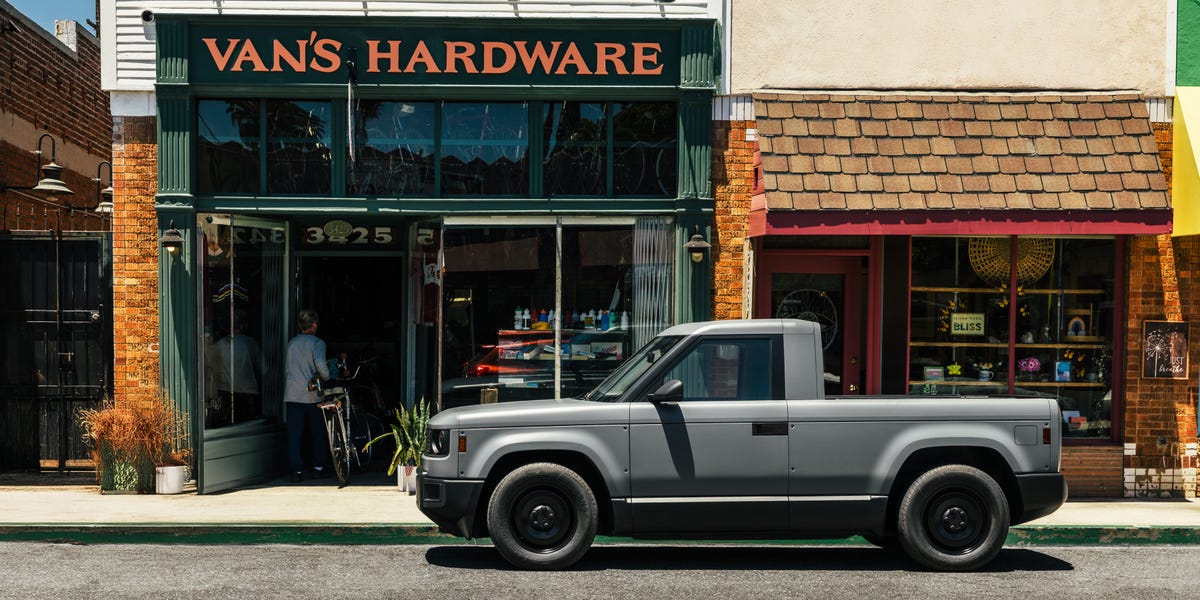
Slate's $25.8K electric pickup targets buyers tired of $60K trucks with features they do not need. First deliveries start in October.
Slate put a price tag on its tiny electric pickup this week. The base model starts at $25,800. That puts it in competition with used Ford Rangers and stripped Nissan Frontiers, not Rivians or Cybertrucks.
The company's bet is straightforward. Automakers have spent the past five years packing trucks with touchscreens, air suspension, and driver-assist suites. The average new truck transaction price hit $60,000 last year. Slate figures a chunk of the market wants the opposite: a small, cheap, simple truck with an electric powertrain and no subscription features.
Founder and CEO Sam Shapiro said the team looked at what buyers actually use. "Most people don't tow 10,000 pounds. They carry plywood, mountain bikes, or bags of mulch. A full-size truck is wasted space and wasted money for that."
The Slate truck is shorter than a Ford Maverick. Its bed fits a standard sheet of plywood flat. Range is rated at 160 miles on the base battery, 250 miles on the optional pack. Curb weight comes in under 3,500 pounds – light by modern EV standards.
Shapiro has talked about tapping a fleet-sales channel alongside direct-to-consumer delivery. That mix could matter. The small-truck segment under $30,000 is all but abandoned. Ford killed the Ranger Raptor's lower trims. GM doesn't offer anything close. Nissan and Toyota sell aging platforms that start above $30,000 after delivery fees.
Slate raised $210 million in Series B funding last quarter. The manufacturing partner is a contract assembler with capacity in the Southeast. First deliveries are scheduled for October.
The price point is the headline. A $25,800 electric truck puts Slate in a category with exactly zero competition on specs. The question is whether buyers who romanticize cheap trucks online will actually order one.
Prepared with AlphaScala research tooling and grounded in primary market data: live prices, fundamentals, SEC filings, hedge-fund holdings, and insider activity. Each story is checked against AlphaScala publishing rules before release. Educational coverage, not personalized advice.