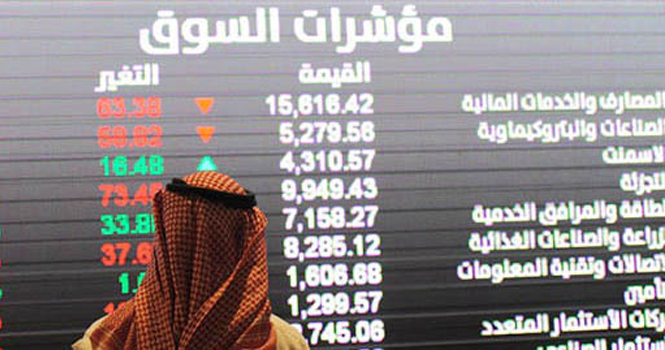
Six Saudi stocks fell to their lowest since debut on May 18. The breadth event demands follow-through analysis for TASI traders.
Six stocks on the Saudi stock exchange (TASI) fell to their lowest levels since their respective initial public offerings on May 18. The event is rare in its breadth: multiple listings hitting all-time lows in the same session, which happens infrequently on the exchange. For traders tracking Saudi equities, the cluster of new lows raises a structural question about whether the weakness is company-specific or a broader market signal.
The source does not name the six companies or their sectors. The fact that multiple stocks simultaneously reached new lows since listing is the actionable data point. In a market like TASI, where liquidity concentrates in a handful of large caps, a breadth event of this kind often reflects a sector-wide rotation, a macro shock, or a liquidity squeeze affecting smaller names. Without specific names, the signal is structural rather than stock-specific. Traders should treat the event as a warning flag for the broader index until more granular data emerges.
A single stock hitting an all-time low is common. Six doing so on the same day is not. The pattern suggests that whatever catalyst drove the sell-off was broad enough to hit multiple listings simultaneously. Possible drivers include a shift in global risk appetite, a change in oil price expectations given Saudi Arabia’s economic sensitivity to crude, or a domestic policy surprise. The absence of a named catalyst in the source means traders must look to the next session’s volume and sector breakdown for confirmation. If the six stocks continue to slide on heavy volume, the signal strengthens. If they bounce, the May 18 event may have been a capitulation low.
The immediate decision point is the follow-through day. Traders should watch whether the six stocks hold their new lows or recover. A failure to bounce within two to three sessions would suggest that selling pressure is sustained. A sharp reversal on rising volume could mark a bottom for those names. The broader TASI index level relative to its moving averages will also matter. If the index breaks key support, the six-stock signal becomes a leading indicator of a wider downturn. If the index holds, the all-time lows may be isolated to specific sectors or market-cap tiers.
For traders building a watchlist, the May 18 event is a reminder to screen for stocks making new lows on low volume versus high volume. The latter is more dangerous. The former can present mean-reversion opportunities. Without the names, the best preparation is to run a TASI scan for stocks that hit new lows on May 18 and check their liquidity profiles and recent earnings. The stock market analysis page offers tools for that kind of screening. For execution, consider brokers that offer direct TASI access through the best stock brokers list.
The six-stock all-time low event is not a trade in itself. It is a data point that demands attention. The next few sessions will determine whether it was a one-day anomaly or the start of a broader trend in Saudi equities.
Prepared with AlphaScala research tooling and grounded in primary market data: live prices, fundamentals, SEC filings, hedge-fund holdings, and insider activity. Each story is checked against AlphaScala publishing rules before release. Educational coverage, not personalized advice.