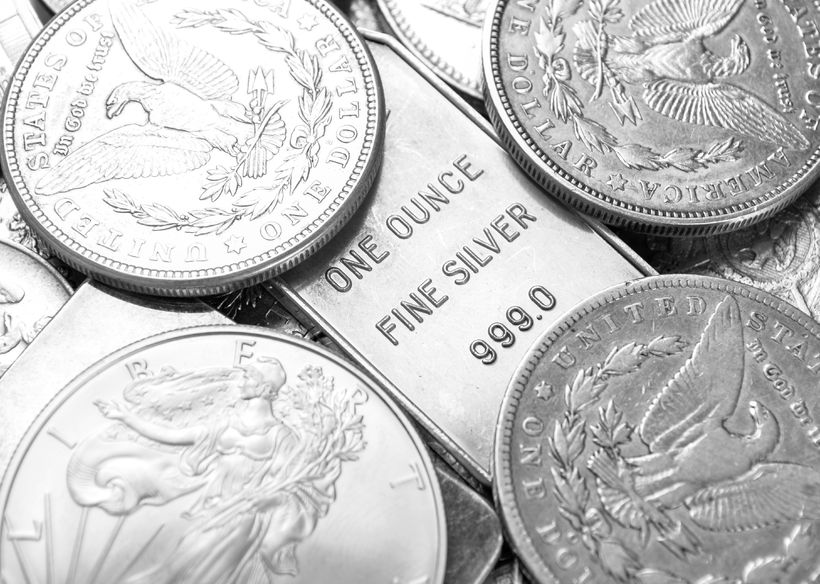
The silver market is currently navigating a significant correction, with prices retreating from early-year highs of $121 per ounce to a recent level of $72. This sharp decline, which erased much of the gains seen earlier this year, reflects a broader cooling in retail demand and macroeconomic headwinds. The energy crisis stemming from the Iran War has intensified inflation concerns, creating a difficult environment for non-yielding assets like silver. As prices slipped below the $80 threshold, mining equities faced increased selling pressure, highlighting the sensitivity of the sector to rapid shifts in spot price momentum.
Structural Deficits and Industrial Demand
Despite the immediate price volatility, the long-term supply-demand balance remains tilted toward a deficit. The Silver Institute projects that the global market will remain in a deficit for the sixth consecutive year, with the shortfall expected to widen by 15% to 46.3 million troy ounces in 2026. This structural tightness is largely underpinned by industrial requirements, particularly from China's massive solar industry. In March, Chinese silver imports reached an all-time high of 836 tons, signaling that physical demand remains robust even as speculative froth is purged from the futures market.
JPMorgan Global Research anticipates silver prices will average $81 per ounce in 2026, more than double the 2025 average. However, institutional caution persists. Gregory Shearer, head of Base and Precious Metals Strategy at J.P. Morgan, noted that while Chinese investment demand remains a critical catalyst, the firm is cautious about re-engaging until the recent price volatility is fully resolved. This suggests that while the fundamental floor may be rising, the path to recovery remains contingent on the stabilization of broader commodity markets.
Operational Performance and Capital Allocation
For investors evaluating mining equities, the focus has shifted toward operational efficiency and balance sheet strength. Silvercorp Metals Inc (NYSEAMERICAN:SVM), a primary silver producer with significant operations in China, provides a case study in recent performance. The company reported fiscal Q4 2026 production of 1.5 million ounces of silver, alongside 14 million pounds of lead and 3.9 million pounds of zinc. With fiscal 2026 revenue reaching $438.1 million, a 47% increase over the previous year, Silvercorp is scaling its output while advancing construction at its Kuanping and El Domo mines.
Conversely, capital allocation strategies are defining the risk profile for developers like Skeena Resources Ltd (NYSE:SKE). On April 10, the company closed a $750 million notes offering maturing in 2031 with an 8.5% interest rate. Skeena is utilizing $184 million of these proceeds to repurchase a significant portion of its gold stream agreement with Orion, effectively reducing its streaming obligation for the Eskay Creek mine from 10.55% to 3.52%. This move is designed to retain more value from future production, which is currently targeted to commence in 2027.
Sector Read-Through and Risk Assessment
Investors should monitor the divergence between spot price volatility and the operational progress of these miners. While companies like Silvercorp are benefiting from high-margin production, developers like Skeena are taking on debt to secure long-term equity value in their projects. The primary risk to this thesis is a sustained period of high interest rates or a deeper global economic slowdown that could dampen industrial demand for silver. Conversely, a stabilization in the geopolitical landscape or a clear resolution to the current inflationary pressures could provide the necessary environment for the projected 2026 price recovery to materialize.
For those tracking the broader materials sector, NEM stock page provides insight into how larger diversified miners are managing similar inflationary pressures. While GS stock page offers a view on the financial sector's perspective on commodity cycles, the specific risks for silver miners remain tied to project execution and the ability to maintain production targets in a volatile pricing environment. As of the latest assessment, Newmont Corporation (NEM) carries an Alpha Score of 70/100, while Goldman Sachs Group Inc. (GS) holds an Alpha Score of 57/100, reflecting the differing risk-reward profiles between precious metal producers and financial institutions.