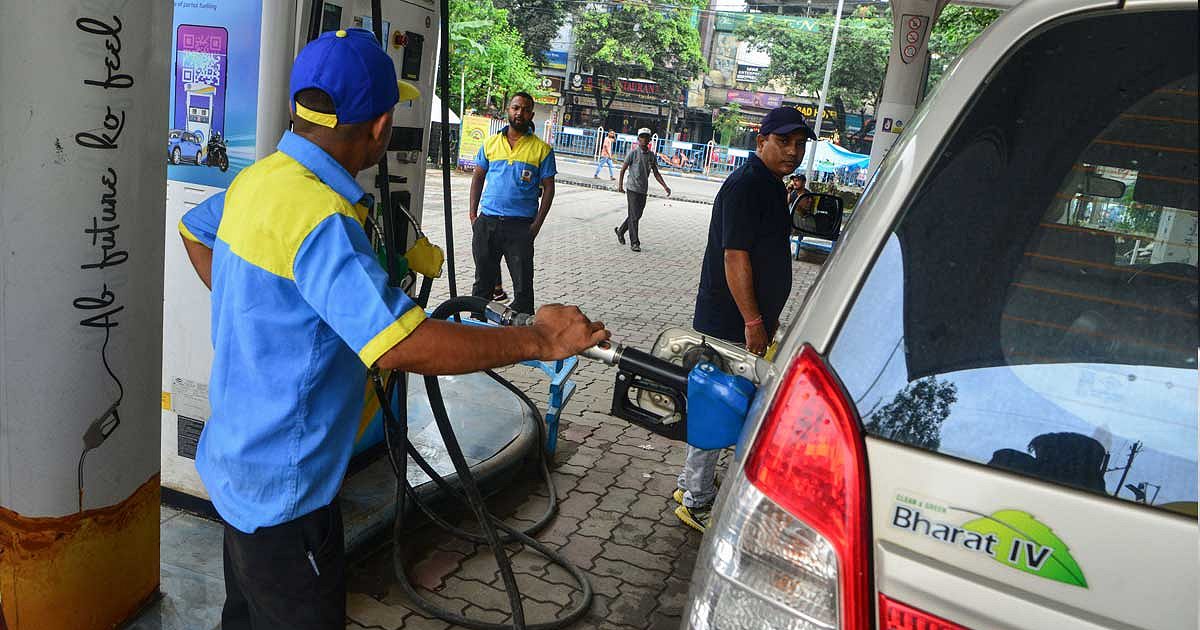
SIAM warned of chloride contamination in E20 fuel causing component failures, then withdrew the letter days later. The U-turn reveals how ethanol blending now touches farm incomes, energy security, and vehicle durability — with Punjab opposing the rollout while ethanol-producing states stay silent.
The Society of Indian Automobile Manufacturers wrote to Petroleum Secretary Neeraj Mittal on July 28 with what looked like an urgent request. SIAM said its members were seeing a "huge increase" in failures of fuel injectors, fuel pumps, exhaust gas recirculation valves, and other components in direct contact with fuel or engine emissions. Investigations into failed parts pointed to corrosion and wear caused by high chloride contamination in E20 fuel – 20% ethanol mixed with petrol.
Fuel samples from vehicles showed chloride levels of up to 500 parts per million. Samples from retail outlets showed contamination of up to 350 ppm, according to the letter. It also flagged unusually high moisture levels in some samples, warning that excess water could cause phase separation – a condition where ethanol and petrol separate – leaving vehicles unable to run immediately after refuelling.
SIAM urged the ministry of petroleum and natural gas to introduce mandatory chloride limits in fuel specifications through the Bureau of Indian Standards, direct oil marketing companies to identify the contamination source, and strengthen fuel quality controls.
Less than a week later, the public posture flipped. On August 4 night – after the letter entered the public domain and MoPNG issued a clarification defending the E20 programme – SIAM said the figures in its communication required "authentication through collection of elaborate data from various regions across the country followed by a comprehensive consultation with our member OEMs." The correspondence was part of "routine and ongoing technical deliberations" between industry, oil companies, and government agencies. It reassured consumers there was "no cause for concern" and formally withdrew the earlier communication.
In one document, SIAM cited specific contamination levels, linked them to field failures, and sought immediate regulatory intervention. In the other, it said those figures needed further validation before any conclusions could be drawn.
Why the industry's public position changed is difficult to say. The developments demonstrated that ethanol-blended petrol has become one of the country's most politically and commercially sensitive policy issues.
For the Union government, ethanol blending is a pillar of India's energy security strategy – reducing crude oil imports, saving foreign exchange, and creating an additional market for agricultural produce. For automobile manufacturers, the priority is ensuring vehicle durability after years spent redesigning engines and components for E20 compatibility. For vehicle owners, the concerns are more immediate. Several consumers have taken to social media and other public forums complaining of lower mileage after shifting to E20 petrol. Some have reported maintenance-related issues.
Road transport and highways minister Nitin Gadkari told Parliament recently that fuel efficiency could decline by 2-6% depending on the age and type of vehicle. He stated that testing had failed to link engine failures with E20 use.
The engineering discussion quickly morphed into a broader political debate. Aam Aadmi Party national convenor and former Delhi chief minister Arvind Kejriwal emerged as the most vocal political opponent of the E20 rollout. He demanded that consumers be given a choice between E20 and pure petrol. His party held protests on the issue.
The Punjab Assembly on August 4 passed a resolution urging the Centre to suspend mandatory E20 rollout for vehicles not certified to run on the blend.
The geography of the controversy is revealing. The loudest political opposition came from Punjab. States that account for much of India's ethanol production – Uttar Pradesh, Maharashtra, Karnataka, Bihar, and Gujarat – largely stayed away from the debate. These states are home to a large share of the country's distilleries, which produce ethanol from sugarcane-based feedstocks as well as grain-based feedstocks including maize and surplus or damaged foodgrains. For them, ethanol has become an important rural industry, providing revenue for sugar mills, grain processors, and farmers.
The contrasting positions were evident on Tuesday. While Punjab opposed the E20 rollout, Union agriculture minister Shivraj Singh Chouhan met farmer organisations that backed the ethanol blending programme. According to an agriculture ministry statement, farmer representatives said they support ethanol and want the real benefit to reach farmers, not just companies or middlemen. Chouhan said the government's thinking is clear – the benefit should reach the entire chain from field to fuel tank, with the largest share going to the farmer.
The ethanol blended petrol programme began as a pilot in 2001 before being formally launched in 2004 with the objective of blending 5% ethanol with petrol. Progress remained slow for years because ethanol production was limited, pricing policies were uncertain, and OMCs struggled to secure supplies. The programme gathered momentum after 2014, when the Centre introduced assured procurement prices for ethanol and expanded the list of approved feedstocks beyond molasses.
The turning point came in 2021, when an inter-ministerial committee chaired by the NITI Aayog prepared a roadmap for the transition to E20. The original target of achieving 20% ethanol blending by 2030 was brought forward to the ethanol supply year 2025-26.
Average ethanol blending increased from 8.1% in ESY 2020-21 to 10% in 2021-22, 12.1% in 2022-23, 14.6% in 2023-24, and 19.2% in 2024-25 before reaching the 20% target in ESY 2025-26 – five years ahead of the original schedule. Ethanol procurement by OMCs increased from about 380 million litres in ESY 2013-14 to more than 12 billion litres in ESY 2025-26. Installed production capacity expanded to around 20 billion litres annually.
Just after the E20 target was achieved in 2026, government officials began discussing the technical feasibility of higher ethanol blends such as E25 and E30. The Centre recently clarified in Parliament that no decision has been taken to mandate blending beyond E20. Any future move will follow technical studies and consultations with stakeholders.
The July 28 SIAM letter did not question the ethanol blending programme itself. It reiterated the industry's support for the government's biofuel policy and referred to ongoing discussions on future programmes involving higher ethanol blends. Its main argument was that fuel quality controls must keep pace with higher blending levels. The letter said contamination could create "a wrong impression about the E20 fuel in customers' minds" and urged the government to address the issue immediately. SIAM members had been raising the chloride issue before the BIS committee for more than two years, the letter noted, but mandatory limits were yet to be incorporated into fuel specifications.
Prepared with AlphaScala editorial tooling from the source reporting linked above. Indexable analysis may include a cited Alpha Score value. Publishing checks screen each story before release. Educational coverage, not personalized advice.