Stocks● Neutral
Sheng Siong Growth Has a Price Tag. Can Earnings Catch Up?
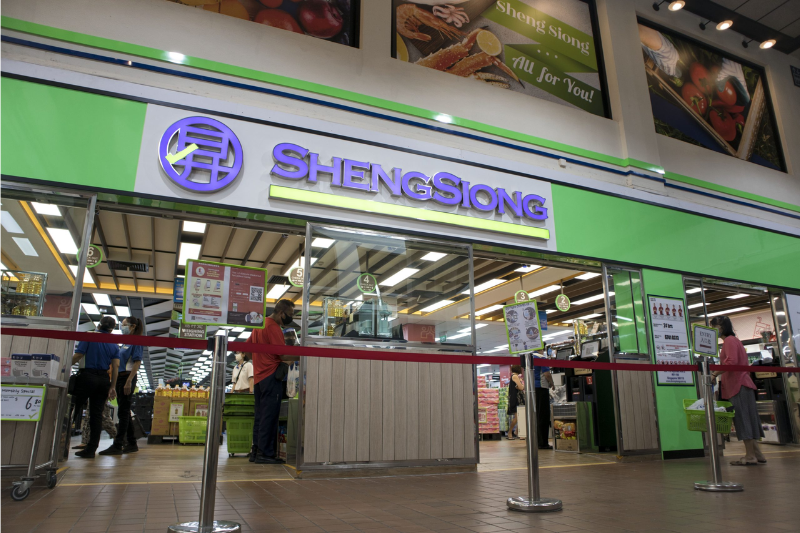
Sheng Siong shares trade at 31.8x forward earnings after a 34% annual price gain that far outpaced 4% EPS growth. Store openings and dividend growth face a high bar.
Continue with
Sheng Siong shares have been climbing. The stock touched S$3.26 on 24 July, near the top of a 52-week range that started at S$2.02. The rally has pushed the forward price-to-earnings ratio to 31.8 times, a level well above the stock's historical average and roughly 60% higher than the multiple of its closest peer, DFI Retail Group.
The premium reflects a decade of steady execution. Revenue for the full year ended December 2025 rose 9.9% year on year, from S$1.4 billion to S$1.6 billion. Net profit increased 8.7% to S$149.2 million. Momentum carried into the first quarter of 2026: revenue jumped 12.4% from the same period a year earlier, hitting S$452.8 million, while net profit climbed 12.6% to S$43.4 million. Gross margin widened to 31.0%, helped by a richer sales mix, even as operating costs rose.
Cash and cash equivalents stood at S$461.1 million at the end of 2025, up S$25.6 million in the final quarter alone. The company carries no debt. Managers can fund new stores without outside financing.
Two new outlets at Smith Street and Canberra Crescent are scheduled to open in the second quarter of 2026, with a third at Rivervale Crescent due in the third quarter. Five tenders for Housing Development Board sites remain pending, and two more are expected within six to 12 months. The group is also investing S$520 million in a new headquarters and distribution centre in Sungei Kadut, a seven-storey building due for completion in 2029. The facility is designed to support a network of more than 120 stores, giving the company room to expand beyond its current footprint without logistics constraints.
Sheng Siong paid a final dividend of S$0.038 per share, up 18.8% from S$0.032 a year earlier. The total dividend for 2025 was S$0.07 per share, producing a trailing twelve-month yield of 2.15%. The payout ratio came in at 70.4%, meaning roughly seven of every ten dollars of profit were returned to shareholders.