Indices● Neutral
Shanghai AI Lab KrF Resin Breakthrough Tests Photoresist Incumbents
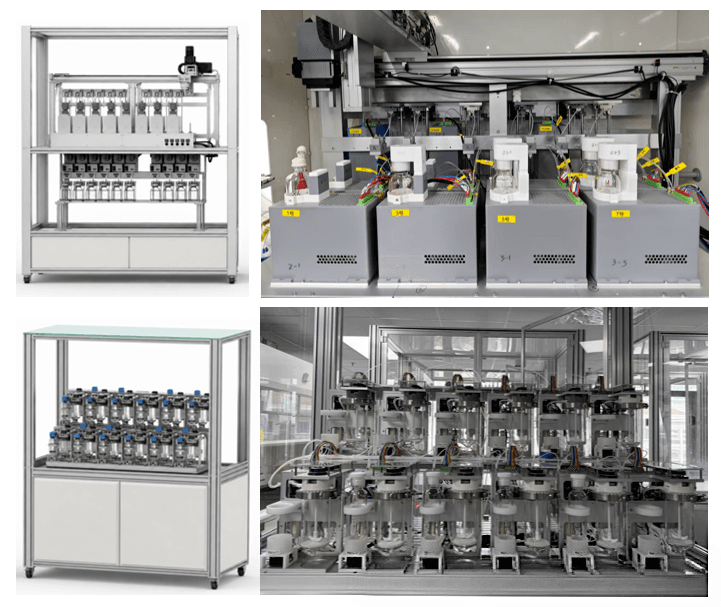
High-purity KrF photoresist resin developed via AI platform enters customer validation with Hengkun New Materials, challenging JSR, TOK, and DuPont's supply dominance.
Continue with
Shanghai AI Lab, in collaboration with university partners, has developed a high-purity KrF photoresist resin using an AI-driven synthesis platform. The resin achieved batch consistency metrics that meet semiconductor manufacturing standards. The material has now entered customer validation with Hengkun New Materials, a Chinese specialty materials company.
KrF photoresist is a light-sensitive material used in 248-nanometer lithography, a workhorse process for producing mature-node semiconductors such as power management ICs, microcontrollers, and display drivers. These chips remain in high demand across automotive, industrial, and consumer electronics. The photoresist must deliver extreme purity and lot-to-lot uniformity to avoid defects in high-volume manufacturing. The AI platform's ability to optimize synthesis parameters and predict molecular structures allowed the team to rapidly iterate toward a resin that meets these stringent requirements.
Photoresist Supply Chain: Incumbents Face AI-Accelerated Threat
The global photoresist market is concentrated among a handful of incumbent suppliers, a dynamic often examined in stock market analysis. Japanese companies JSR Corporation and Tokyo Ohka Kogyo, along with U.S.-based DuPont, control the majority of high-end KrF and ArF photoresist supply. South Korea's Dongjin Semichem and others also compete. For years, Chinese semiconductor fabs have relied heavily on imports, creating a strategic vulnerability given trade restrictions and supply-chain disruptions.
The Shanghai AI Lab's breakthrough signals a potential shift. An AI-driven approach to materials discovery could compress development timelines and reduce the trial-and-error that traditionally slows new resin qualification. If the resin passes customer validation, it would represent a domestically developed alternative that meets production-grade specifications. The immediate readthrough is for Chinese photoresist manufacturers and chemical companies that have been investing in electronic materials. Hengkun New Materials, the validation partner, stands to gain early-mover advantage if the resin is commercialized. Other Chinese materials firms with photoresist ambitions may face pressure to accelerate their own R&D or risk losing relevance.