Stocks● Neutral
Seoul Tests 5G as a City-Wide Lab for Autonomous Cars and IoT
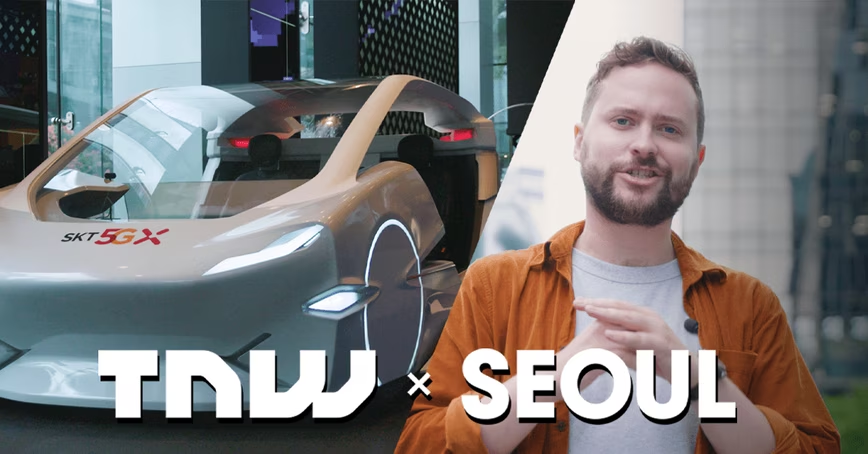
Seoul is running one of the world's first city-scale 5G testbeds, giving developers a real urban environment to trial autonomous vehicles and IoT sensors before commercial rollout.
Continue with
Seoul is running one of the world's first city-scale 5G testbeds, giving developers and hardware makers a real urban environment to trial autonomous vehicles, IoT sensors, and VR services before those products hit commercial networks.
The South Korean capital has deployed 5G base stations across key districts, offering latency below 10 milliseconds and peak speeds roughly 20 times faster than 4G. That performance is critical for self-driving cars, which need to process sensor data and react faster than a human can. The same infrastructure supports smart-city applications like real-time traffic management and public-safety monitoring.