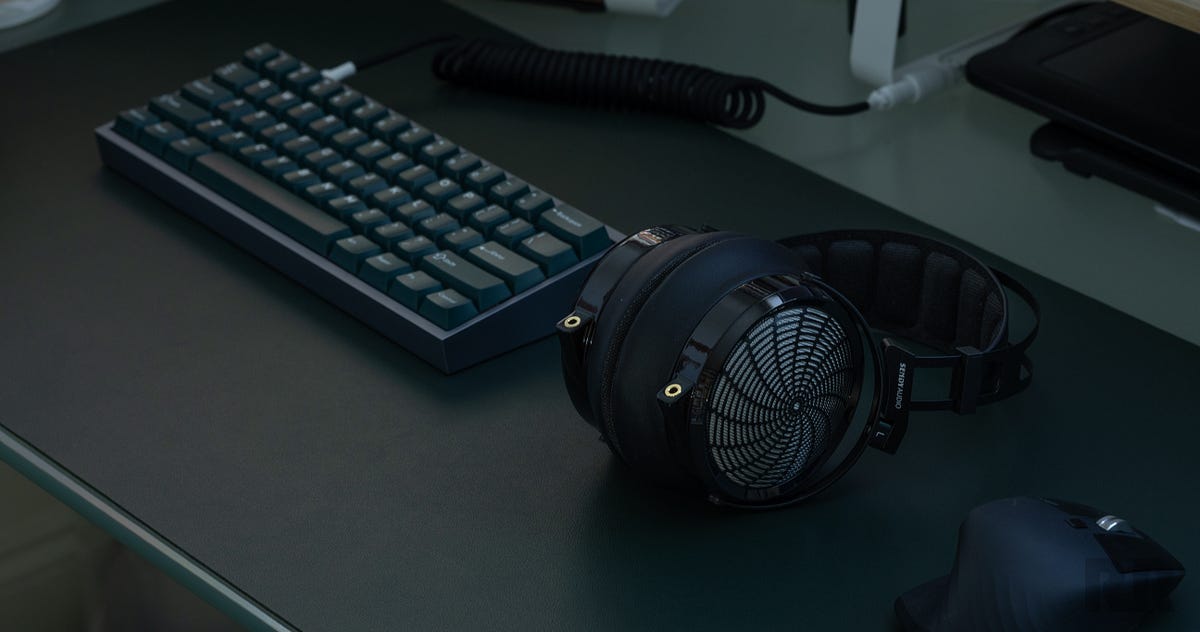
Sendy, the sister brand to SIVGA, has been quietly building a reputation for beautifully crafted headphones. The Apollo PRO takes their existing planar design and refines it: better ergonomics, upgraded materials, and a tuning that leans decisively into warmth. At $494, it competes in a crowded mid-range space against the Meze 105 AER and THIE Audio Cypher. But the Apollo PRO makes a distinct argument for itself.
The sound signature is relaxed and bass-forward. The mid-bass has a moderate lift, while the sub-bass extends well but rolls off gently. Lower mids stay linear and warm, blending into a small upper-midrange hump that peaks around 2–3KHz before the treble takes over with a clean, gentle roll. Unlike many planar headphones that can sound bright or sharp, the Apollo PRO keeps treble respectful. It captures speed and airiness without the tonal stiffness. For someone sensitive to treble, that means higher listening volumes are comfortable, even on sharply mastered tracks like Nero's "Satisfy." The tradeoff is that aggressive string instrumentation can sound smoothed over. Paramore's "Ignorance (Acoustic)" has texture and articulation, but some of the energy present on brighter sets gets lost.
Treble-bound elements sit further back in the mix than a traditional V-shaped headphone would place them. Hi-hats and cymbals are well-defined and textured but clearly occupy the background layer. Micro-detail is still strong – the metallic slams of cymbals on A Day To Remember's "If I Leave" come through cleanly. The twinkling effects on "Alive (Severo x Anton May Remix)" stay distinct, adding layering to the soundstage.
The midrange follows Sendy's house sound: warm and linear. Lower mids are flat in frequency response, giving them a reference-style presentation. Texture is excellent. Odesza's "Always This Late" feels immersive and robust, with vocals and ethereal string instrumentation well separated. The synths on Phoenix's "1901" sound full-bodied and rich, dripping with texture, contrasting nicely against the track's bright vocals. That said, some mastering styles can sound dense, especially in passages without vocal contrast. The guitars on Three Days Grace's "Time of Dying" lack air at the recording level, and the Apollo PRO doesn't add any.
Bass is where the Apollo PRO surprises. Open-backed planars are not typically known for punch, but this headphone delivers. Speed and control are the name of the game, but they don't come at the expense of immersion. On Highly Suspect's "Bath Salts," each drum hit during the bridge generates a cohesive burst of bass. They attack fast, linger with appropriate weight, and decay naturally. Electronic music sounds stellar through the Apollo PRO, so long as you aren't chasing intense sub-bass rumble. Old-school dubstep like Flux Pavilion's "Cracks" comes across dynamic and layered, with no smudging or blur. The basshead in me craves more – Lights (Bassnectar Remix) renders the shape and texture of the bass line but doesn't step into tactile space without EQ and higher volume.
Build quality is a strength. The Apollo PRO uses CNC'd aluminum hardware and real zebuwood earcups. The suspension-style spring-steel headband is padded with soft lamb leather and springy foam, secured by a screw clamp that makes it user-serviceable. Earpads are generously padded and thoughtfully sculpted, using lambskin on the exterior and velvet on the interior face.
The stock cable is unusually nice. Metal-clad terminations, a thick chain-braid, and a wooden Y-splitter and chin-cinch make it a joy to handle. It uses a dual-mono 3.5mm connection to deliver balanced audio from a 4.4mm termination. The included adapter steps down to 3.5mm and further to 1/4in, though using the stock cable with common headphone amps requires two adapters in sequence. A native 1/4in connector or a modular termination would have been preferable.
The carrying case is practical – sturdy, with little wasted space and metal feet for upright storage. It also looks like a butt crack. That's a petty complaint, but it's hard to unsee.
How It Stacks Up
Compared to the Meze 105 AER ($399, on sale for $299), the Apollo PRO is warmer and richer. The 105 AER is brighter, with more forward treble and upper mids. Vocals sit further forward, and the extra upper-midrange presence gives it more air but also introduces a little grain. The Apollo PRO's bass is broader and more authoritative. The 105 AER sounds cleaner in the bass but lacks heft. For gaming, I prefer the 105 AER. For music, the Apollo PRO's warmth and body win out.
Against the THIE Audio Cypher ($400), the Apollo PRO trades carbon fiber for spring steel and all-aluminum for wood and metal. The Cypher's cable is shorter and thinner, sleeved in cloth. Sonically, the Cypher is more restrained and reference-style. Its treble is brighter, with more air and sparkle. The Apollo PRO has a substantial increase in lower-midrange and mid-bass. The Cypher breathes better in dense instrumental passages and is more flexible across genres. For daily use, I'd stick with the Cypher. The Apollo PRO feels richer in the hand, but the Cypher's balance and lower price work in its favor.
The Apollo PRO is a well-executed open-backed planar for listeners who value weight, richness, and a warm signature. Its bass performance and build quality are standouts in the price range. The treble tuning and relaxed presentation won't suit everyone, but for those who appreciate a bottom-heavy frequency response, the Apollo PRO has a clear audience.