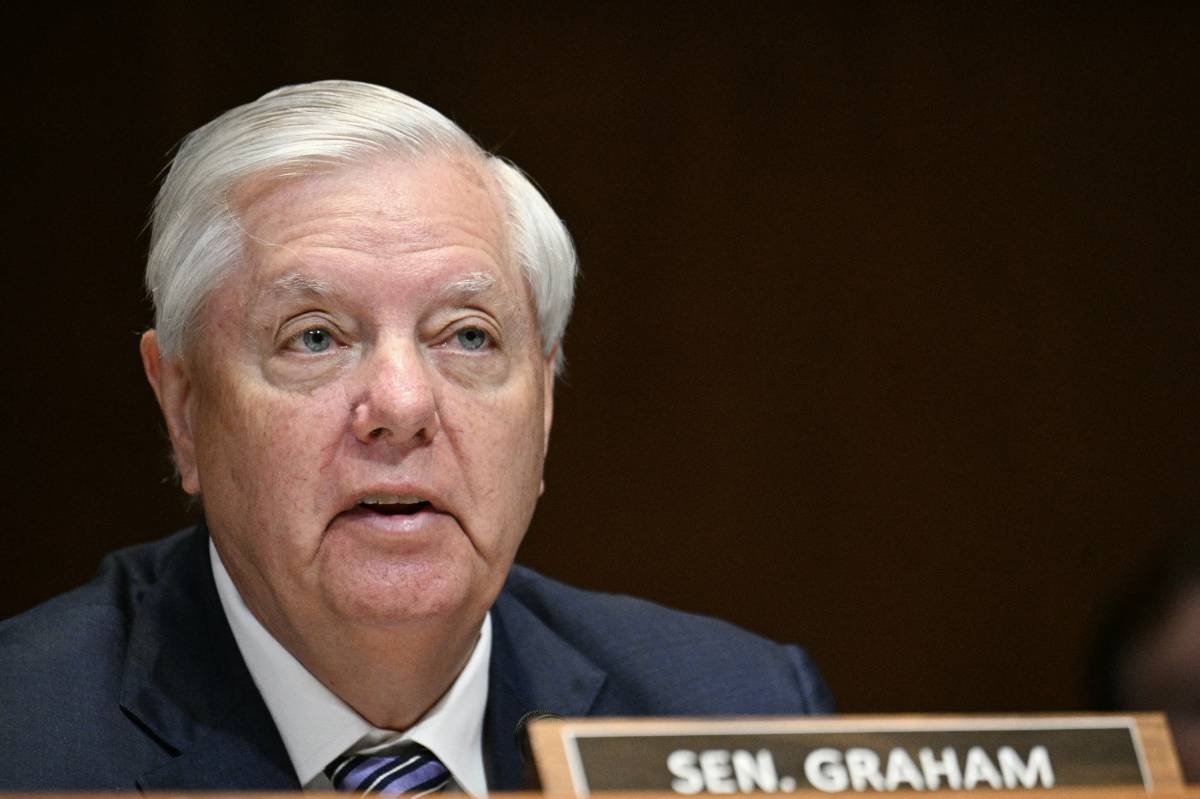
WASHINGTON – Republican Senator Lindsey Graham of South Carolina died Saturday night at age 71, his office said Sunday. The local medical examiner preliminarily determined the cause as a tear in his aorta from heart disease. Emergency services responded to a call for cardiac arrest at his Capitol Hill home, NBC News reported.
Graham had been scheduled to appear on NBC's "Meet the Press" on Sunday morning. President Donald Trump took his place on the program and praised his late ally. "He's a tough one to lose. He was great. He was unique in every way, actually," Trump said by telephone. He added that he spoke with Graham on Saturday evening as Graham returned from a trip to Ukraine. They made tentative plans to meet Sunday. "It could have been his last call," Trump said. Later, Trump ordered flags across the country lowered to half-staff.
Graham's death, combined with the weeks-long hospitalization of former Senate Republican leader Mitch McConnell, leaves the GOP with a 53-47 majority. McConnell has not voted since June 11. The party has little room for missing votes or defections on budget bills, judicial confirmations, or foreign aid packages. South Carolina Governor Henry McMaster will appoint a successor for the remaining months of Graham's term. A special primary must follow.
Graham was a hawkish foreign policy voice. He pushed for U.S. military action against Iran and strongly backed Ukraine after Russia's 2022 invasion. He voted for the Iraq war and supported a long-term presence in Afghanistan. Ukrainian President Volodymyr Zelensky said he was deeply saddened by Graham's death. Graham had visited Kyiv on Friday, his tenth trip to Ukraine since the full-scale invasion began. "America and the world have lost a determined leader," Zelensky wrote on Facebook.
Israeli Prime Minister Benjamin Netanyahu called Graham "a great friend of Israel and a cherished friend of mine." Graham had ardently pushed the United States to strike Iran's theocratic government.
Graham's relationship with Trump was turbulent. In 2016, during his own failed presidential bid, Graham called Trump a "race-baiting, xenophobic, religious bigot." After Trump won the nomination, Graham backed him. The relationship frayed after the January 6, 2021 Capitol attack. Graham later reconciled and supported Trump's 2024 reelection campaign. Trump's comments on Sunday reflected their renewed alliance.
Graham was first elected to the House in 1994 and to the Senate in 2002. He won reelection in 2008, 2014, and 2020. He served as chairman of the Senate Budget Committee, a position that will now need a new occupant. His death adds to the strain on a Senate Republican conference already stretched by McConnell's absence. The narrow majority leaves little margin for missed votes on the party's legislative agenda, including budget reconciliation and judicial appointments.
Raised in Central, South Carolina, where his parents ran a restaurant and pool hall, Graham was the first in his family to attend college, according to his Senate biography. He served as a military lawyer and reached the rank of Air Force colonel. That experience shaped his interventionist foreign policy. He voted for the 2002 authorization for military force against Iraq and later supported a long-term U.S. presence in Afghanistan.