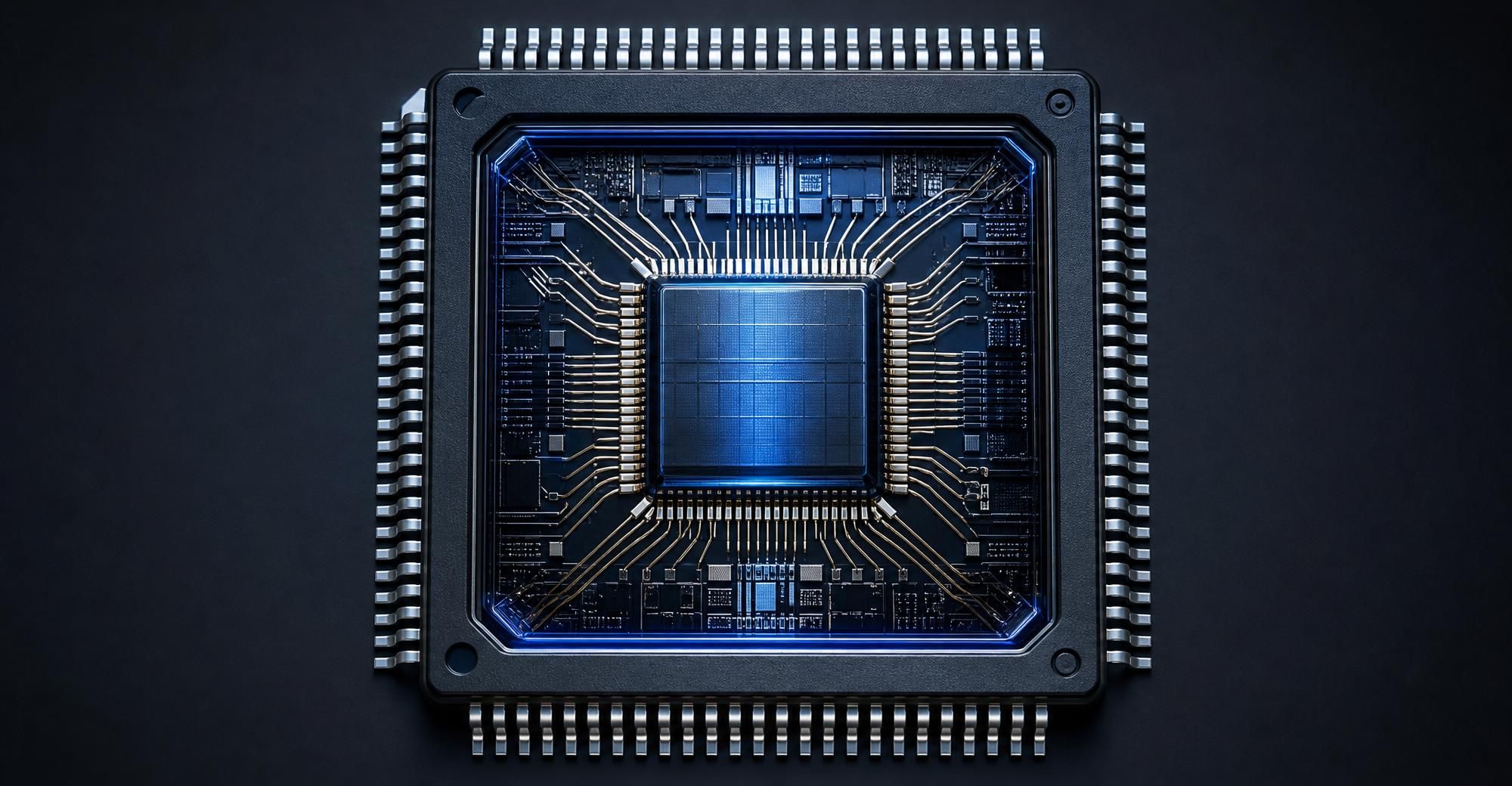
The global semiconductor market is on pace to cross $1 trillion in revenue by 2026, according to the World Semiconductor Trade Statistics. Industry revenue reached $791.7 billion in 2025 and is projected to hit $975 billion in 2026. The growth is not distributed evenly across sub-sectors. The mechanism runs through artificial intelligence demand reshaping the memory market in particular.
Why Memory Chips Carry the AI Demand Surge
Memory chips are the commodity backbone of AI infrastructure. Every large language model training cluster requires high-bandwidth memory stacked on GPU accelerators. The WSTS projection implies that memory alone will account for roughly 30% of the total semiconductor market by 2026, up from historical averages near 25%.
The cause-and-effect chain is direct. AI model training scales → HBM demand increases → DRAM manufacturers shift production lines → standard DRAM supply tightens → prices rise across the memory stack. This is not a demand-pull story for all chips. It is a capacity reallocation story that creates winners and losers within the same sector.
Memory sub-types face different dynamics. HBM and DDR5 benefit from structural demand growth and limited supply. Legacy DDR4 and NAND flash face margin pressure from capacity additions by Chinese memory makers.
China's Semiconductor Push Creates a Two-Tier Market
China's domestic chip production is accelerating, concentrated in mature-node manufacturing (28nm and above) and memory fabrication. Chinese memory makers are adding capacity for DDR4 and legacy NAND, which competes directly with established players in the commodity segment.
The read-through for global investors is a two-tier market. Premium AI memory (HBM, DDR5) should continue to benefit from structural demand growth and limited supply. Legacy memory faces margin pressure from Chinese capacity additions. The same WSTS projection tells opposite stories depending on which product line a company sells.
Confirmed Peers and Supply-Chain Read-Throughs
The primary beneficiaries are the three dominant memory manufacturers: Samsung Electronics, SK Hynix, and Micron Technology. Each has confirmed HBM supply agreements with NVIDIA and other AI chip designers. The secondary read-through runs to equipment suppliers that sell the lithography and deposition tools needed to build new memory fabs.
Equipment suppliers face execution risk
Companies like Applied Materials, Lam Research, and Tokyo Electron benefit from capacity expansion. Timing is uncertain. Chinese memory fabs are being built faster than Western counterparts. Export controls on advanced equipment create a bottleneck. The equipment orders showing up in quarterly reports will be the real-time signal for whether the WSTS projection is achievable or optimistic.
Valuation Risk vs. the WSTS Forecast
The semiconductor sector trades at a premium to the broader market. The $975 billion revenue projection is already partially priced into leading stocks. The risk is that consensus estimates embed the WSTS forecast, leaving little room for upside surprise. A miss on any single component – slower AI adoption, memory price declines, or geopolitically driven disruption – would trigger multiple compression.
The Next Decision Point
The WSTS projection is an industry forecast, not a binding commitment. The next concrete catalyst is the July 2026 mid-year update, which will confirm the trajectory or force a revision. Between now and then, the key data points are:
- Monthly semiconductor sales reports from the Semiconductor Industry Association
- Quarterly earnings from Samsung, SK Hynix, and Micron, specifically their HBM revenue mix
- Export control updates from the Bureau of Industry and Security regarding China fab equipment
If the mid-year update holds at or above the $975 billion mark, memory and equipment sub-sectors have further room to re-rate. If the projection is cut, the stocks that rallied on the forecast will give back those gains faster than the broad market. The forecast itself is the setup. The execution data is the trigger.