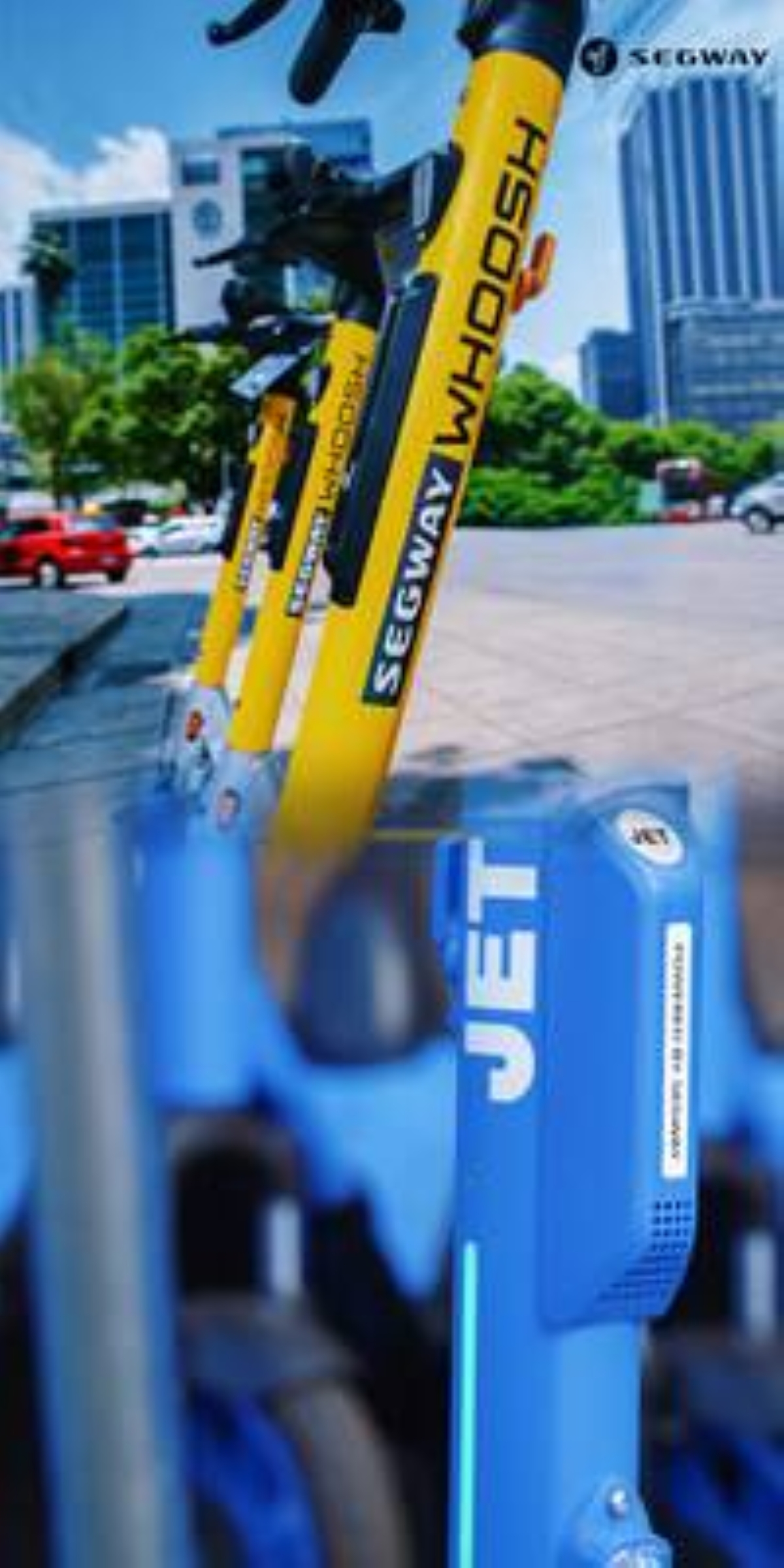
Segway said 89% of riders during its 2026 World Cup campaign were first-time users. The 25-minute average trip suggests scooters became a mid-range option, not just last-mile. Retention is the open question.
Segway said 89% of riders who used its shared e-scooters during the 2026 World Cup campaign were first-time users. The figure suggests major sporting events can pull new users into a mode often stuck in the last-mile niche.
The campaign, run with operators Whoosh and JET across Mexico, logged 54,413 promotional minutes from June 1 through June 26. Riders averaged 25.1 minutes per trip. That is longer than the typical first-mile trip, often under 10 minutes, and hints that scooters became a legitimate mid-range option during the tournament.
Whoosh expanded its free-ride campaign to Monterrey on June 29, extending the activation beyond the original scope. The partnerships covered stadium districts, transit hubs and other high-traffic points. Segway provided the hardware; the operators handled local deployment and pricing.
“The 2026 World Cup offered a compelling showcase for shared micromobility’s role in supporting cities during high-traffic events,” said Jasper Luan, Director of Market and Solutions at Segway-Ninebot. “In partnership with Whoosh and JET, we delivered for residents and football fans while demonstrating the viability of shared mobility solutions on the world stage.”
Victor Coelho, PR Manager LATAM at JET, said the partnership reflects a push to make electric micromobility a standard urban option in Latin America. “Mexico is a strategic market for JET, and initiatives like this, combining our local operational expertise with Segway’s global scale, are exactly how we accelerate adoption.”
The 89% first-time stat is the headline for operators. Acquiring a new user during a spike in demand, and logging a 25-minute session, points to a conversion funnel that works even in a crowded transit environment. The risk is retention: whether those first-time riders become regular users after the event traffic subsides. Segway did not provide post-campaign ridership data.
The campaign also serves as a dry run for future mega-events. Operators typically face regulatory pushback during large gatherings. Segway, Whoosh and JET managed to deploy across multiple cities without major friction. That operational experience, more than the raw minute count, may be the lasting asset for the partners.
Prepared with AlphaScala research tooling and grounded in primary market data: live prices, fundamentals, SEC filings, hedge-fund holdings, and insider activity. Each story is checked against AlphaScala publishing rules before release. Educational coverage, not personalized advice.