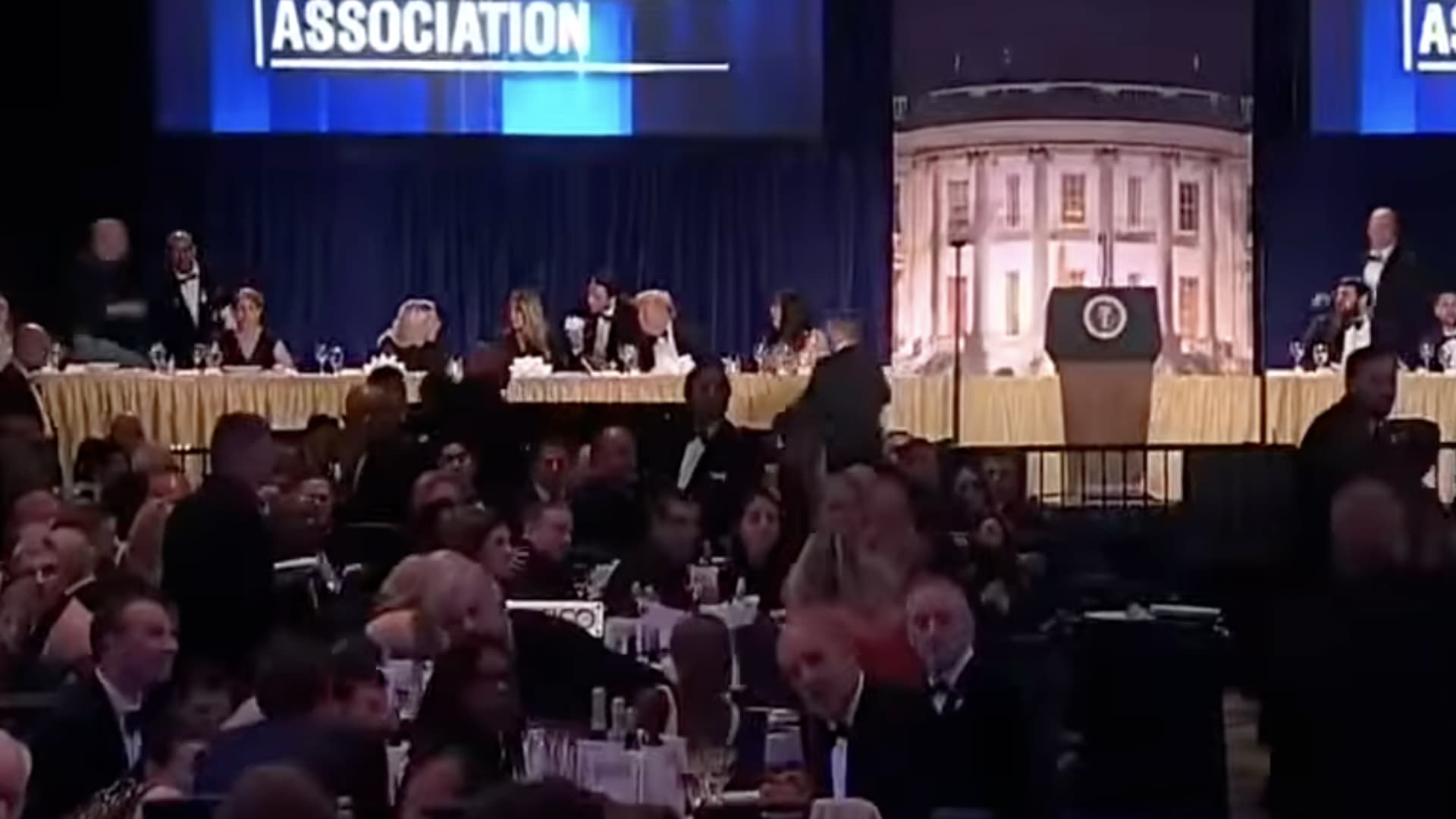
The annual White House Correspondents' Dinner faced an unexpected security breach this past Saturday, shifting the focus from the evening's traditional programming to the efficacy of event containment protocols. Shortly after 8:30 p.m., a disturbance within the Hilton Hotel ballroom triggered a rapid response from security personnel, creating a sudden atmosphere of uncertainty among the attendees. This event serves as a reminder of the logistical complexities involved in securing high-profile gatherings where public figures and media representatives congregate in dense, high-visibility environments.
Assessing Event Containment and Venue Vulnerability
The incident highlights the inherent difficulty in managing access and perimeter integrity during large-scale social events in urban centers. While the Hilton Hotel is a frequent host for major political and media functions, the breach underscores a potential gap between standard hotel security measures and the heightened requirements of events involving top-tier government officials. The swiftness of the disruption suggests that even established venues face challenges when managing the flow of guests and the potential for unauthorized entry into secure zones.
For organizations and event planners, the primary concern remains the balance between maintaining an open, accessible environment and ensuring the safety of participants. This incident likely signals a shift toward more rigorous screening processes and a re-evaluation of physical barriers at future events. The reliance on standard hotel security staff versus specialized protection details is now a central point of discussion for those managing similar high-stakes gatherings.
Broader Implications for Corporate and Public Security
Beyond the immediate impact on the dinner, the event prompts a broader review of how corporate entities manage their own public-facing functions. Companies often invest heavily in corporate communication risks and the cost of over-confidence when managing their public image, yet physical security at sponsored events is frequently treated as a secondary operational concern. The disruption in Washington serves as a case study for why security planning must be integrated into the earliest stages of event strategy.
AlphaScala data currently monitors various sectors for operational resilience. For instance, companies like ON Semiconductor Corporation, which holds an Alpha Score of 45/100 and is labeled as Mixed, often navigate complex supply chain and physical security environments that require constant oversight. Similarly, Amer Sports, Inc. carries an Alpha Score of 47/100, reflecting a mixed outlook as it manages its own global footprint. You can review further details on these companies at the ON stock page or the AS stock page.
The next concrete marker for this narrative will be the release of the official incident report from the venue and local law enforcement. This documentation will likely dictate whether future events of this scale will require a permanent shift toward private, government-led security details rather than relying on hotel-provided infrastructure. Any changes to city-wide event permitting or security mandates in the District of Columbia will serve as the next indicator of how seriously organizers are taking these new vulnerabilities.