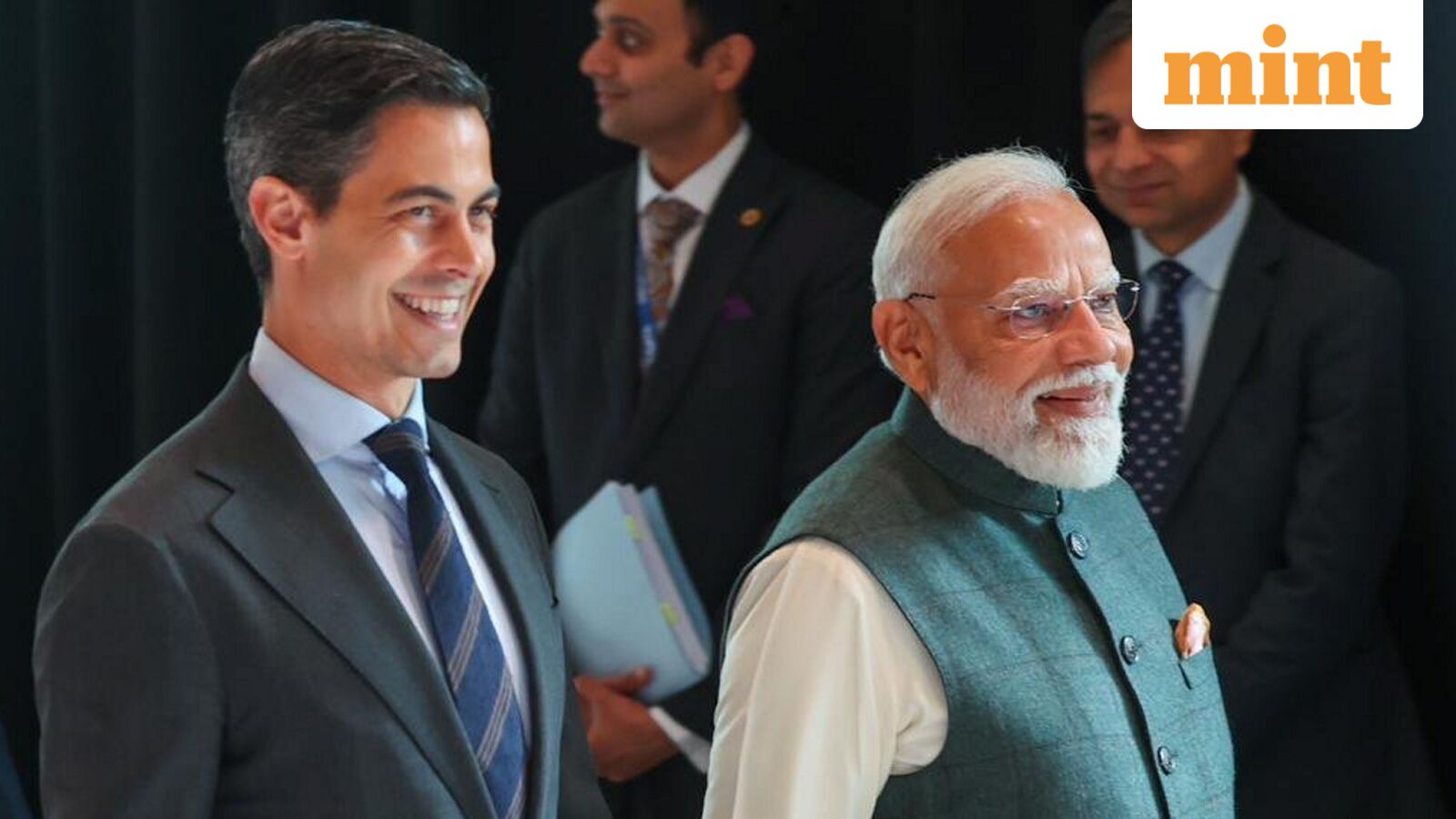
Prime Minister Narendra Modi's visit to the Netherlands produced a concrete semiconductor commitment: an agreement between Tata Electronics and ASML to support the Dholera semiconductor fab in Gujarat. The pact signals India's push into chip manufacturing and gives ASML a direct stake in that effort. The deal also introduces a new layer of geopolitical and execution risk for the Dutch lithography giant.
The Event: ASML-Tata Electronics Agreement for Dholera Fab
Modi, on the second leg of a five-nation tour, addressed a CEO roundtable and invited Dutch companies to design, innovate, and manufacture in India. The specific sectors he named – maritime, renewable energy, digital technologies, semiconductors, artificial intelligence, and healthcare – mirror the areas where the Netherlands holds competitive advantage. The most concrete outcome was the Tata Electronics-ASML agreement, described as support for the Dholera fab, a project that is part of India's $10 billion semiconductor incentive scheme.
Modi and Dutch Prime Minister Rob Jetten also called for early implementation of the India-EU Free Trade Agreement (FTA). According to an official release, the FTA reinforces India and the European Union as trusted and reliable partners. Modi noted that over 300 Dutch companies are already part of India's growth story, and that the Netherlands is India's largest European investor and second-largest trading partner. Bilateral trade reached $27.8 billion in 2024–25, and cumulative FDI from the Netherlands stands at $55.6 billion.
Exposure: ASML's India Bet and the Export Control Calculus
The Simple Read: New Market, New Revenue
India is a large, underpenetrated semiconductor market. The government has committed billions in subsidies, and the Dholera fab is one of several planned projects. For ASML, supplying lithography equipment to a new fab means incremental revenue and diversification away from Taiwan and South Korea. Modi emphasized that India contributes 17 per cent to global growth and that manufacturing in India is becoming cost-effective. The simple narrative is that ASML gains a new customer in a high-growth geography.
The Better Read: Export Controls and the Dutch Government's Role
ASML is already constrained by export controls on its most advanced extreme ultraviolet (EUV) lithography machines. The Dutch government, under pressure from the United States, has tightened licensing for shipments to China. India is not subject to the same restrictions. The agreement does not specify which ASML tools will go to Dholera. If the fab requires advanced nodes, ASML will need Dutch export licenses. Any shift in the Netherlands' policy stance – whether due to US pressure or EU-wide semiconductor export rules – could delay or cap the equipment supply.
Practical rule: The risk is not that India becomes a new China-style flashpoint. The risk is that the Dutch government, in balancing trade ties with security concerns, imposes conditions that make the Dholera fab uneconomical or slow to ramp.
Timeline: From MoU to Production – The Execution Gap
MoU to Fab: The Typical 3-5 Year Gap
The agreement between Tata Electronics and ASML is a support pact, not a purchase order. Semiconductor fabs take three to five years from announcement to production. The Dholera site itself requires infrastructure – power, water, logistics – that is still under development. Modi cited India's speed in infrastructure and connectivity. The track record of large industrial projects in Gujarat is mixed.
Dholera's Infrastructure Readiness
Dholera is part of the Delhi-Mumbai Industrial Corridor. The government has allocated land and begun basic infrastructure. The semiconductor fab demands ultra-pure water, stable power, and a skilled workforce. India's talent pool is deep. Specialized semiconductor engineers are scarce. ASML's support likely includes training and installation services. The timeline for first production remains uncertain.
Affected Assets: ASML, Tata Electronics, and the India Supply Chain
ASML (ASML) – Alpha Score 64
ASML carries an Alpha Score of 64 out of 100, rated Moderate, reflecting balanced risk-reward on the Technology sector stock. The India deal adds a long-term growth option. It does not change the near-term earnings trajectory. ASML's stock is more sensitive to export control headlines and memory chip demand than to a single fab support agreement. For traders, the event is a narrative shift, not a catalyst.
Tata Electronics – Unlisted but Critical
Tata Electronics is a subsidiary of Tata Sons, the holding company of the Tata Group. It is not publicly traded. Direct exposure is limited to Tata Group-linked stocks or ETFs. The Dholera fab is Tata's first major semiconductor foray. Execution risk is high: Tata has experience in electronics manufacturing. It does not have experience in leading-edge chip fabrication.
India's Semiconductor Ecosystem
Other companies exposed to India's semiconductor push include Applied Materials, Lam Research, and Tokyo Electron, which supply equipment and services. The India-EU FTA, if implemented, could reduce tariffs on semiconductor equipment and materials. That would benefit all suppliers. The FTA timeline is uncertain. Modi and Jetten called for early implementation. EU trade negotiations are slow.
What Would Reduce the Risk
- Clear export license approval from the Dutch government for the specific ASML tools destined for Dholera. This would remove the primary geopolitical overhang.
- A firm purchase order from Tata Electronics to ASML, specifying tool types and delivery dates. This would convert the MoU into a revenue event.
- Progress on India-EU FTA, particularly tariff reductions on semiconductor equipment. This would lower costs for the fab and improve project economics.
- Demonstrated infrastructure readiness at Dholera – power grid completion, water supply contracts, and workforce training programs.
What Would Make It Worse
- New Dutch or EU export controls on mid-range lithography tools, similar to the restrictions already applied to China. This could block or delay the equipment needed for the fab.
- Delays in Dholera infrastructure that push the fab timeline beyond 2028. ASML's support agreement may have a limited shelf life.
- Escalation of US-China semiconductor tensions that lead the US to pressure the Netherlands to restrict technology transfers to India as well. India is not currently a target. The geopolitical environment is fluid.
- Tata Electronics' inability to secure financing or technology partners for the fab. The project is capital-intensive and requires multiple partners.
For traders tracking ASML, the India deal is a long-term narrative shift. It is not a near-term catalyst. The next concrete marker is the Dutch government's stance on export licenses for the Dholera fab. Until that is clear, the risk-reward remains skewed toward the downside.
For more on ASML, see the ASML stock page. For broader market analysis, visit stock market analysis.