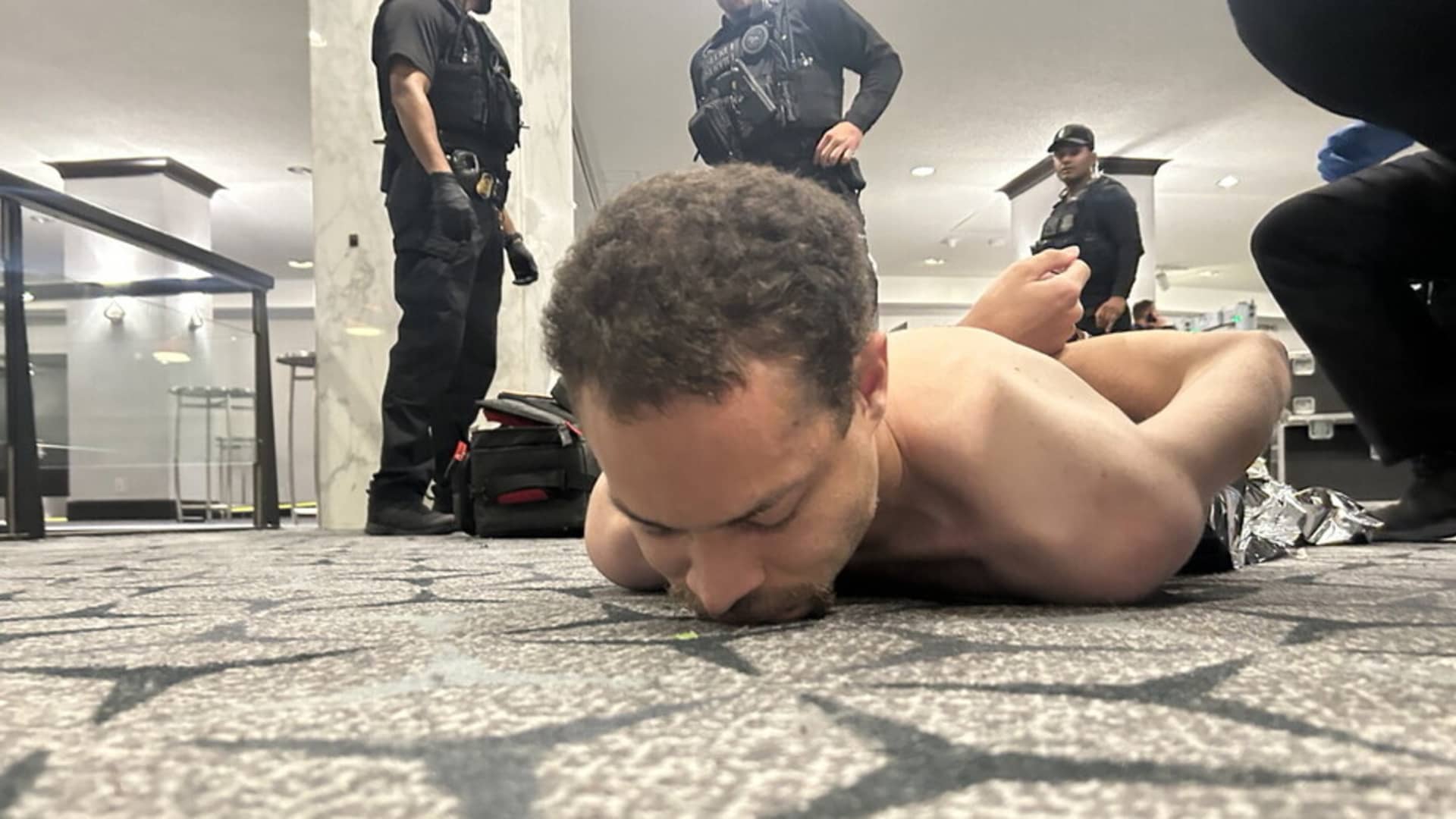
Security Breach at Washington Hilton Triggers Market Volatility Concerns

A security breach at the Washington Hilton during the White House Correspondents' Dinner has prompted a re-evaluation of event-based risk premiums and hospitality sector security protocols.
HASBRO, INC. currently screens as unscored on AlphaScala's scoring model.
Alpha Score of 45 reflects weak overall profile with strong momentum, poor value, poor quality, weak sentiment.
Alpha Score of 47 reflects weak overall profile with moderate momentum, poor value, moderate quality. Based on 3 of 4 signals — score is capped at 90 until remaining data ingests.
Alpha Score of 52 reflects moderate overall profile with poor momentum, strong value, strong quality, weak sentiment.
The security incident involving Cole Allen at the Washington Hilton during the White House Correspondents' Dinner has introduced a sudden layer of geopolitical and domestic policy uncertainty. As officials confirm the suspect checked into the venue on Friday, the event has shifted focus toward the intersection of high-profile political gatherings and the physical security requirements of major urban centers. This development forces a re-evaluation of event-based risk premiums for companies operating in the hospitality and security sectors.
Hospitality Sector and Venue Security Exposure
The Washington Hilton serves as a critical hub for political and corporate events in the capital. The breach of security at such a high-profile location raises immediate questions regarding the operational costs and liability frameworks for large-scale hospitality providers. Companies with significant exposure to event-driven revenue streams must now navigate a more stringent regulatory environment regarding guest screening and perimeter control. This incident serves as a primary stress test for existing safety protocols that govern the hospitality industry in major metropolitan areas.
Investors are currently assessing how these security requirements will impact the bottom line for firms that rely on high-traffic, high-security event spaces. The potential for increased insurance premiums and the necessity for upgraded surveillance technology could weigh on margins in the coming quarters. While the immediate impact is localized to the event venue, the broader sector read-through suggests that security-related capital expenditures may rise across the board for major hotel chains and event management firms.
Market Context and Institutional Response
Market volatility often spikes following events that threaten the stability of the political apparatus. The dissemination of information regarding the suspect via social media channels has accelerated the speed at which this news has been integrated into broader stock market analysis. The rapid flow of information ensures that institutional desks are adjusting their risk models to account for potential disruptions to upcoming political and economic summits.
AlphaScala data currently tracks various financial and technology entities that may be sensitive to these shifts in sentiment. For instance, C stock page holds an Alpha Score of 62/100, reflecting a moderate outlook within the financials sector. Similarly, ON stock page maintains an Alpha Score of 45/100, indicating a mixed sentiment profile. These scores are subject to change as the market processes the implications of the Washington Hilton incident on broader economic stability.
The next concrete marker for this situation will be the official briefing from federal law enforcement regarding the suspect's motives and the specific failures in the venue's security chain. Investors should monitor subsequent filings from the Washington Hilton's parent companies or related security contractors for any mention of increased operational costs or potential legal liabilities. The resolution of this investigation will determine whether this event remains an isolated security failure or triggers a sustained shift in how major corporations manage the risks associated with hosting high-profile political figures.
AI-drafted from named sources and checked against AlphaScala publishing rules before release. Direct quotes must match source text, low-information tables are removed, and thinner or higher-risk stories can be held for manual review.