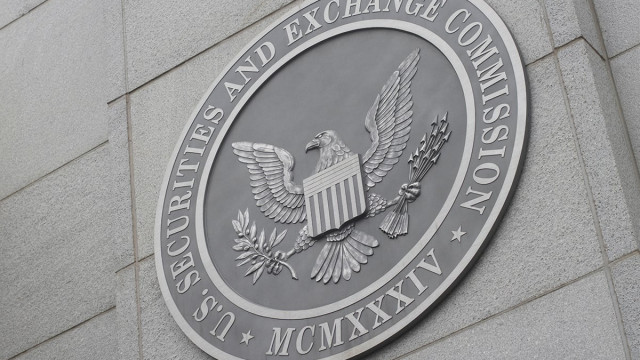
The SEC has authorised blockchain-based equity listings on alternative trading platforms without requiring company consent. The exemption allows broker-dealers to issue digital equity tokens representing traditional stocks and trade them on alternative venues. Industry experts warn that this regulatory shift may fragment market depth across multiple blockchain platforms and redirect transaction revenue away from established exchanges like NYSE and Nasdaq.
SEC Exemption Removes Issuer Consent as a Barrier
Under the new framework, an alternative trading system can tokenise any NYSE or Nasdaq-listed stock and launch a tradable token on a blockchain venue. The issuing company has no veto power. That mechanism changes the baseline: if one broker-dealer tokenises an equity, every trading platform hosting that token draws order flow away from the primary exchange.
Key insight: The SEC exemption shifts control over securities representation from issuers to trading platforms, creating a structural risk of fragmented order flow.
How the mechanism works
- A broker-dealer tokenises a stock by depositing shares with a custodian and issuing a blockchain-based representation.
- The token trades on any alternative venue that accepts it, 24 hours a day, seven days a week.
- Issuers cannot block or recall the token, unlike a delisting request on a traditional exchange.
- Each tokenised version creates a separate liquidity pool, each with its own price discovery process.
Liquidity Dispersion Across Blockchain Venues
Dispersed market depth can generate pricing inconsistencies across venues. A stock quoted on three blockchain trading systems and one traditional exchange may trade at slightly different prices. Institutional-sized orders face higher execution costs when liquidity is split among opaque order books.
Potential effects on market quality
- Wider bid-ask spreads on the primary exchange as order flow migrates to blockchain venues.
- Increased latency arbitrage opportunities across fragmented trading pools.
- Higher capital charges for market makers hedging across discontinuous liquidity pools.
- Reduced price discovery efficiency when meaningful volume moves to alternative platforms with less transparent pricing.
Blockchain platforms demonstrate demand
Hyperliquid has documented $2.6 billion in outstanding positions, signalling that blockchain-native platforms already attract substantial real-world asset exposure. Data from RWA.xyz shows $1.53 billion in tokenised equity valuation spread across more than 272,000 token holders. Monthly transfer activity reached $3.4 billion, indicating sustained transaction demand.
Revenue Migration Threatens Exchange Fee Income
Transaction fee income faces potential offshore migration as blockchain venues attract trading volume. Conventional exchanges risk losing domestic fee-based revenue, which impacts financial performance and competitive positioning. NYSE and Nasdaq are constructing their own tokenised equity systems to maintain competitive transaction flow. Both are partnering with digital transfer service providers and blockchain networks to standardise settlement.
Two scenarios for revenue exposure
- Slow institutional adoption: Minor fee erosion for traditional exchanges. Blockchain venues remain retail-focused with limited volume.
- Fast institutional entry: Significant revenue loss from traditional exchanges. Blockchain venues gain pricing power as concentrated liquidity pools develop.
What Reduces the Fragmentation Risk? What Worsens It?
Measured implementation strategies by incumbents may limit liquidity dispersion. Standardised settlement frameworks and coordinated regulatory oversight could maintain price consistency across venues.
Factors that reduce the risk:
- A unified token standard that routes orders to a central book when liquidity is thin.
- SEC or industry self-regulatory organisation (SRO) rules requiring best execution across all blockchain venues.
- Issuers creating official tokenised versions that crowd out unauthorised representations.
Factors that worsen the risk:
- Proliferation of unregulated platforms listing tokenised equities without coordination.
- Offshore migration of trading volume to jurisdictions with lighter oversight.
- Institutional adoption without uniform pricing mechanisms, creating arbitrage gaps.
- Latency between blockchain settlement and traditional clearing cycles, increasing counterparty risk.
Practical rule for traders: Monitor RWA.xyz monthly transfer data and Hyperliquid open interest as proxies for blockchain equity adoption. A sustained increase in transfers above $4 billion indicates institutional entry is accelerating fragmentation.
The SEC Framework Accelerates Change
The SEC’s innovation exemption hastens tokenised equity acceptance, disrupting consolidated revenue structures that have underpinned exchange economics for decades. Distributed trading diminishes centralised regulatory oversight and reduces the incentive for traditional exchange-driven market quality standards. This evolution presents strategic challenges for both oversight agencies and financial market operators.
Tokenised stocks deliver accelerated settlement processes and lower transaction costs. Partial ownership capabilities and global accessibility broaden investor participation. These features attract international investors and stimulate wider blockchain-based equity adoption. The balance between innovation efficiency and market stability will determine how deeply this structural shift cuts into legacy exchange economics.
The regulatory door is now open. Liquidity fragmentation and revenue migration are no longer hypothetical risks – they are the next logical outcome unless incumbents and regulators move in step.