Stocks● Neutral
Sea Legend Starts First Regular Arctic Route; India, China Eye NSR
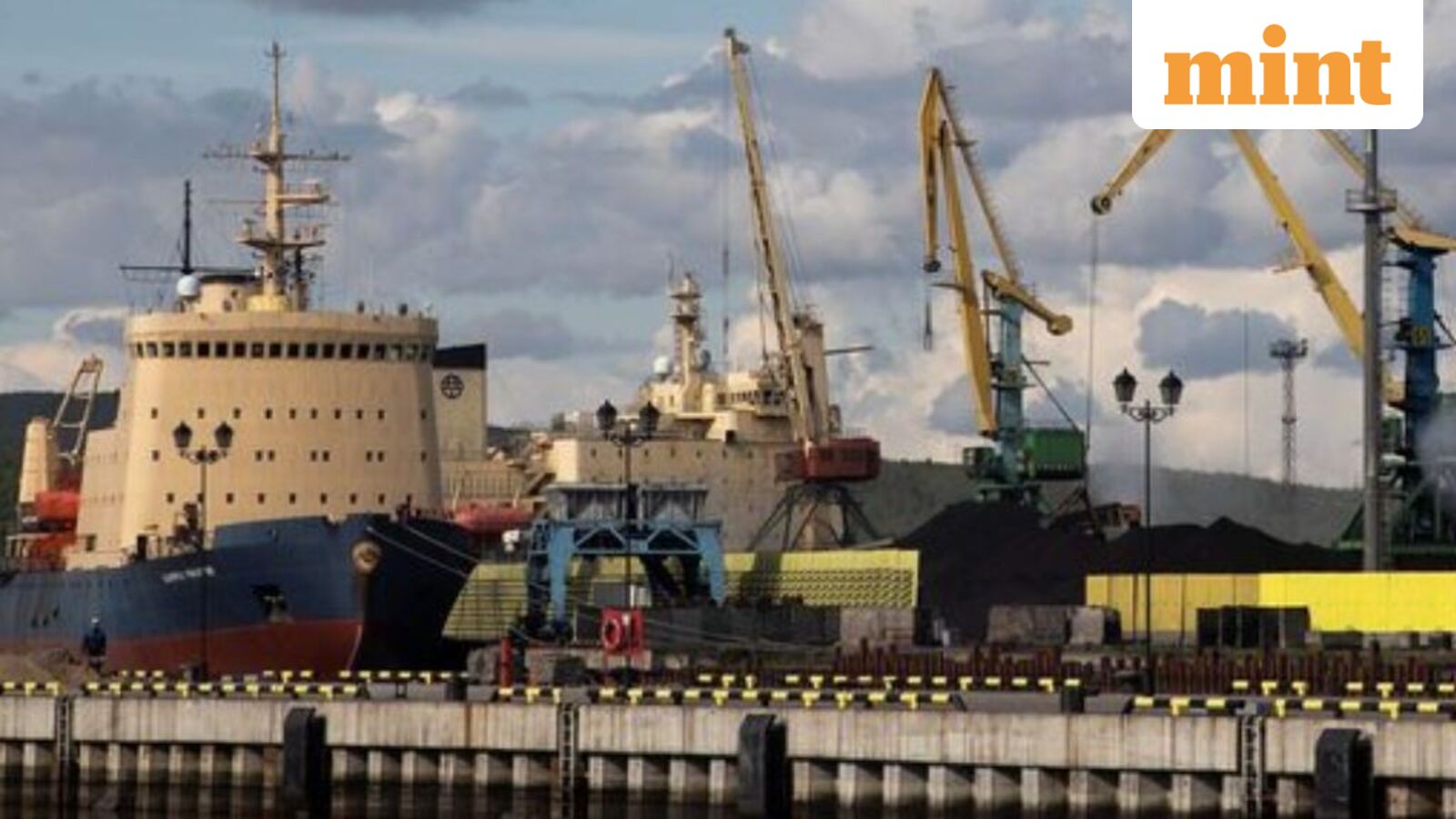
Sea Legend's first regular container service on the Northern Sea Route cuts China-to-Europe transit to 20 days. India and Russia are discussing cooperation, but environmental pledges from major carriers limit the route's potential as a Hormuz alternative.
Continue with
A Chinese shipping company begins the first regular container service along the Northern Sea Route on Saturday, a seasonal Arctic corridor that Moscow is pushing as an alternative to the Suez Canal and, potentially, the Strait of Hormuz.
Sea Legend's vessel will run between Ningbo in eastern China and Felixstowe in Britain, with a voyage expected to take 20 days – roughly half the time required via Suez. The service will operate until Oct. 3, a window that Niels Rasmussen, chief shipping analyst at the shipping lobby BIMCO, said is "broadly aligned with the period when ships can expect to transit without icebreaker assistance."
President Vladimir Putin has long championed the 3,500-mile route along Russia's Arctic coast. In recent months, he argued that disruptions around the Red Sea and the Strait of Hormuz make the NSR the safest, most reliable option. China's Xi Jinping has promoted a "polar Silk Road" as an extension of the Belt and Road initiative.
India is also deepening engagement. Vladislav Maslennikov, Director of the Department of European Problems at the Russian Foreign Ministry, said this week that the "most productive dialogue" on Arctic cooperation is taking shape with China and India.