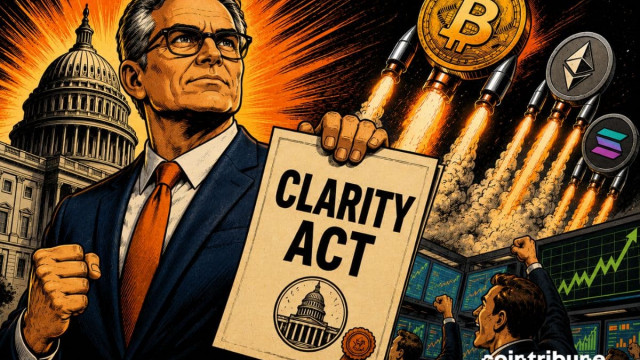
Charles Schwab threw its weight behind the Clarity Act, the bill that would split crypto oversight between the SEC and the CFTC, calling it a needed catalyst for digital asset markets. The asset manager's support comes as the legislation faces a divided Senate and a tight calendar before the August recess.
Senate Majority Leader John Thune told reporters the bill probably will not get a floor vote before the summer break. White House crypto advisor Patrick Witt is pushing for a vote in the first week of August, setting up a clash between the two Republicans over timing.
Schwab launched its own crypto brokerage in 2026, allowing clients to buy and sell bitcoin and ether. The firm said a clear federal framework would replace the current patchwork of state rules, cutting compliance costs and making it easier for traditional institutions to enter the space.
Three major advocacy groups – the Crypto Council for Innovation, the Blockchain Association, and the Digital Chamber – sent a letter to Senate leaders on Monday urging passage. They argued that 67 million Americans already hold digital assets and that the lack of a unified framework is holding back innovation.
Goldman Sachs CEO David Solomon also backed the bill this month, calling it an overdue step toward clarity. The legislation would set rules for stablecoins, custody, and market structure, areas where the SEC and CFTC have been fighting for jurisdiction.
The Senate returns from its July 4 recess on July 8. Thune has not committed to a vote before the August break, and the bill's supporters are running out of time to build the 60 votes needed to overcome a filibuster.