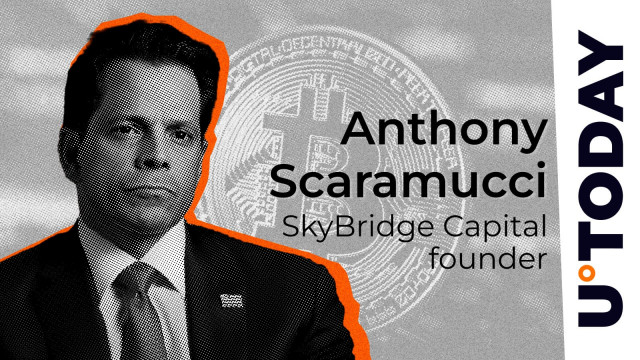
SkyBridge Capital founder sees blockchain's tipping point when everyday services use crypto rails without consumers knowing. Gas fees and wallet addresses disappear behind familiar checkout buttons.
Anthony Scaramucci thinks crypto wins when nobody notices it. The SkyBridge Capital founder argued this week that blockchain's biggest success will come when everyday consumers use the technology without realizing they are doing so.
Scaramucci was responding to a claim by Norm Tuckwell, who said "normal people will never use crypto." Scaramucci shot back that ordinary users "will soon use crypto/blockchain without even realizing it."
The argument is a familiar one inside the industry. Developers have spent the past few years building infrastructure that hides gas fees, wallet addresses, and blockchain names from end users. Payment apps, loyalty programmes, and ticket systems can now settle on a blockchain while the consumer sees the same checkout button they have always clicked. Tokenised assets and cross-border transfers run on rails that feel like standard banking apps.
The idea mirrors the early internet. Hardly anyone thinks about TCP/IP or HTTPS when they send a message. Most users have no idea what protocol powers a streaming video. Crypto advocates argue that the same invisibility will mark mainstream adoption of their technology.
Scaramucci has been a consistent bull on Bitcoin and digital assets for years. Critics say crypto still lacks a killer use case beyond speculation, and the complexity of wallets and seed phrases keeps average consumers away. Supporters argue that complexity is a phase, not a permanent feature. They point to stablecoin payments and tokenised real-world assets as examples of blockchain products that work without the user touching a private key.
The invisible-crypto thesis shows up in company roadmaps across the sector. Several large firms have restructured their products to hide blockchain mechanics. The goal is to make the user experience identical to a traditional fintech app while the settlement layer runs on a distributed ledger.
Whether the technology can match the speed and reliability of existing payment networks at scale remains an open question.
Drafted by a large language model from the source reporting linked above, then screened by automated publishing checks. It is not read by a journalist before publication. Some articles cite our Alpha Score. Verify prices and figures against the original source. Educational coverage, not personalized advice.