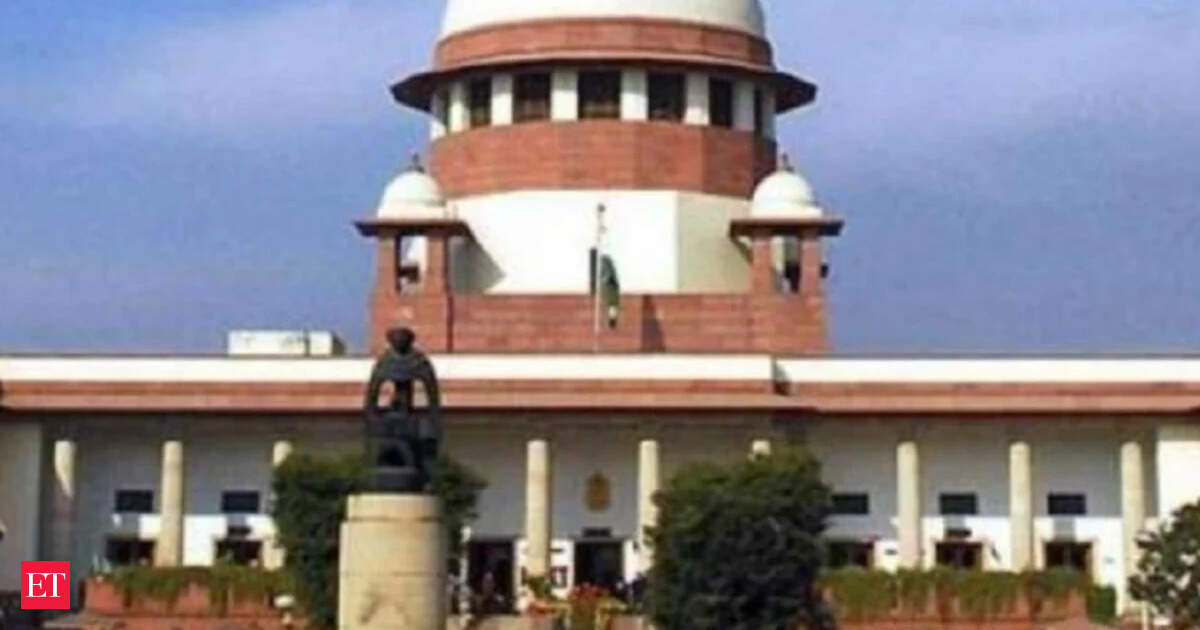
The ruling creates immediate disqualification for accused heirs even during trial, shifting risk in probate disputes and potentially reducing litigation costs for trust firms.
Alpha Score of 58 reflects moderate overall profile with moderate momentum, moderate value, moderate quality, moderate sentiment.
India's Supreme Court has ruled that anyone accused of murder or abetting murder is barred from inheriting the victim's property, whether through a will or intestate succession. That bar holds even while a criminal trial is still underway. The immediate consequence is that executors and trustees no longer have to wait for a conviction before distributing an estate. That strips away a common delay tactic in probate disputes and shifts the risk-reward profile for insurers, wealth managers, and trust companies operating in the country.
The straightforward interpretation is that an accused individual cannot take a single rupee from the deceased's assets. The court grounded its decision in principles of justice and equity, and clarified that the disqualification is not conditional on a final conviction. The simple read is that this prevents a potential murderer from benefiting financially while the case drags on.
But the practical market read is more consequential. Until now, a common negotiation lever in inheritance fights was the accused party's potential claim. Plaintiffs could drag out probate settlements by arguing that they might still be entitled if acquitted. That created clouded title, higher legal fees, and delayed distributions. The ruling removes that lever. Now, the moment an accusation is formalised, the alleged killer's claim evaporates, regardless of trial status. That does not eliminate litigation entirely, but it shifts the bargaining power sharply toward the estate's rightful beneficiaries.
For companies that manage estate transfers, run trust accounts, or underwrite legal-risk insurance, this decision is deflationary for costs. It compresses the timeline between death and asset distribution by removing the waiting period that often accompanied criminal proceedings. Wealth managers who were sitting on frozen estates for years can now finalise them faster, reducing carrying costs and administrative drag.
The ruling also changes how probate lawyers structure their cases. Previously, firms could invest heavily in delaying tactics tied to the accused's potential inheritance rights. With that tool disabled, the litigation pathway shrinks. That means less billable work for some niche law practices, but a net positive for broader estate planning services. Demand for clean, upfront estate structuring could rise as more families seek to avoid the accusation threshold altogether.
What many commentators get wrong is treating this as a criminal law decision only. It is not. It is a civil inheritance rule that closes a loophole that artificially lengthened disputes. The key mechanism is the immediate disentitlement, not the eventual conviction. That immediacy reprices the cost of contesting a will, and compresses the typical probate cycle.
Confirmation would come if lower courts begin applying the standard rapidly to ongoing cases and if national trust companies report lower litigation provisions over the next two quarters. The risk to the setup is narrow: a subsequent bench could revisit the decision in a different context, or the legislature could carve out exceptions. For now, the certainty premium is priced directly into how quickly estates can be settled.
Operators in the estate planning chain should watch for any change in insurance underwriting guidelines. If liability insurers start excluding coverage for inheritance disputes while a criminal accusation is pending, that would harden the new reality and signal that the market has fully absorbed the shift.
Drafted by the AlphaScala research model and grounded in primary market data – live prices, fundamentals, SEC filings, hedge-fund holdings, and insider activity. Each story is checked against AlphaScala publishing rules before release. Educational coverage, not personalized advice.