Stocks● Neutral
SBI chairman says total business may double to ₹200 lakh crore by 2030
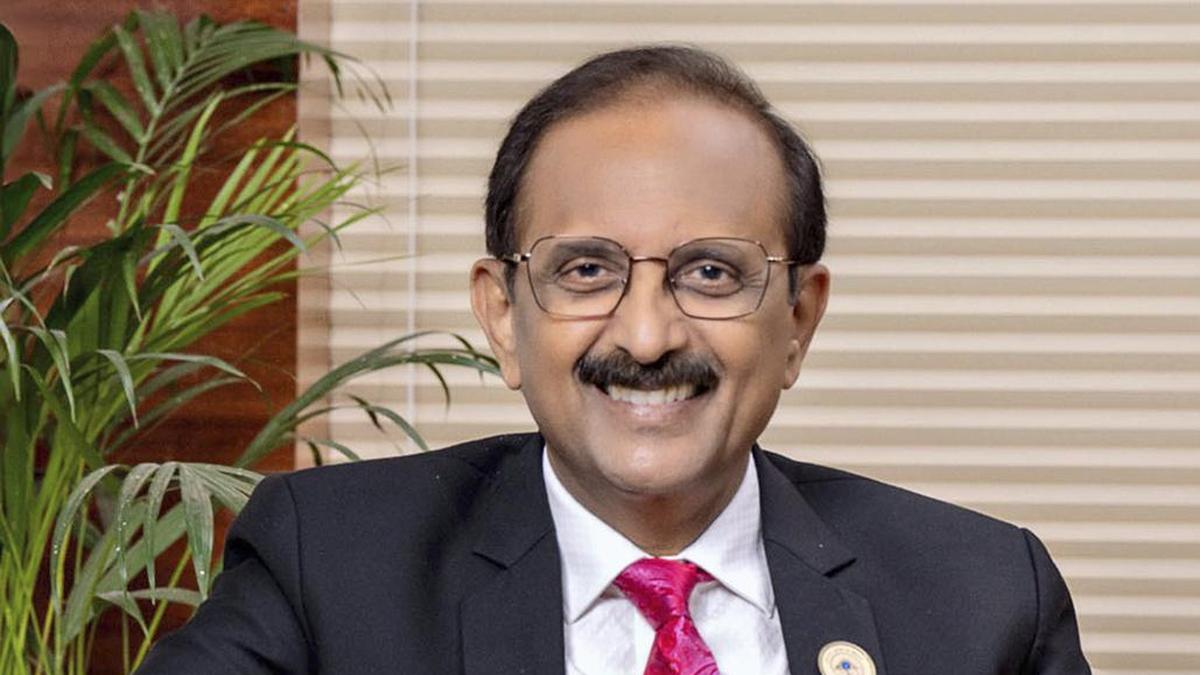
SBI chairman C S Setty said the bank's total business could double to around ₹200 lakh crore by its platinum jubilee year 2030, driven by economic growth.
Continue with
State Bank of India's total business could double to roughly ₹200 lakh crore by 2030, the bank's platinum jubilee year, if current growth holds, Chairman C S Setty said in an interview with PTI.
The country's largest lender crossed ₹100 lakh crore in total business – an aggregate of loans and advances – in the second quarter of the last fiscal year. That figure stood at ₹110.01 lakh crore at the end of June 2026.
Setty said no formal milestone had been set for the 75th foundation year. The growth trajectory could still push total business to ₹170-180 lakh crore, and potentially as high as ₹200 lakh crore. "We don't have any milestone, but if you take the current growth rate, I think we should be around ₹170-180 lakh crore, or maybe reaching ₹200 lakh crore," he said. "That would be another important milestone."
The chairman tied SBI's expansion directly to the Indian economy. If the economy grows at 7-8%, the bank's balance sheet has the potential to expand 11-12% annually, he said. At that pace, the balance sheet doubles every six years.
"For a bank of our size, scale is imminent, and it is fully intertwined with what is happening in the Indian economy," Setty said.
SBI's Vision 2030 framework targets four stakeholder groups: customers, employees, shareholders, and the government and regulators including the Reserve Bank of India. For customers, the focus is service and experience. For employees, it is simpler processes and higher productivity. For shareholders, the goal is value creation through efficiency. For the government, SBI aims to continue mobilising roughly a quarter of the country's savings and supporting agriculture and MSME lending. The bank also focuses on the rural economy.