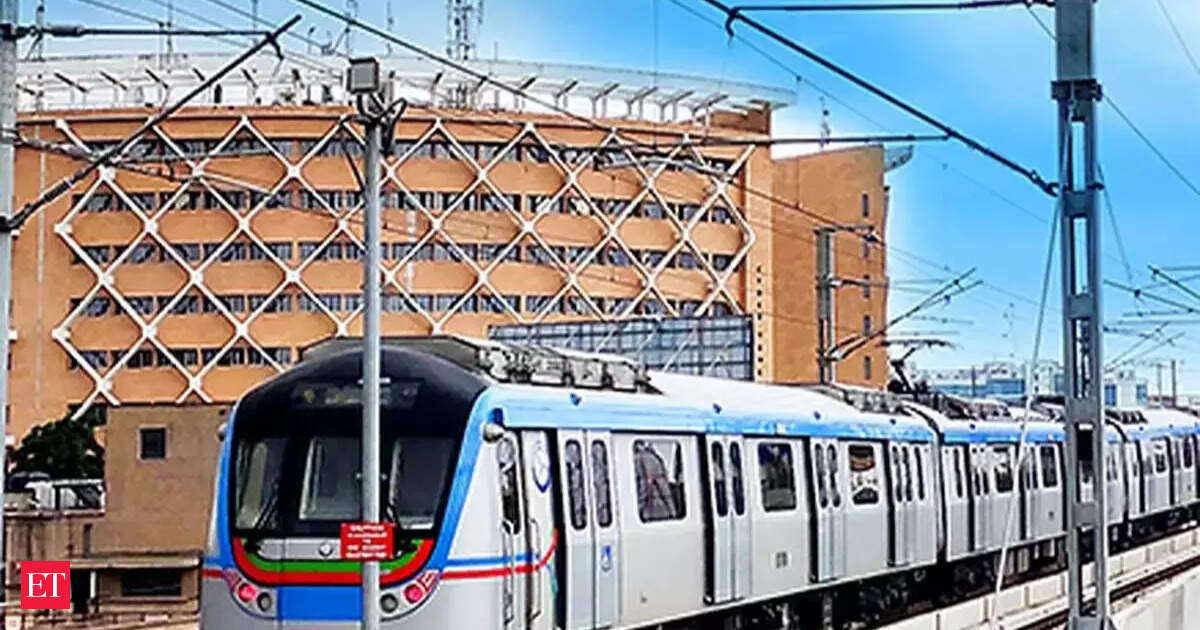
SBI Capital Markets will evaluate Hyderabad Metro's Phase-I takeover and Phase-II financing. The joint ownership model could reshape India's metro expansion playbook.
The Centre and the Telangana government have hired SBI Capital Markets to evaluate a takeover of Hyderabad Metro's Phase-I assets and to assess financing for the planned Phase-II expansion. The mandate follows high-level discussions between state and central officials.
SBI Caps will conduct due diligence on the existing 72-km Phase-I network, which opened between 2017 and 2020 and carries roughly 500,000 passengers a day. The firm will also map out funding options for the proposed Phase-II corridor, estimated to cost around ₹25,000 crore and add another 58 km of track.
What changed. The previous structure had the state government leading the project, with the Centre providing viability gap funding. The new mandate suggests a joint ownership model, with both governments potentially sharing equity and debt guarantees. A formal takeover would likely involve transferring the special purpose vehicle from the state to a joint venture, a process SBI Caps will help structure.
Why the evaluation matters now. Hyderabad Metro has faced recurring operational losses since its Phase-I launch. The Telangana government has subsidised fares and absorbed losses. The pandemic pushed ridership below break-even levels. Phase-II financing stalled because the state's fiscal space tightened. A central takeover would inject new capital and improve the project's credit profile, potentially lowering borrowing costs for the expansion.
For investors tracking infrastructure-linked stocks, the move signals a broader shift. The Centre has been promoting metro-rail expansions as part of its urban mobility push. State-level finances have constrained progress. A joint central-state takeover model could become a template for other cities. Developers with exposure to Hyderabad real estate, such as Prestige Estates and Brigade Enterprises, may benefit from increased connectivity along Phase-II routes.
The decision point. SBI Caps is expected to submit its report within three months. The key variables are: how much of Phase-I debt the Centre absorbs, the equity split between the two governments, and the tariff structure for Phase-II. If the Centre takes on a majority of the existing debt, the project's interest burden drops sharply, making Phase-II viable on lower ridership assumptions. If the state retains fare-setting control, the financial viability hinges on political willingness to raise fares.
A quick look at the numbers. Phase-I construction debt stands at about ₹14,000 crore, with annual interest costs of roughly ₹1,100 crore. Phase-II would add another ₹12,000–13,000 crore in debt. The joint venture's weighted average cost of capital could fall from the current 9.5% to below 8% if the Centre provides sovereign-guaranteed loans.
What could go wrong. The valuation exercise may hit disagreement on Phase-I asset pricing. The state government has argued that the network's replacement cost is above its book value. The Centre may push for a lower transfer price to minimise its initial outlay. Any dispute could delay the mandate beyond the three-month timeline.
The appointment of SBI Caps is a concrete step. The project has a clear path forward. The next three months will determine whether the deal moves from evaluation to execution.
Prepared with AlphaScala research tooling and grounded in primary market data: live prices, fundamentals, SEC filings, hedge-fund holdings, and insider activity. Each story is checked against AlphaScala publishing rules before release. Educational coverage, not personalized advice.