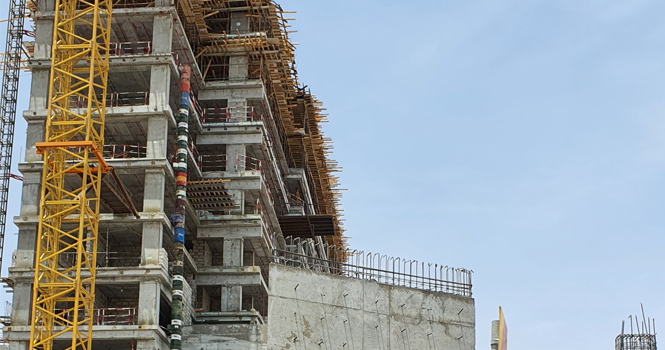
Equipment rental costs surged 5.1% as the Construction Cost Index hit 103.9. Non-residential costs rose 3.0%, pressuring margins on fixed-price contracts.
Saudi Arabia's Construction Cost Index rose 2.6% in May from a year earlier, the fastest pace since the General Authority for Statistics (GASTAT) began collecting the data in January 2024. The index hit 103.9 points (base year 2023), up from 101.3 in May 2025, GASTAT data showed.
The biggest driver was equipment and machinery rental costs, which surged 5.1% year-on-year. Energy costs climbed 3%, and labor costs rose 2.6%. Core materials, which carry the largest weight in the index at 48.5%, increased a more modest 1.6%.
Breaking it down by sector: residential construction costs (77.5% of the index) rose 2.5%, pushed by equipment rental (+4.7%), energy (+3%), labor (+2.5%) and basic materials (+1.6%). Non-residential costs increased 3.0%, with equipment and machinery rental jumping 6.7% – the sharpest sub-component move in the report. Energy and labor each added 3%.
For contractors and developers working on fixed-price contracts, the equipment rental spike is the number to watch. A 5.1% jump in rental costs suggests tight supply for heavy machinery, a bottleneck that can erode margins on projects priced before the increase. Labor costs rising at 2.6% add to the squeeze, though the 1.6% rise in core materials is less alarming than the headline number suggests.
The read-through for listed Saudi cement and steel producers is mixed. Higher construction activity supports volumes. Cost increases, however, may lead project owners to delay or rebid contracts if input prices keep climbing. The non-residential sector's 3.0% cost increase, driven by equipment and machinery, points to particular pressure on large infrastructure and industrial projects.
GASTAT's next release, due in September, will include the impact of summer cooling demand on energy costs. That data will show whether the May acceleration was a one-month spike or the start of a sustained trend.
Prepared with AlphaScala research tooling and grounded in primary market data: live prices, fundamentals, SEC filings, hedge-fund holdings, and insider activity. Each story is checked against AlphaScala publishing rules before release. Educational coverage, not personalized advice.