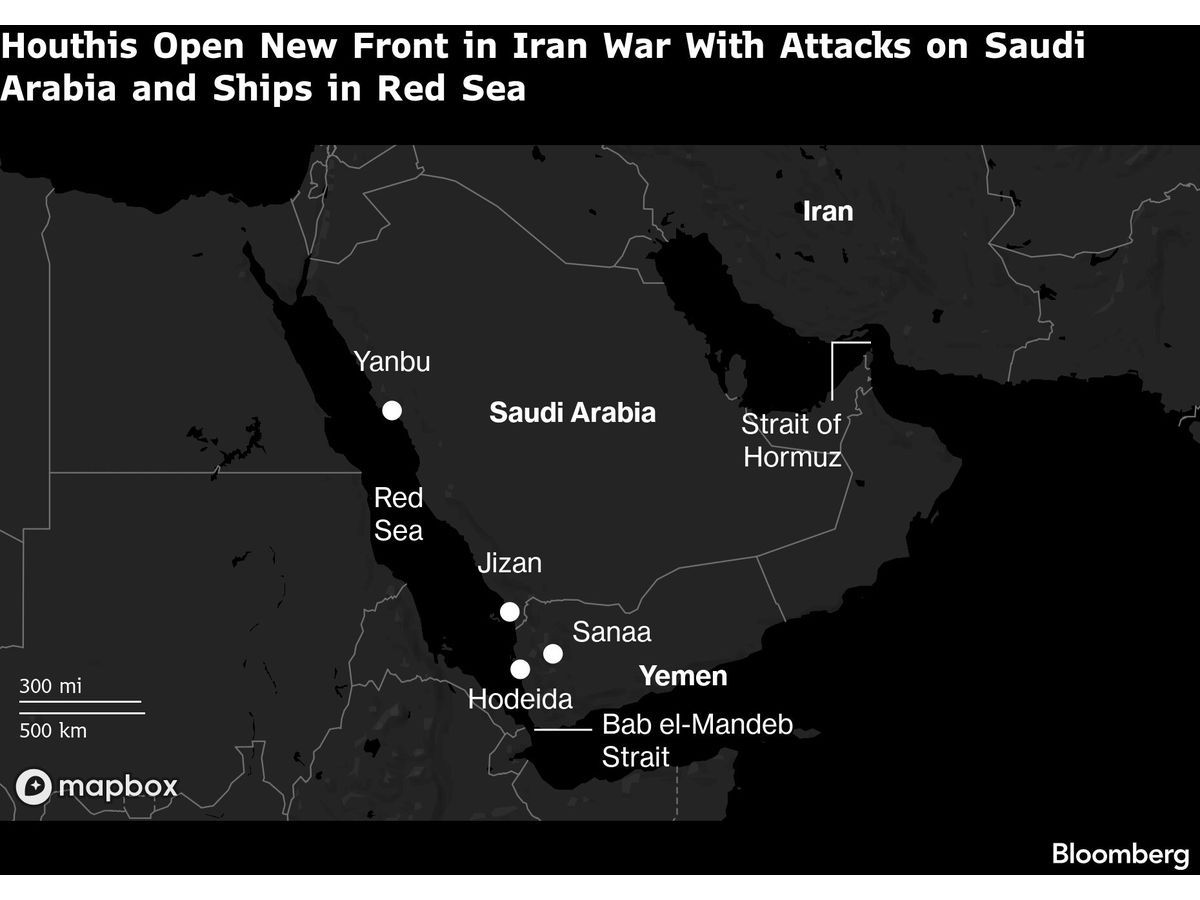
Saudi Arabia is holding Oman-mediated talks with Houthi militants to prevent renewed fighting from disrupting its oil exports, sources say.
Saudi Arabia is trying to contain a renewed conflict with Houthi militants through behind-the-scenes diplomacy, according to people familiar with the matter. The kingdom wants to prevent clashes with the Iran-backed group from hurting its oil industry and economy.
The kingdom has held talks with the Yemen-based Houthis via Omani mediators. Riyadh is still preparing military options in case diplomacy fails, said the people, who spoke on condition of anonymity to discuss sensitive information.
Riyadh conducted limited airstrikes on Houthi positions for two straight days in late July. It has not done so again as it tries to find a diplomatic resolution with the Islamist organization that controls most of Yemen's population, the people said.
The Saudi, Omani and US governments didn't immediately respond to requests for comment.
Saudi Arabia has held intermittent Oman-mediated talks with the Houthis since a 2022 ceasefire. That deal ended a years-long bombing campaign led by the Saudis and United Arab Emirates to oust the Houthis, who captured the Yemeni capital of Sanaa soon after a civil war started in 2014. They also hold the crucial port of Hodeida on the Red Sea.
The Houthis are pressing for more economic concessions from Riyadh, the people said. The group has repeatedly said Saudi Arabia should pay salaries for some Yemeni civil servants and lift all restrictions on goods and people going into Houthi-run areas as part of any lasting peace.
The renewed diplomacy lays bare Crown Prince Mohammed bin Salman's dilemma. The Houthis opened a new front in the Iran war by threatening any ships calling at the kingdom's ports. Saudi Arabia wants to respond to Houthi attacks without being sucked into renewed fighting.
US officials have privately discouraged a major Saudi military retaliation to Houthi strikes on vessels off its Red Sea coast, regional and western diplomats said. Washington fears that worsening Saudi-Houthi hostilities would further disrupt global shipping and energy markets. The conflict could possibly close the Bab el-Mandeb strait, another chokepoint vital for flows of energy. Oil prices have already soared 35% this year, mainly because of the closure of the Strait of Hormuz.
A broader military campaign risks drawing Saudi Arabia even deeper into the regional conflict with Iran. Riyadh had to defend itself against Iranian missile and drone attacks during the height of the war in March and early April. More recently, the Houthis and Iran-supported militias in Iraq have fired projectiles at its petroleum facilities, including refineries.
For the Houthis, the talks represent a way to extract financial and humanitarian gains they could not win on the battlefield. For Saudi Arabia, the calculus is simpler: keep oil flowing from its Red Sea ports while Hormuz remains effectively shut.
Whether the Houthis are willing to trade their leverage at sea for concessions on land is the open question. The group has shown little appetite to de-escalate while it holds the initiative.
A full breakdown of the talks would leave Saudi Arabia with few good options. Airstrikes alone have not dislodged the Houthis before. A ground campaign is not something Riyadh is prepared to restart.
Drafted by a large language model from the source reporting linked above, then screened by automated publishing checks. It is not read by a journalist before publication. Some articles cite our Alpha Score. Verify prices and figures against the original source. Educational coverage, not personalized advice.