Commodities● Neutral
Saudi Arabia Scores $24.7B Oil Revenue as Hormuz Stays Shut
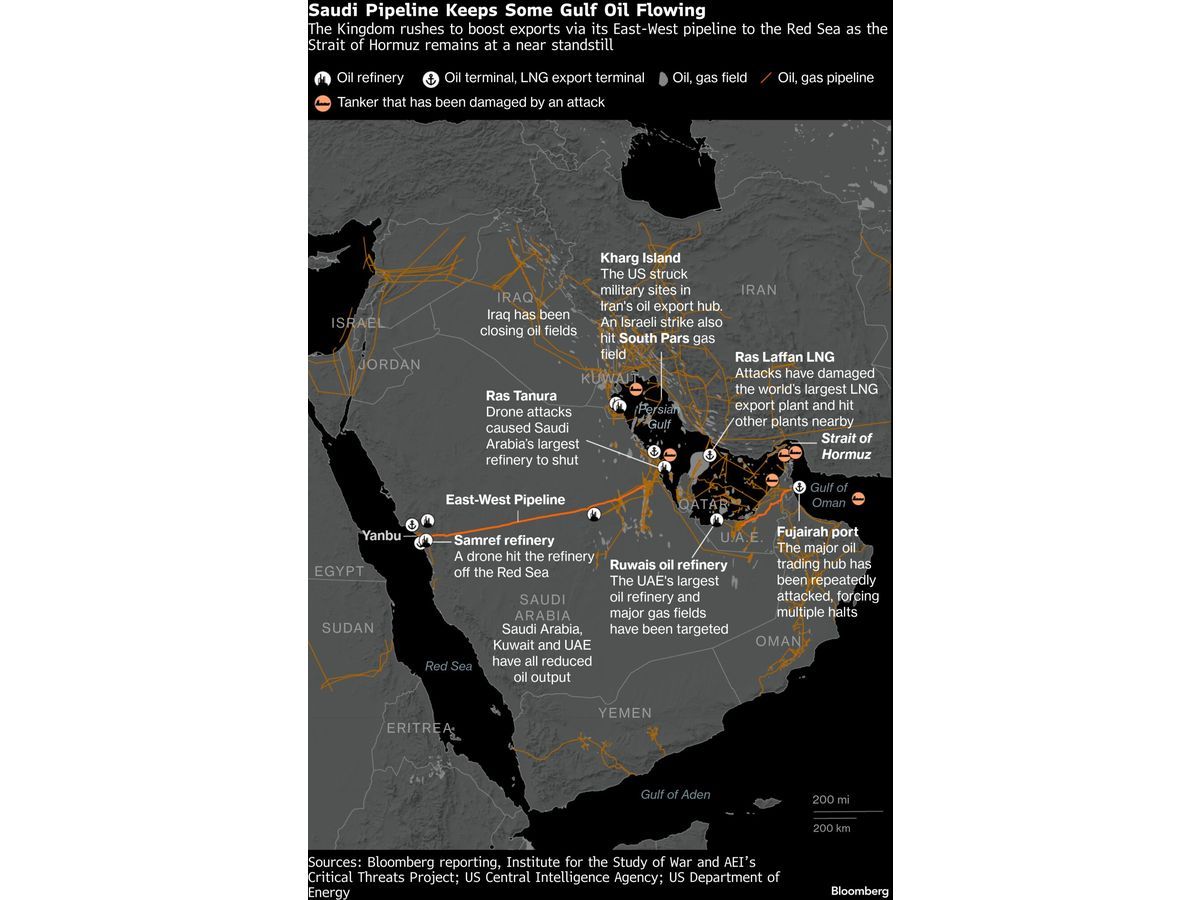
Saudi oil revenue hit $24.7B in war's first month as East-West pipeline bypasses Strait of Hormuz. Competition from UAE and Oman could cap those gains.
Continue with
The closure of the Strait of Hormuz to most commerce has rerouted energy flows through Saudi Arabia's Red Sea coast, generating a surge in oil revenue. Saudi Arabia's oil export revenue hit a more than three-year high of $24.7 billion in the first full month of the war. The kingdom is simultaneously advancing Crown Prince Mohammed bin Salman's $1.3 trillion economic transformation plan. The mechanism behind this windfall is not luck. A decade-old contingency pipeline and a highway network turned Saudi Arabia into the Gulf's transit backstop.
The war has slowed economic growth across the Gulf and driven a jump in defense spending. Yet Saudi Arabia's ability to monetise its pre-war infrastructure has produced a clear near-term advantage. The question is whether that advantage survives a potential reopening of Hormuz.
"Saudi Arabia has shown it is the indispensable Red Sea backstop," said Hesham Alghannam, a Riyadh-based scholar at the Malcolm H Kerr Carnegie Middle East Center.
Saudi Arabia's $24.7B War Dividend
Oil export revenue jumped in the first month of the conflict because Saudi Arabia could ship crude without using the Hormuz chokepoint. Most Saudi crude exports had passed through the strait before the war. The East-West pipeline, a contingency plan built decades ago, now carries a significant portion of production to the Red Sea. That route avoids the war risk and insurance premiums that have made Hormuz passages prohibitively expensive.
Practical rule: Saudi oil revenue gains are real but contingent on Hormuz remaining closed. The premium shrinks if rival routes erode the kingdom's pricing power.
The Pipeline That Changed the Math
The East-West pipeline has a capacity of about 5 million barrels per day. During peacetime, much of that capacity sat idle as tankers loaded directly from Ras Tanura and shipped through Hormuz. The war changed utilisation rates. Satellite data and shipping filings show Red Sea crude loadings rising sharply. The pipeline alone would not have been enough. Saudi Arabia's highway system allowed thousands of trucks to ferry fertilizers and consumer goods from the Gulf coast to Red Sea ports. That created a multimodal corridor that competitors cannot replicate overnight.
Red Sea Corridor vs. Hormuz Closure
The Red Sea has become the Gulf's primary exit point for energy and cargo. Saudi ports on the Red Sea handle crude, refined products, and container traffic that previously moved through the UAE. The shift has boosted port revenues and created demand for logistics services inside the kingdom.
The corridor faces two risks. First, the Strait of Hormuz may reopen. Senior US officials said Sunday that the US and Iran are closing in on a deal that would reopen the strait. President Donald Trump insisted he would not "rush" into an agreement. A reopening would reduce the premium Saudi Arabia collects on its Hormuz-free exports.
Second, the Red Sea itself carries security risks from Houthi attacks and naval deployments. For now, Saudi shipping continues without major disruption.