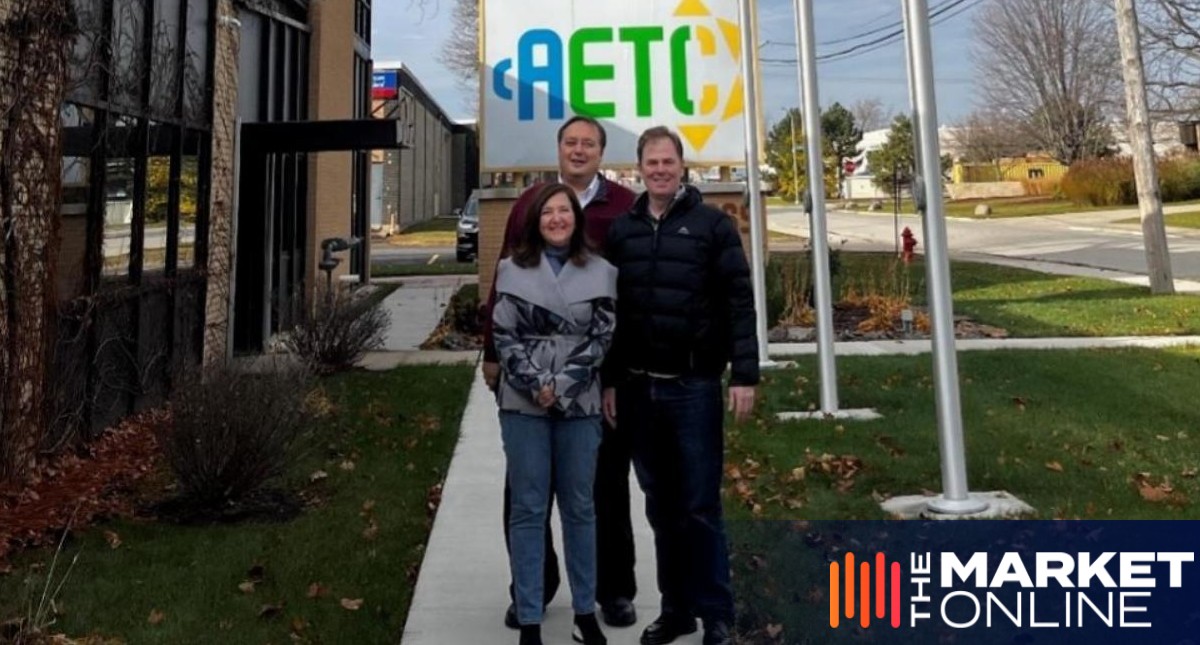
Sarytogan Graphite (ASX: SGA) has shipped bulk concentrate to American Energy Technologies Company (AETC) in Chicago, where purification trials are now underway. The 2026 plant-scale testwork will include characterisation, granulation, calcining, thermal purification, spheronisation and battery testing. AETC will also supervise the manufacture and performance testing of 5Ah pouch cell lithium-ion batteries at a European battery innovation centre.
The products from these trials will be suitable for providing samples to potential customers. Many of those customers have already tested smaller samples of Sarytogan graphite with positive results and are awaiting larger samples. The purification program is the next concrete catalyst for the company's path to offtake agreements and project financing.
Why the AETC Purification Trials Matter for Sarytogan's Valuation
The Mechanism: From Concentrate to Battery-Grade Graphite
Natural graphite concentrate typically contains 90-97% total graphitic carbon (TGC). Battery anodes require purity above 99.95% TGC. The gap is closed through thermal or chemical purification. Thermal purification – the method AETC will use – involves heating graphite to over 2,500°C in an inert atmosphere to vaporise impurities. It is energy-intensive but produces fewer chemical waste streams than acid-based methods.
Sarytogan's deposit in the Karaganda region of Central Kazakhstan has a mineral resource estimate of 225 million tonnes at 29.2% TGC. That grade is moderate compared to some flake graphite deposits. The deposit's size and its designation as a strategic project under the European Union's Critical Raw Materials Act (CRMA) give it a structural advantage in the EU battery supply chain.
What the Trials Test
The 2026 program at AETC covers the full downstream chain:
- Characterisation of bulk concentrate
- Granulation and calcining
- Thermal purification
- Spheronisation (shaping graphite into spherical particles for anodes)
- Battery test trials including 5Ah pouch cell assembly and performance testing
Each step carries execution risk. Spheronisation yield, purification energy cost, and electrochemical performance in pouch cells are the three metrics that will determine whether the product meets tier-1 battery manufacturer specifications.
Practical rule: Purification success is necessary but not sufficient. The sector will watch for cost per tonne of purified graphite and customer commitments. Positive pouch cell results alone do not guarantee offtake.
EU Critical Raw Materials Act: Strategic Designation in Play
How the CRMA Changes the Funding and Offtake Landscape
The EU's Critical Raw Materials Act, enacted in 2024, classifies natural graphite as a strategic raw material. Projects designated as strategic under the CRMA gain access to streamlined permitting, potential co-financing from the European Raw Materials Fund, and priority in EU offtake negotiations. Sarytogan's deposit received that designation, validating the deposit as world-class and highlighting its role in supplying sustainable critical raw materials to Europe.
The readthrough for the sector is that EU policy is actively creating demand pull for non-Chinese graphite sources. China currently controls over 70% of natural graphite production and over 90% of spherical graphite processing. The CRMA targets domestic processing capacity for at least 40% of the EU's annual consumption by 2030. That gap creates a window for developers like Sarytogan that can demonstrate a credible purification pathway.
Kazakhstan's Position in the Supply Chain
Sarytogan's deposit is in Kazakhstan, a country with existing mining infrastructure and proximity to European markets via rail and the Caspian Sea. Kazakhstan is not a member of the EU but has a partnership agreement that includes raw materials cooperation. The geopolitical risk is lower than for projects in some other Central Asian jurisdictions. Logistics and cross-border regulatory alignment remain execution variables.
Upstream DFS Due Q3 2026: What It Means for Project Value
The Split Study Structure
Sarytogan split its definitive feasibility study into upstream and downstream components in line with the company's funding envelope. The upstream DFS covers mining, crushing, grinding, and flotation to produce a graphite concentrate. It is scheduled for completion in Q3 2026. The downstream DFS, which will be informed by the purification trials now commencing, will cover purification, spheronisation, and battery-grade product manufacturing.
This structure allows the company to de-risk the mining and concentration stage before committing capital to downstream processing. The upstream DFS will form the firm foundation for the overall project value. The downstream DFS will add the premium for battery-grade product.
What Confirms the Thesis
- Completion of the upstream DFS on schedule in Q3 2026
- Positive purification trial results with cost metrics competitive with Chinese producers
- Customer offtake agreements for purified spherical graphite
- EU funding or offtake support under the CRMA framework
What Weakens the Thesis
- Purification trials reveal high energy costs or low yield
- Pouch cell performance fails to meet manufacturer specifications
- Upstream DFS delays or cost overruns
- Lack of customer commitments despite sample availability
Sector Readthrough: Graphite Developers and the EU Supply Chain
How Sarytogan's Progress Affects the Broader Graphite Sector
Sarytogan is one of several graphite developers targeting the EU battery market. The sector includes companies with deposits in Africa, Australia, and the Americas. The common challenge is demonstrating that non-Chinese graphite can be purified economically and perform in lithium-ion batteries.
Successful purification trials at Sarytogan would validate the thermal purification pathway for its deposit type. That would reduce technical risk for the broader sector by showing that a scalable, commercially viable process exists outside China. Failure would reinforce the perception that Chinese dominance in graphite processing is hard to break.
The EU CRMA designation gives Sarytogan a regulatory moat that most peers lack. Other developers with EU strategic project status include a handful of lithium and rare earth projects. Graphite projects with that designation are scarce. That scarcity could translate into a valuation premium if the purification trials succeed.
What Traders Should Track
- AETC press releases on purification results and pouch cell performance
- Customer announcements from battery manufacturers testing Sarytogan samples
- EU CRMA funding decisions for strategic projects
- Upstream DFS publication in Q3 2026
- Peer comparison: how Sarytogan's deposit grade, size, and purification cost stack against other developers
Key insight: The graphite sector is binary on purification. A single successful plant-scale trial can trigger re-rating. A failure can strand years of development. Sarytogan's trials are the next binary event for the EU-focused graphite developers.
The Next Decision Point for Sarytogan Graphite
The purification trials at AETC will produce samples for potential customers over the coming months. The upstream DFS is due in Q3 2026. Between now and then, the market will have partial data points: characterisation results, purification yield, and pouch cell test outcomes. Each data point will either confirm or weaken the thesis that Sarytogan can supply battery-grade graphite to the EU at competitive cost.
For traders, the risk-reward is asymmetric. A successful outcome could unlock EU funding and offtake, driving a re-rating toward development-stage valuations. A failure would leave the project without a clear path to revenue. The next catalyst is the release of purification trial results, which have no fixed date but are the most actionable event on the horizon.