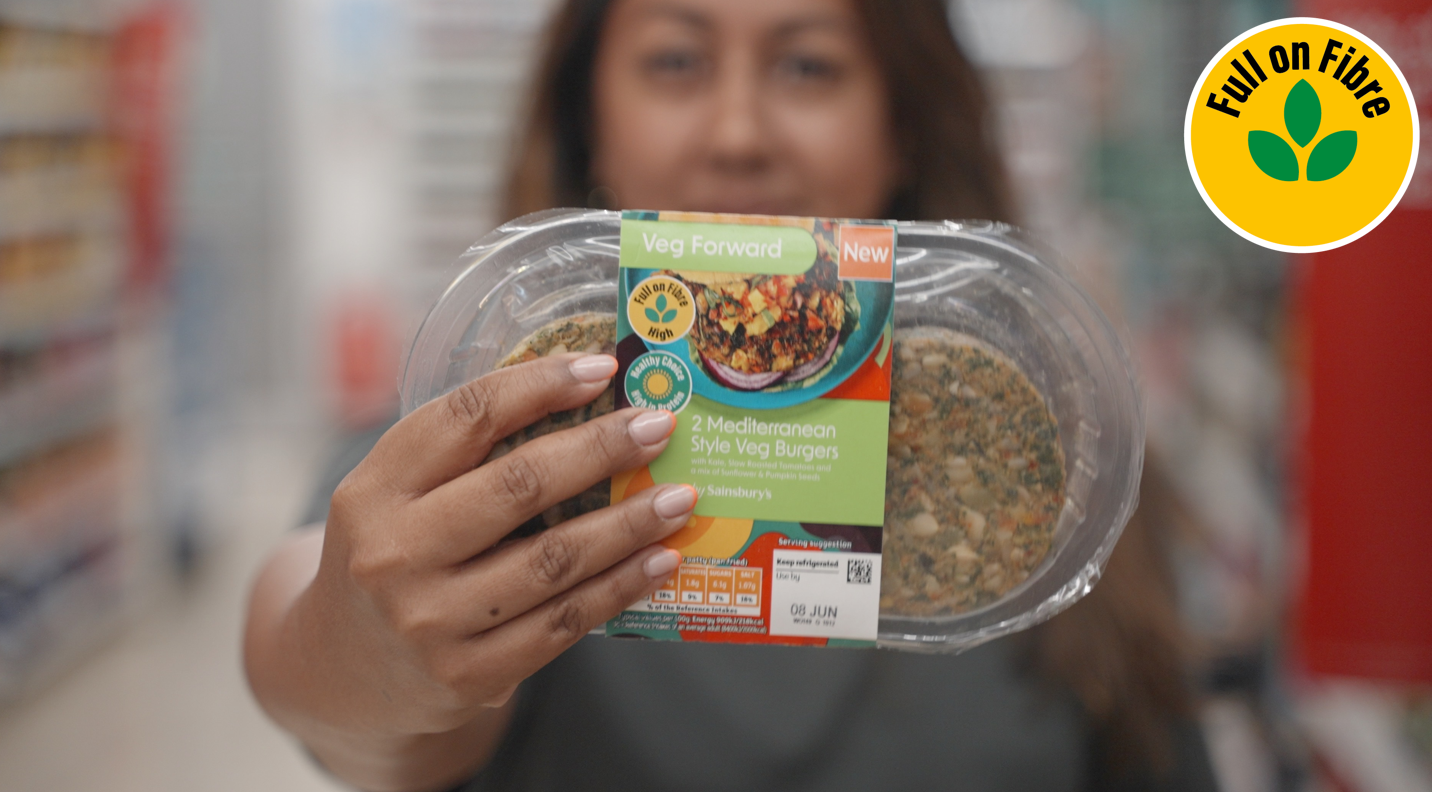
Sainsbury's (SBRY) announced a strengthened health ambition aimed at making healthier eating simpler and more affordable for families. The headline targets increased consumption of fruit, vegetables, and fibre. For equity watchers, the mission is not the question. The mechanism is. Retailers that reposition toward fresh and whole foods typically face a measurable margin drag compared with packaged grocery staples. The UK's largest supermarket chains are already competing on price and private-label economics. The announcement creates a catalyst to reassess Sainsbury's cost structure, traffic potential, and positioning against Tesco and Asda in a strained consumer environment.
The Health Ambition: A Directional Signal, Not a P&L Event
The press release describes a major step-up in an existing commitment. It lacks specific financial targets, reformulation deadlines, or SKU-level pledges. Without a quantified investment figure or margin guidance, the market cannot price a direct earnings impact. What changed is the public commitment: Sainsbury's is now explicitly stating that health parameters will influence product development and shelf assortment. That implies some level of reformulation, sourcing shifts, and possible supply chain changes. For a grocer with roughly 1,400 stores across the UK, even a 1–2% change in product mix toward lower-margin fresh categories can affect segment profit. Investors should treat the announcement as a directional signal, not a near-term earnings event.
Why Fresh Produce Margins Are the Real Constraint
The health push lands in a sector where operating margins already run thin–typically 2–4% for UK supermarkets. Fresh produce carries lower shelf life, higher waste risk, and often lower gross margins than ambient packaged goods. Sainsbury's is already investing in price competitiveness against Aldi and Lidl, which have forced the big four to absorb cost inflation. Adding health-oriented initiatives without a clear cost-recovery plan could compress margins further. The saving grace is private-label penetration: Sainsbury's has built a strong own-brand portfolio. Health-aligned own-brand products can capture margin if they reduce reliance on third-party branded suppliers. The mechanics point to a tradeoff: short-term margin pressure against long-term basket loyalty.
HFSS Regulations and the Competitive Preemption
The UK grocery market is shaped by HFSS regulations (high fat, salt, sugar) that restrict promotional placement of less healthy items. Tesco and Asda have also introduced health-led ranges. Sainsbury's move can be read as preemptive alignment with anticipated tightening of HFSS rules, rather than a competitive surprise. The real differentiator will be execution: how quickly the company can reformulate and restock without raising prices or sacrificing taste. If Sainsbury's succeeds, it could gain market share among health-conscious families, a demographic that is price-sensitive and loyalty-light. If execution falters, the investment becomes a drag with no revenue offset.
Next Milestones: Margin Guidance and Private-Label Sales
Sainsbury's next half-year results are the earliest occasion for management to disclose the financial scope of this health ambition. Investors should focus on three specific disclosures:
- Any change to the retail margin guidance (currently around 3.5% operating margin).
- The private-label sales growth rate, especially in fresh categories.
- Like-for-like sales trends in stores and online, particularly in the grocery segment.
A fall in margin guidance would confirm that the initiative carries near-term cost. A stable margin with accelerating volume would suggest the strategy is self-funding. Until those data points land, the announcement is a narrative shift, not a trades-ready setup.
The UK grocery sector remains a slow-growth, margin-constrained space. Sainsbury's health push is a bet that trust and wellness can drive repeat visits more effectively than price cuts alone. For traders watching SBRY, the next catalyst is not a product launch–it is the financial disclosure that shows whether the bet is funded by margins or generates its own returns.