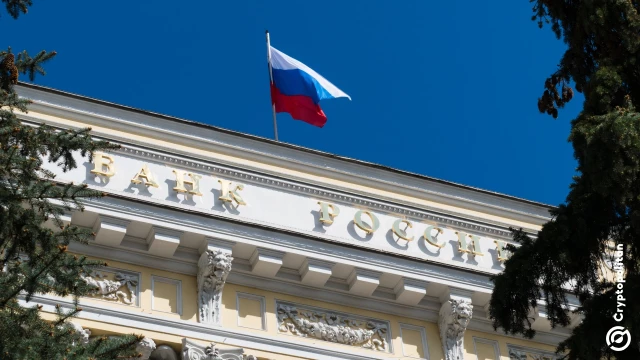
Russian Parliament Advances Centralized Crypto Oversight Framework

The Russian parliament has adopted a digital currency bill that grants the Bank of Russia full authority to license market participants and regulate all crypto transactions.
Alpha Score of 72 reflects strong overall profile with strong momentum, moderate value, strong quality, moderate sentiment.
Alpha Score of 55 reflects moderate overall profile with moderate momentum, moderate value, moderate quality. Based on 3 of 4 signals — score is capped at 90 until remaining data ingests.
Alpha Score of 47 reflects weak overall profile with moderate momentum, poor value, moderate quality. Based on 3 of 4 signals — score is capped at 90 until remaining data ingests.
Alpha Score of 45 reflects weak overall profile with strong momentum, poor value, poor quality, weak sentiment.
The Russian parliament has formally adopted a digital currency bill during its first reading, establishing a rigid regulatory structure for the nation's cryptocurrency sector. Under the proposed rules, the Bank of Russia assumes the role of primary gatekeeper, granting the central bank broad authority to oversee the entire domestic ecosystem. This shift centralizes control over market participants and transaction flows, effectively placing the monetary authority at the center of all digital asset activity.
Central Bank Authority Over Market Access
The legislation mandates that the Bank of Russia will serve as the sole licensing body for all market participants. This includes the power to approve or prohibit specific crypto transactions at its discretion. By formalizing this oversight, the state aims to bring previously decentralized or unregulated digital asset operations under a single administrative umbrella. The move signals a departure from earlier, more fragmented approaches to digital asset policy, prioritizing state-level control over transaction monitoring and participant vetting.
Regulatory Scope and Operational Constraints
The bill provides the central bank with the legal mandate to determine the legality of specific digital assets and their associated exchange mechanisms. This creates a binary environment where the regulator holds the final say on which platforms can operate and which assets can be traded within the jurisdiction. The following elements define the core of the new regulatory architecture:
- Licensing requirements for all entities facilitating digital currency transactions.
- Direct oversight of transaction flows by the Bank of Russia.
- Authority to issue blanket bans on specific asset classes or operational models.
- Enforcement of compliance standards for all domestic crypto service providers.
This legislative development mirrors broader global trends where authorities seek to integrate digital assets into existing financial surveillance frameworks. For investors and firms operating within the region, the primary risk remains the potential for sudden liquidity constraints if the central bank chooses to restrict access to specific protocols or asset types. The centralization of power suggests that future market accessibility will be tied directly to the central bank's evolving policy stance rather than market-driven demand.
AlphaScala currently tracks various digital asset developments and their impact on global liquidity, which can be reviewed in our crypto market analysis. While this bill focuses on domestic Russian operations, the precedent of central bank-led licensing often influences how neighboring jurisdictions approach their own Bitcoin (BTC) profile and Ethereum (ETH) profile regulations.
Market participants should monitor the subsequent readings of the bill, as these sessions will likely clarify the specific criteria for licensing and the technical requirements for transaction reporting. The next concrete marker will be the publication of the central bank's secondary regulations, which will define the operational boundaries for exchanges and the specific compliance burdens placed on individual market participants.
AI-drafted from named sources and checked against AlphaScala publishing rules before release. Direct quotes must match source text, low-information tables are removed, and thinner or higher-risk stories can be held for manual review.