Stocks● Neutral
Russia Skips Navy Day Warships, Displays Submarine Poster
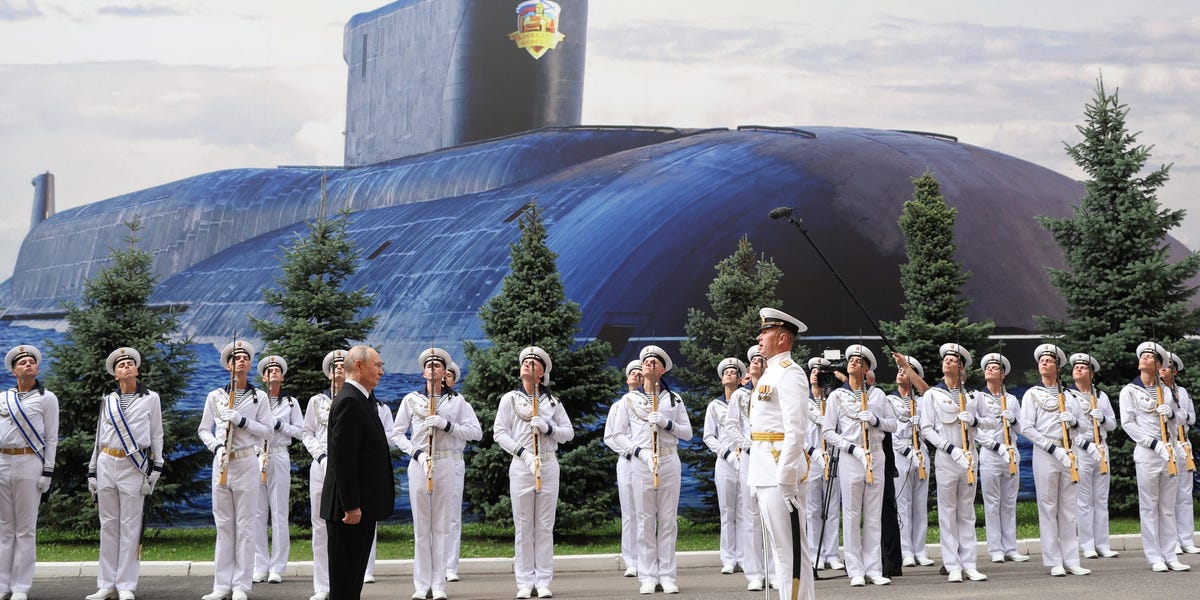
Russia held a muted Navy Day with a poster of a nuclear submarine instead of warships, as Ukrainian drone threats forced the Kremlin to cancel the parade for the second year.
Continue with
Russia scrapped its traditional Navy Day parade for the second straight year, replacing rows of warships with a towering poster of a nuclear submarine. The scaled-back event Sunday in St. Petersburg marked the 330th anniversary of the navy. About 30 sailors stood in formation as President Vladimir Putin arrived at the Admiralty headquarters.
Putin met with commanders and presented awards, the Kremlin said. A military band played in a cordoned-off courtyard. The centerpiece was a poster of the Alexander Nevsky, a Borei-class nuclear-powered missile submarine. A second poster showed two large combat surface vessels. The reception was a far cry from the grand displays of prior years, when the Kremlin sent 40 warships, four submarines, and 3,000 personnel into Kronstadt and the Neva River for the holiday.
The shift began in 2024. Ukrainian drone strikes on Russian soil forced the Kremlin to hold a smaller version with about 20 vessels and 2,500 personnel. In 2025, the parade was canceled outright. Kremlin spokesman Dmitry Peskov cited security concerns at the time. This year's event was effectively a poster session.
St. Petersburg lies roughly 600 miles from the Ukrainian border, well within range of the explosive-laden fixed-wing drones Ukraine has deployed against military and industrial targets. Ukrainian forces said in July that they had surged long-range strikes on Russian soil by more than 10-fold since the start of the year. They carried out over 2,350 individual strike missions in June alone, according to the Ukrainian military.