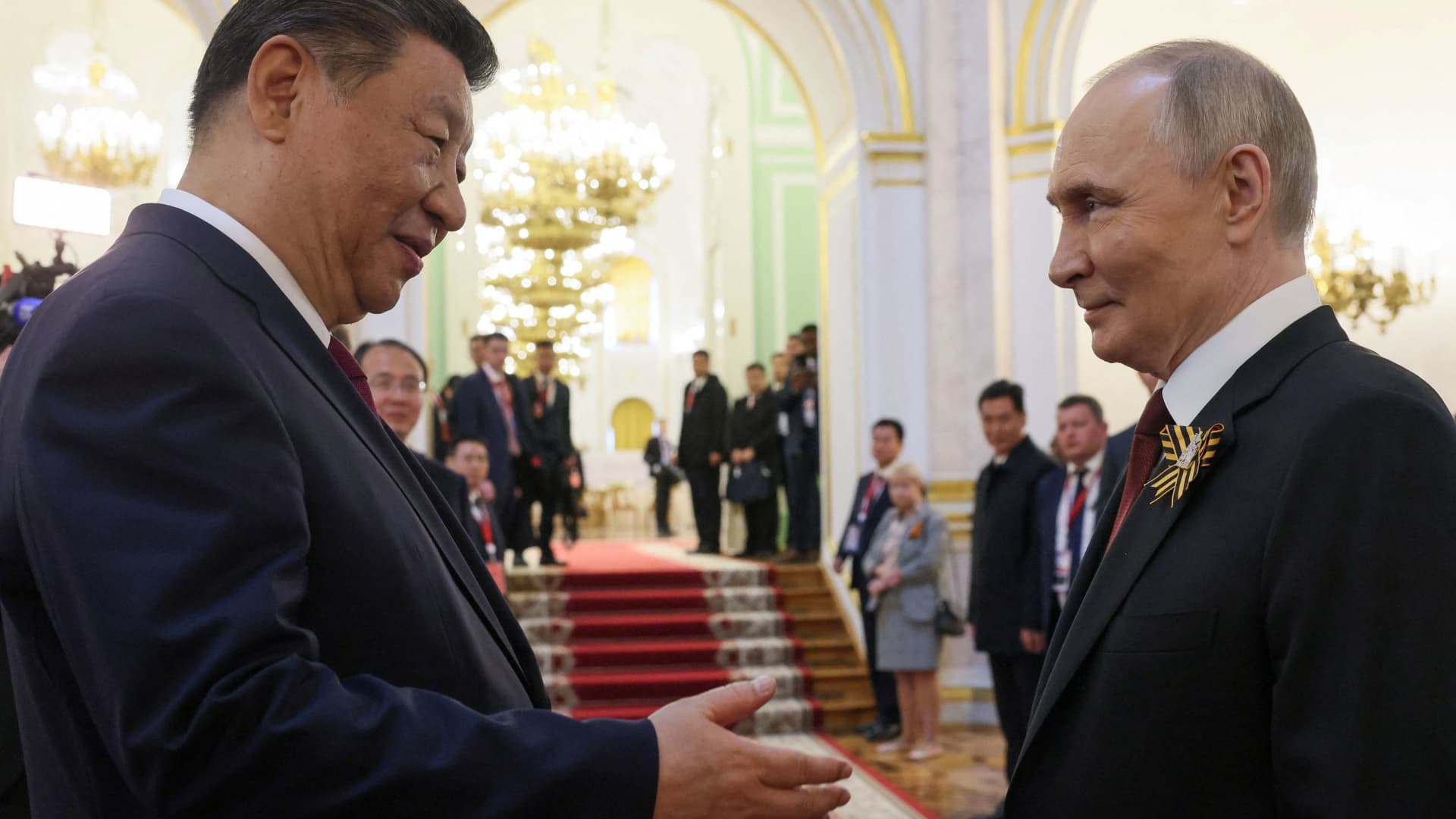
Russia Targets China's Energy Demand
Russian Foreign Minister Sergei Lavrov stated on Wednesday that Moscow is prepared to fill the resource gap currently facing China. This offer arrives as regional instability in the Middle East threatens to constrain global energy flows, potentially forcing Beijing to pivot away from traditional suppliers.
For traders, this signals a deepening of the energy corridor between the two nations. China remains the world's largest importer of crude, and any move to prioritize Russian barrels over Middle Eastern imports carries implications for global pricing benchmarks like CL and the broader crude oil profile. With supply chains under pressure, the Kremlin is leveraging its resource wealth to cement its role as a primary energy patron for the Chinese economy.
Market Impact of Supply Realignment
Increased reliance on Russian energy by China would likely decouple regional pricing structures from global norms. If Beijing shifts significant volume away from the Persian Gulf, the resulting premium on non-Russian barrels could spike volatility across energy-sensitive indices like the SPX or IXIC.
- Energy Security: Beijing's move to secure long-term contracts with Moscow acts as a hedge against potential blockades or conflict-driven price spikes in the Middle East.
- Geopolitics: The shift strengthens the ruble-yuan trade axis, potentially pressuring the dollar's dominance in energy settlements.
- Supply Chain: Analysts should monitor tanker traffic in the Black Sea and the Far East, as these routes will see increased activity to accommodate the redirected volume.
"Russia can certainly fill the resource gap that has arisen in China," said Russian foreign minister Sergei Lavrov.
What Traders Are Watching
Market participants should focus on the spread between Urals crude and Brent. A narrowing of this gap would confirm that Chinese demand is effectively absorbing excess Russian supply, limiting the impact of international sanctions on Moscow's revenue stream. If this flow accelerates, look for continued downward pressure on tanker rates for routes originating in the Middle East, while Pacific-bound transport capacity will become a critical bottleneck to monitor.
Traders should also weigh how this realignment influences inflation expectations in importing nations. As market analysis suggests, energy costs remain the primary driver of central bank policy; if China bypasses global spot markets for bilateral deals with Russia, the resulting transparency gap could complicate forecasting for global energy demand.
Focus on the next round of export data from major oil-producing nations to see if the promised volume shift is actually hitting the balance sheets. The long-term trend points toward a bifurcated energy market where political alliances dictate flow as much as price.