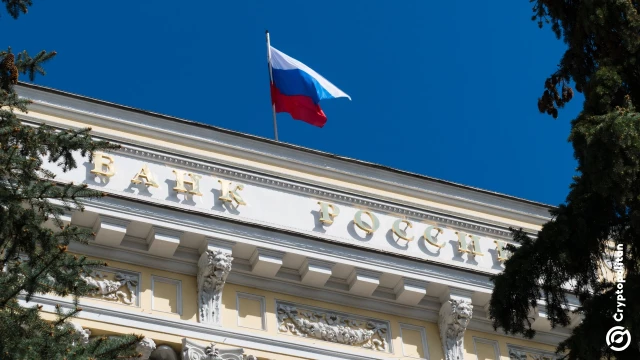
Russia’s central bank published detailed rules for cryptocurrency exchanges and digital depositories, the first time the regulator has spelled out capital, registration, and trading procedures under the country’s new digital currency law.
The Central Bank of Russia (CBR) released two draft directives covering how exchanges register, set trading procedures, and calculate asset prices. A separate document lays out capital requirements for digital depositories, a new type of organization that will keep records of cryptocurrency holdings and transactions.
Depositories must hold equity of 50 million to 250 million rubles, roughly $600,000 to $3 million, depending on whether they work with open distributed ledgers or provide post-trade settlement services. The CBR said the equity must be liquid and include assets of “high credit quality.”
The directives supplement the law “On Digital Currency and Digital Rights,” which the State Duma passed in July. The legislation still needs approval from the Federation Council and President Vladimir Putin’s signature. It is set to take effect September 1, 2026.
The CBR said the new rules will affirm its authority to register crypto market participants. Operators of platforms that issue, store, or trade cryptocurrencies will have to appear on a central bank register. The procedures for establishing and maintaining those registers are part of the draft package.
“The Bank of Russia Instruction stipulated in the draft applies to operators operating in accordance with the requirements established by the Federal Law ‘On Digital Currencies and Digital Rights,’ digital currency exchange organizations, and digital depositories,” the documents state.
The CBR published the drafts for regulatory impact assessment, inviting public comment. In a press release, the regulator said it has “created conditions for organized trading in digital currencies and digital rights.”
Exchanges will be allowed to set their own trading procedures and independently calculate the market value and weighted average prices for the digital instruments they trade. That flexibility gives platforms room to design their own market structure within the CBR’s overarching framework.
Most of the rules will come into force this fall. Some specific provisions, including more detailed compliance requirements, are scheduled to take effect in the second half of 2027.
Industry participants such as brokers, management firms, and clearing houses expect regulated activities to begin late this year. They will have a transitional period until March 1, 2027, to fully comply with the regulations and obtain the necessary approvals.
Under the framework, Russian citizens and companies can legally hold cryptocurrencies. Non-qualified investors will be limited to the most liquid assets, including Bitcoin, Ethereum, and Tether’s USDT. Their purchases will be capped at $4,000 per year, the CBR said. The limit applies to the total value of digital currency bought through regulated platforms.
“The assets making up the equity should be liquid, and the financial assets included therein should be of high credit quality,” the CBR said in the depository directive.
The draft rules represent the first detailed regulatory layer under Russia’s digital currency law. The legislation itself was delayed for years before passing the Duma in July. The Federation Council has not yet scheduled a vote, though the bill is expected to pass before the September 2026 effective date.
TASS reported that the CBR’s new directives are designed to establish the central bank’s authority to register crypto market participants. The bank will be responsible for introducing the procedures for maintaining the registers of operators of platforms used to issue, store, and trade cryptocurrencies.
The CBR published the drafts on its website. The regulatory impact assessment period will allow industry participants to submit feedback before the rules are finalized.