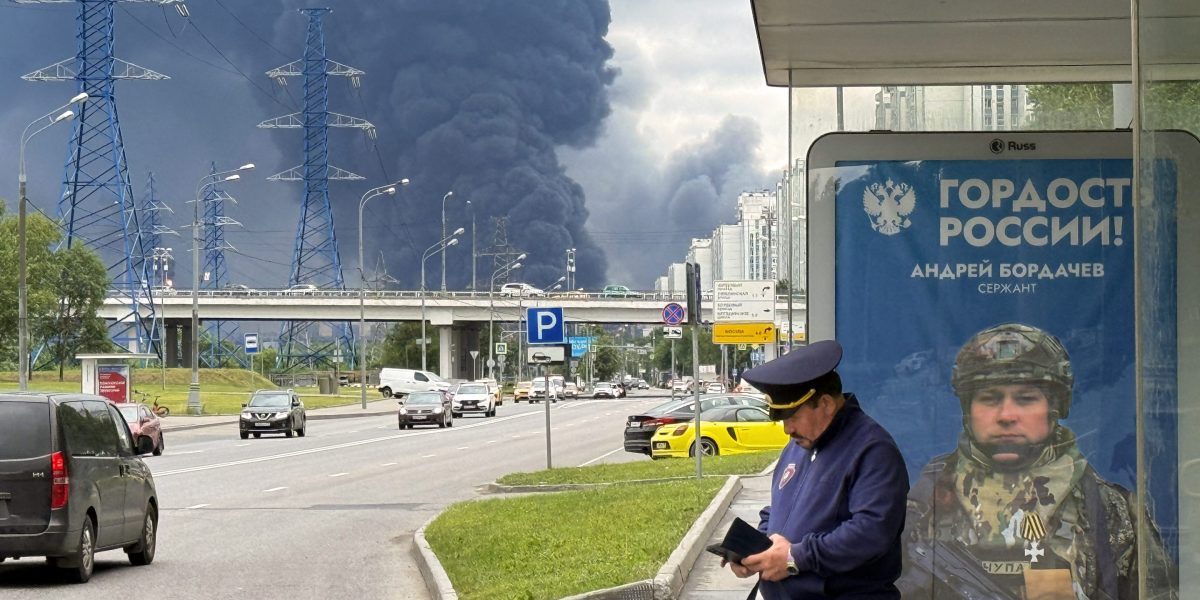
A European intelligence report warns that Russia's economy is heading toward a banking crisis. Corporate and retail loan defaults are rising sharply as the Kremlin's war spending strains the financial system.
The June report, prepared for the EU's next sanctions round, estimates that 10% of corporate loans may not be repaid, up from 2024 levels. At some top banks, 15% of retail loans could be non-performing. The number of Russians who declared bankruptcy last year jumped nearly a third to more than 500,000.
State-backed lending and loan restructurings are masking the true scale of the trouble, the report said.
"The situation creates the illusion of a dynamic economy that, in reality, conceals an explosive situation which an economic shock, such as an ambitious package of sanctions against banks … could trigger," the report said, according to Reuters.
Russia's federal budget deficit ballooned to 6 trillion rubles ($83 billion) by the end of May, more than double 2025's level and well past the 3.8 trillion rubles projected for all of this year. The government has been drawing down reserves in its sovereign wealth fund to close the gap, leaving the fund nearly empty.
With few other sources left to fund the war, the Kremlin could look to the population's savings. The finance ministry is preparing legislation that could let it access $40 billion in pension savings held in privately managed funds. The leader of Russia's Communist Party told parliament that 130 trillion rubles held in bank accounts should be "mobilized" to address the country's economic woes.
Such talk has sparked panic in Russia's business community, already grappling with high interest rates and expansive Western sanctions. "The government could try to take money by any means," a Moscow executive told the Washington Post. "Everyone is thinking about how to get their money out and leave."
Warnings about Russia's finances have been building for months. Last June, Russian banks raised red flags on a potential debt crisis. High interest rates were weighing on borrowers. The head of the Russian Union of Industrialists and Entrepreneurs warned many companies were in "a pre-default situation."
The Center for Macroeconomic Analysis and Short-Term Forecasting, a state-backed Russian think tank, said in December the country could face a banking crisis by October if loan troubles worsen and depositors pull out their funds. Earlier this year, Russian officials told President Vladimir Putin that a financial crisis could hit by the summer. Inflation was spiraling. Russian statistics show that nonpayments of commercial bills hit $109 billion in January.
In May, sources told the Russian newspaper Izvestia that nearly 25% of the bond market is at risk of default. Businesses that borrowed at low rates now face refinancing at much higher ones. The volume of debt that needs to be rolled over this year is about double last year's, adding pressure on cash flows and raising competition for liquidity. The report cited a source that called the default problem a systemic trend.