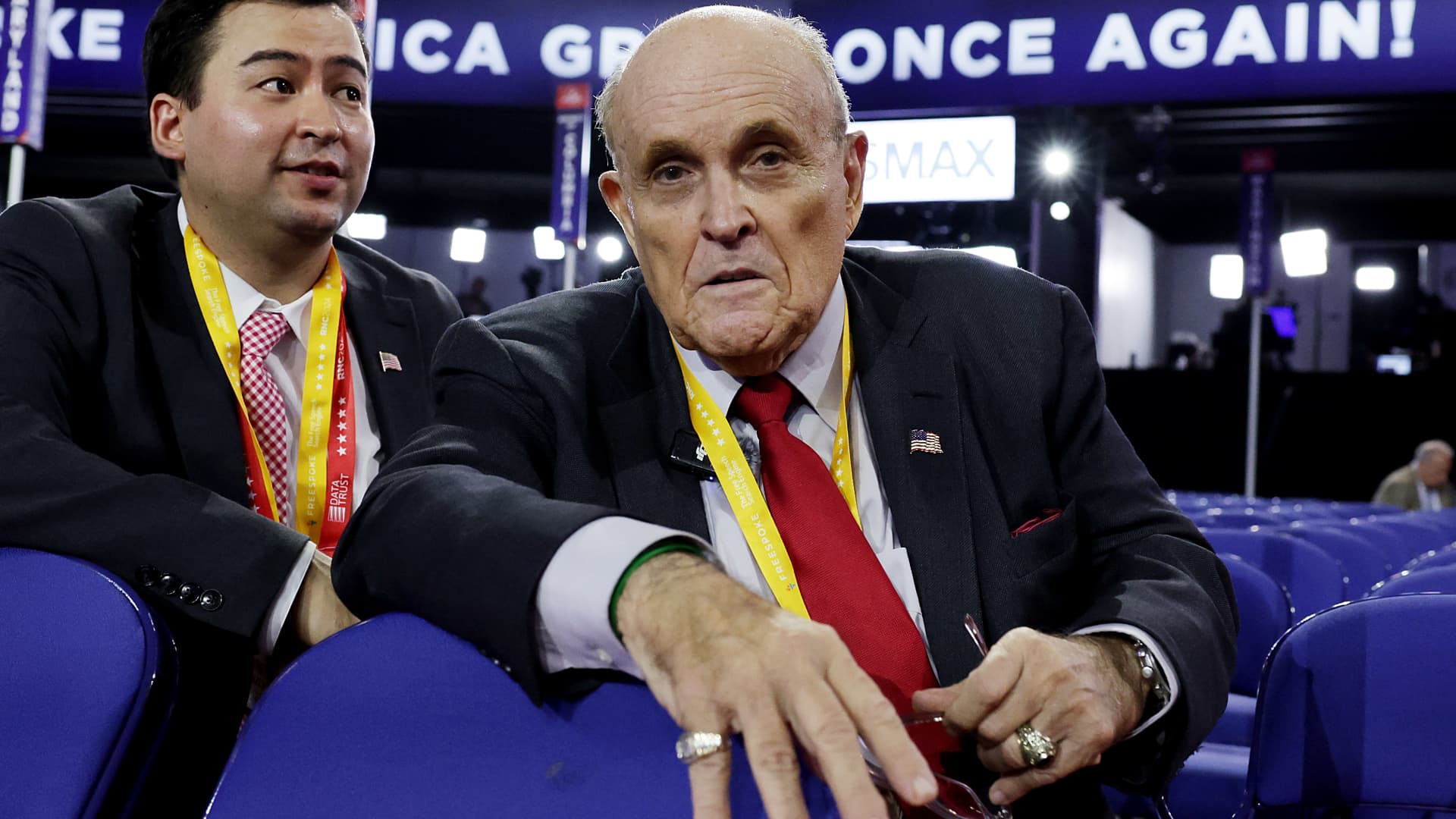
The hospitalization of 81-year-old Rudy Giuliani in critical but stable condition marks a sudden shift for a figure whose recent years have been defined by intense legal and financial volatility. As a former New York City mayor and high-profile attorney for Donald Trump, Giuliani’s health status arrives at a moment when his personal and professional standing remains under significant pressure from multiple legal fronts. The announcement, delivered by spokesman Ted Goodman, provided no specific medical details, though observers noted Giuliani appeared raspy and struggled with his voice during his "America's Mayor Live" broadcast on Friday night.
The Intersection of Legal Liability and Personal Status
Giuliani’s current health crisis occurs against a backdrop of severe financial and professional consequences stemming from his post-mayoral career. The most significant of these is a federal court judgment in Washington, D.C., which found him liable for defaming two Georgia election workers. The court ordered him to pay nearly $150 million in damages for his false claims regarding ballot fraud during the 2020 election. This judgment represents a massive personal liability that has fundamentally altered his financial profile and legal standing.
Beyond the civil judgment, Giuliani’s professional credentials have been systematically dismantled. In July 2024, a New York state appeals court disbarred him, citing his flagrant misuse of his position to propagate false and perjurious claims. A similar disbarment followed in Washington, D.C., two months later. These actions represent a total loss of his ability to practice law, effectively ending a career that once saw him serve as a top federal prosecutor in the 1980s and a celebrated mayor from 1994 to 2001.
Legal Exposure and Ongoing Litigation
While his civil and professional losses are finalized, Giuliani remains entangled in criminal litigation. His efforts to reverse the 2020 election results led to indictments in both Georgia and Arizona. The status of these cases remains fluid. In Fulton County, Georgia, the case against him and other allies was dropped in November following the disqualification of District Attorney Fani Willis and the subsequent appointment of a replacement prosecutor.
In Arizona, the legal path is equally complex. The state’s attorney general is currently appealing a ruling that requires the criminal case to be returned to a grand jury. The court’s decision was based on the finding that prosecutors failed to present key legal text during the initial proceedings. These ongoing legal battles continue to serve as a primary source of uncertainty for those tracking his public legacy and personal assets. For a broader look at how legal and political shifts impact the stock market analysis, it is essential to distinguish between headline-driven volatility and long-term structural risks.
The Legacy of a Polarizing Public Figure
Giuliani’s career trajectory remains one of the most stark in modern American politics. His tenure as mayor was defined by a sharp decline in New York City’s crime rate and his leadership following the September 11, 2001, terror attacks. These events cemented his reputation as "America’s Mayor" and propelled him to a national stage, including an unsuccessful bid for the Republican presidential nomination in 2008.
However, his later association with Donald Trump and his promotion of election denial claims have largely overshadowed his earlier achievements in the eyes of many. Trump’s recent comments on Truth Social, where he labeled Giuliani a "True Warrior" and the "Best Mayor in the History of New York City," underscore the deep partisan divide that now defines Giuliani’s public perception. This polarization is a critical component of his current narrative, as his supporters view his legal troubles as a political persecution, while his critics point to the court-mandated penalties as a necessary consequence of his actions.
Market and Institutional Read-Throughs
For those observing the intersection of high-profile political figures and institutional stability, Giuliani’s situation serves as a case study in reputational risk. The collapse of his legal practice and the massive civil judgment against him illustrate how quickly professional standing can erode when tied to high-stakes political litigation. As his son, Andrew Giuliani, continues his work as executive director of the presidential task force for the 2026 FIFA World Cup, the family name remains active in public life, even as the elder Giuliani’s own influence wanes.
Investors and analysts often look for signals of stability or disruption in the public square. When a figure of Giuliani’s stature faces such a confluence of health, legal, and financial crises, the primary takeaway is the speed at which institutional support can vanish. Whether in the context of MetLife Earnings Signal Stability Amid Financial Sector Shifts or broader political developments, the lesson remains that legal and professional liability can act as a permanent drag on an individual’s ability to operate within established systems.
Ultimately, the path forward for Giuliani is defined by the resolution of his remaining criminal cases and the management of his substantial civil debts. His hospitalization adds a layer of physical fragility to a situation already characterized by profound institutional and personal decline. The market for his influence, once significant, has been effectively shuttered by the legal and professional sanctions imposed over the last two years. Any future developments in his health or legal status will likely be viewed through the lens of these final, defining chapters of his career.