Stocks● Neutral
Rubio-Modi Talks: Energy Deal Conditional on Tariffs and Hormuz
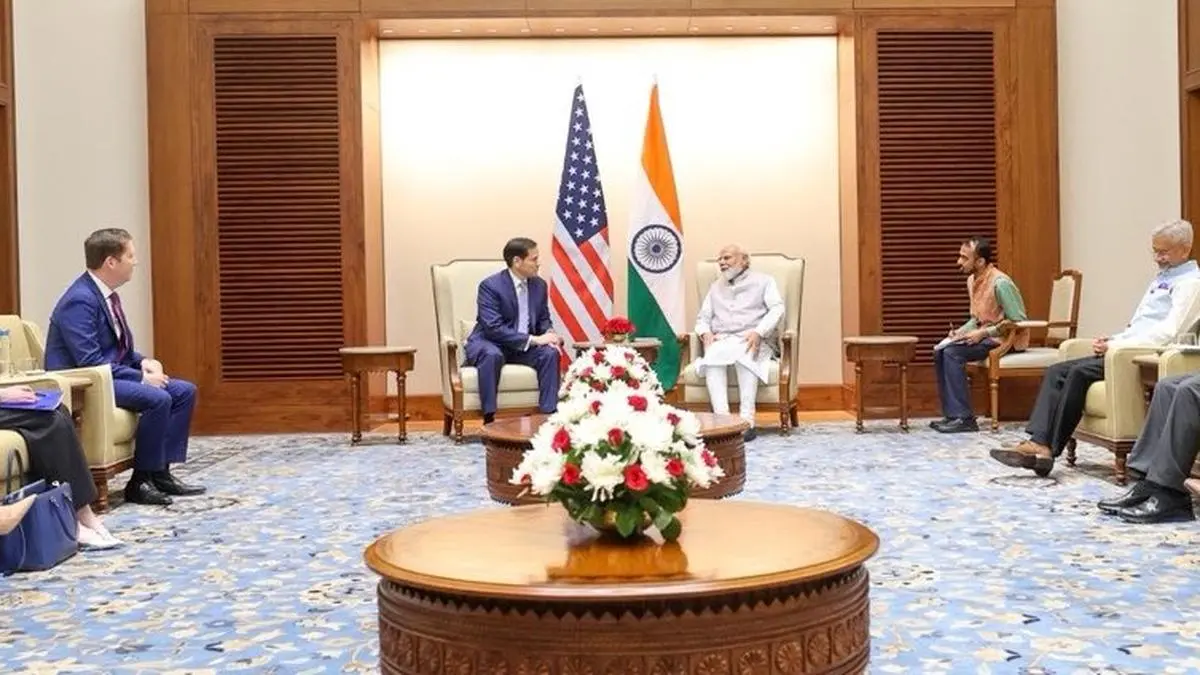
Rubio's energy export pitch to India faces tariff uncertainty and Strait of Hormuz blockade risk. Quad meeting Monday is the next catalyst for energy and defense plays.
Continue with
Prime Minister Narendra Modi and US Secretary of State Marco Rubio met on Saturday for discussions spanning trade, energy security, critical technologies, and the West Asia crisis. The meeting arrives as a potential Strait of Hormuz blockade – triggered by the ongoing US and Israel conflict with Iran – threatens to disrupt global oil flows. For traders, the immediate catalysts are Rubio's bilateral talks with External Affairs Minister S. Jaishankar on Sunday and the Quad Foreign Ministers meeting on Monday. The energy security conversation carries a binary risk for crude premiums and a conditional opportunity for US exporters.
Rubio's Energy Pitch: Simple Read vs. Execution Hurdles
The supply-side opportunity
Rubio told reporters before his trip that the US is prepared to increase energy exports to India. "Well, we want to sell them (India) as much energy as they'll buy… we're at historic levels of US production, and US export… We want them to be a bigger part of their portfolio," he said. The statement supports a straightforward bull case for US energy exporters such as LNG producers and crude sellers. If India shifts a meaningful portion of its oil and gas purchases from the Middle East to the US, demand for Persian Gulf barrels would fall, compressing the Brent-Dubai spread and boosting US Gulf Coast infrastructure stocks.
The tariff obstacle
New Delhi is watching the US tariff situation carefully because it remains fluid. US courts have struck down certain additional tariffs, including reciprocal tariffs imposed by the previous administration. That legal uncertainty means the India-US bilateral trade agreement (BTA) talks – which Rubio is expected to push during his meeting with Jaishankar – cannot rely on a fixed tariff baseline. India wants greater market access for its industrial goods. The US wants agricultural access and lower import duties on American energy equipment. Neither side can make definitive commitments until the tariff picture stabilises.
A grand energy trade announcement therefore depends on legal closure. Without it, the bullish energy exporter narrative lacks a concrete delivery mechanism. The practical risk for traders is that the Quad meeting produces a maritime security statement but the BTA talks produce no more than a vague timeline.
Strait of Hormuz Blockade: India's Binary Crude Exposure
The blockade mechanics
The conflict between the US, Israel, and Iran has raised the probability of a Strait of Hormuz closure. About 20% of the world's oil passes through the chokepoint. India is acutely vulnerable because it imports over 80% of its crude oil, with roughly 60% transiting the Strait. A sustained closure would push Brent crude above $100 per barrel. A de-escalation could reverse recent gains. The outcome is binary: the risk premium in crude options will widen or collapse depending on headlines from the region.
Affected assets and sectors
- Crude oil futures: Short-term volatility will track Iran conflict developments and any diplomatic off-ramp signal from the Quad statement.
- Tanker equities: Rates for Very Large Crude Carriers (VLCCs) spike when alternative routes are needed. India diversifying away from Hormuz would increase demand for US Gulf-to-India shipping.
- Indian rupee: A crude price shock widens India's current account deficit, pressuring the rupee against the dollar. The Reserve Bank of India can intervene, sustained pressure tests reserves.
- Defense contractors: Both India and the US discussed defence cooperation. Any joint patrolling or naval escort commitments in the Quad communique would support defence stocks.