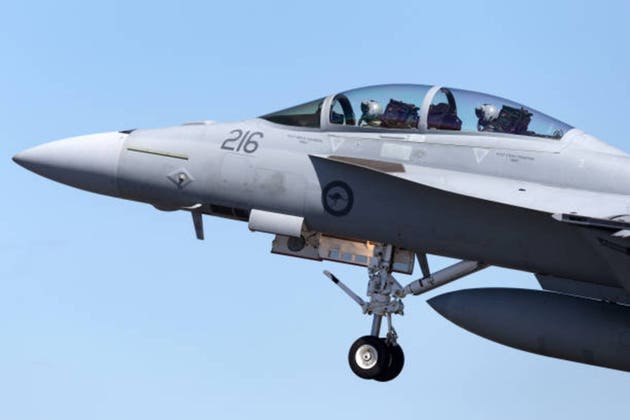
RTX Corporation has successfully delivered the first set of Next Generation Jammer Mid-Band pods to the Royal Australian Air Force. This milestone marks a transition from development to operational deployment for the electronic warfare platform, which is designed to integrate with F/A-18F Super Hornet aircraft. The early delivery schedule provides a tangible boost to the company's defense segment, reinforcing the reliability of its production timelines in a sector often plagued by supply chain delays.
Electronic Warfare and Defense Backlog Visibility
The delivery of these jammer pods serves as a proof point for the company's ability to execute on high-complexity defense contracts. Electronic warfare has become a primary focus for global military modernization efforts, as nations prioritize signal disruption and spectrum dominance. By meeting delivery milestones ahead of schedule, RTX strengthens its position within the defense industrial base and improves the predictability of its long-term backlog. This operational efficiency is critical for maintaining margins in fixed-price government contracts where cost overruns are a persistent risk.
Sector Read-Through and Industrial Positioning
This development highlights the broader shift toward advanced sensor and communication technologies within the industrials sector. As defense budgets increasingly favor software-defined hardware and modular systems, companies capable of delivering integrated electronic warfare suites gain a distinct competitive advantage. The ability to scale production for international partners like Australia demonstrates a scalable model that can be applied to other allied defense programs.
AlphaScala data currently assigns RTX an Alpha Score of 49/100, reflecting a mixed outlook as the company balances large-scale industrial production with the complexities of global defense procurement. More detailed performance metrics and historical data can be found on the RTX stock page. The broader stock market analysis suggests that investors are increasingly scrutinizing the conversion of defense backlogs into realized revenue, making timely deliveries a key metric for valuation.
Catalysts for Future Performance
The immediate path forward involves the integration and testing phase for the Australian fleet. Success in this deployment will likely serve as a benchmark for future procurement discussions with other international allies seeking similar electronic warfare capabilities. The next concrete marker for the company will be the subsequent quarterly earnings report, where management will likely provide commentary on the impact of these early deliveries on segment margins and the potential for follow-on orders. Investors should monitor future filings for updates on the production rate of the jammer pods and any expansion of the program to additional airframes or international partners.