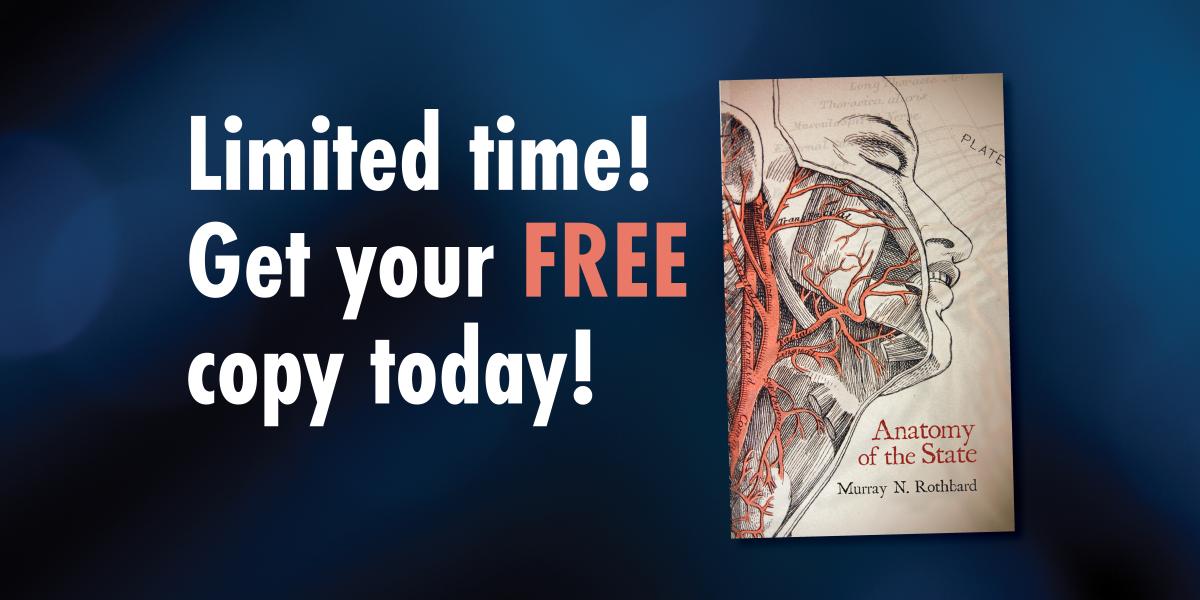
The free distribution of Anatomy of the State through May 31 is a strategic effort to shift economic discourse and influence how investors view state policy.
Alpha Score of 57 reflects moderate overall profile with moderate momentum, moderate value, moderate quality, moderate sentiment.
The decision to distribute Murray Rothbard’s Anatomy of the State for free through May 31 marks a strategic pivot in how ideological organizations engage with their audience. By framing this distribution as a celebration of The Year of Rothbard, the organizers are moving beyond standard educational outreach to prioritize the dissemination of core intellectual frameworks that challenge state authority. This move is not merely a promotional campaign for a book. It is a calculated effort to increase the density of specific economic and political theories within the current discourse.
Anatomy of the State serves as a foundational text for those examining the mechanics of power and the relationship between governing bodies and private property. When an organization chooses to subsidize the cost of such a text, it effectively lowers the barrier to entry for potential adherents to adopt a specific worldview. For the reader, this is an opportunity to acquire a high-conviction text without the friction of a purchase. For the broader market, the proliferation of these ideas often precedes shifts in sentiment regarding fiscal policy and regulatory environments.
Historically, the influence of such literature is measured by its ability to shape the intellectual climate that eventually informs legislative and economic decision-making. As these ideas gain traction, they often influence how individuals perceive the legitimacy of state-led economic interventions. This can have downstream effects on how investors view the stability of long-term policy environments. While the book itself is a static artifact, the act of mass distribution is a dynamic event that can alter the baseline assumptions of a significant demographic.
Rothbard’s argument centers on the premise that the state maintains its power through the suppression of independent intellectual criticism. By distributing this work, the organizers are attempting to foster a more critical environment. In a practical sense, this creates a feedback loop where readers become more skeptical of state-led economic initiatives. This skepticism is a primary driver for those who seek to hedge against systemic risk or who prioritize assets that operate independently of central bank influence.
For those observing the intersection of stock market analysis and political theory, the timing of this giveaway is worth noting. As global markets grapple with the implications of persistent debt and inflationary pressures, the demand for alternative economic frameworks is rising. The distribution of this text provides a common language for those who are increasingly questioning the efficacy of current monetary policies. This is not just about reading a book. It is about the synchronization of a community around a specific set of critiques that will likely influence future market participation and asset allocation strategies.
The May 31 deadline creates a sense of urgency that forces a decision point for the reader. Those who choose to acquire the text will be entering a period of engagement with ideas that fundamentally challenge the status quo. The next concrete marker will be how this increased intellectual alignment manifests in the discourse surrounding future fiscal policy debates and the broader best stock brokers landscape, where users are increasingly looking for ways to insulate their portfolios from state-driven volatility. The giveaway is a catalyst for a shift in perspective that will likely persist long after the May 31 cutoff date.
AI-drafted from named sources and checked against AlphaScala publishing rules before release. Direct quotes must match source text, low-information tables are removed, and thinner or higher-risk stories can be held for manual review.