Rheinmetall CEO told CNBC his reserves cover four years of nitrocellulose supply. The €100B order book and a Bavarian expansion called 'Project Firepower' aim to double output by 2028.
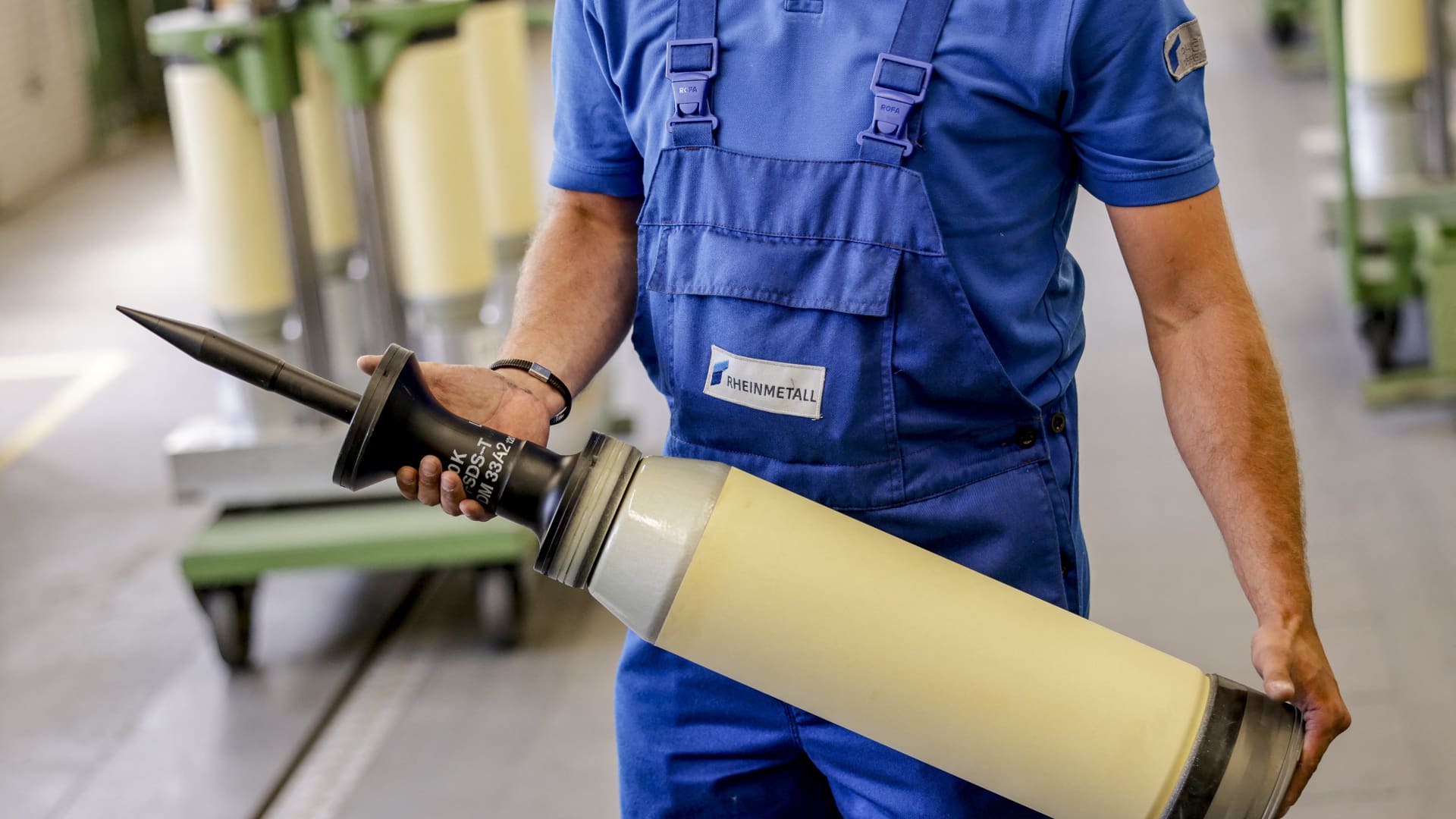
BAVARIA, GERMANY – Rheinmetall CEO Armin Papperger told CNBC on Wednesday that his company has secured enough nitrocellulose, the key ingredient in gunpowder, to cover the next four years of production. The German defense contractor is in the middle of a massive expansion at its Aschau am Inn site, a project that will more than double annual gunpowder output to 4,200 metric tons by 2028.
The scarcity of gunpowder has been a bottleneck for Europe's drive to replenish ammunition stockpiles depleted by two years of war in Ukraine. European governments have ramped up defense budgets to their highest levels since the Cold War. Industrial capacity, not political will, is now the binding constraint.
"At the moment, we have reserves for the next four years," Papperger said. "Without gunpowder, no warhead will go out of the barrel."
Europe has relied on China for cotton linters, the raw material used to produce military-grade nitrocellulose. Exports have slowed in recent years. Rheinmetall is working to qualify wood-derived cellulose as an alternative. The company already owns facilities in Spain and Switzerland and has been investing across the supply chain.
The Bavarian site, spread across 90 hectares, is being expanded under a plan called "Project Firepower." It will also house a research center for high-energy smokeless propellants. Gunpowder prices have spiked as demand outstrips supply.
Rheinmetall is one of the few manufacturers that covers the full value chain, from the propellant to the bullet casing. Papperger said the gunpowder produced at Aschau will feed ammunition for drones, small-caliber weapons, tank guns, and artillery. "In every area where you need powder, here we produce for all these products."
The defense contractor's shares have fallen 35% this year. Some investors question whether modern warfare, dominated by drones and AI-powered systems, will reduce demand for traditional heavy ammunition. Papperger dismissed the concern. "The drone is an add-on in that area, so it will give us more business and not less."
He pointed to the company's order book, which he expects to exceed 100 billion euros by year-end. The U.S. is rebuilding its own depleted stocks, Papperger said, and cannot supply Europe. "The stocks in America are on a level of maybe 20% to 30%, and they have to produce for themselves."
"For the next 10 years we have a lot to do, and we have a lot to produce here," he added.
Drafted by a large language model from the source reporting linked above, then screened by automated publishing checks. It is not read by a journalist before publication. Some articles cite our Alpha Score. Verify prices and figures against the original source. Educational coverage, not personalized advice.