Stocks● Neutral
Rentomojo's ₹1,400/Month Furniture Plan vs. ₹80,000 Purchase: The Mumbai Math
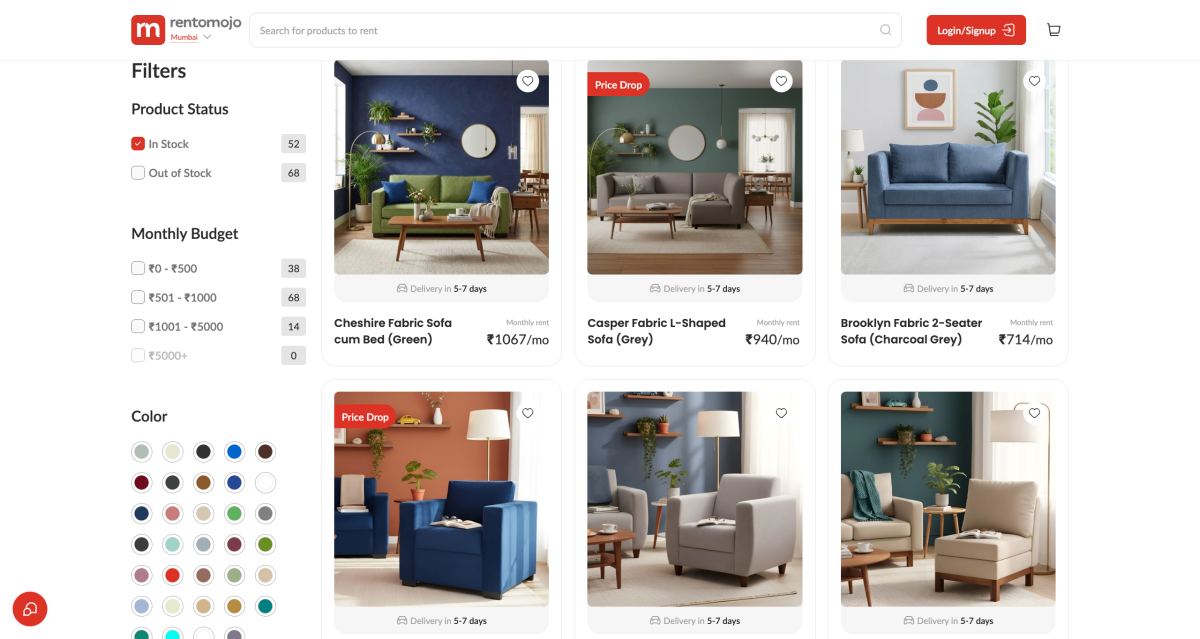
Mumbai couples are swapping an ₹80,000 wardrobe-and-sofa purchase for Rentomojo's ₹1,400/month plan as resale values collapse and apartment configurations shift with every lease. The math favors rental by ₹25,000 over three years.
Continue with
When taste changes faster than furniture depreciates, Mumbai's first-home couples are trading an ₹80,000 wardrobe-and-sofa outlay for a ₹1,400/month plan that moves with them across flats and refreshes with every lease.
The fast-fashion logic that reshaped how wardrobes of clothes are bought is now visible in furniture. Households increasingly want to refresh the look of a living room or bedroom every couple of years: a modular sofa traded for an L-shape, a tall wardrobe swapped for a low chest of drawers, a beige palette retired for something darker. The structural problem with ownership is that none of these changes are possible after the first purchase without absorbing a sunk cost. A sofa bought at ₹50,000 that no longer suits the room is dead capital, and the buyer either lives with it for years longer than they want to or replaces it at full retail price for the second time in three years.
The Resale Exit That Barely Exists
The resale exit most buyers quietly assume will close the loop rarely materialises. A wardrobe bought at ₹30,000 and a sofa at ₹50,000 together recover a small fraction of their value on resale within two to three years. Both are among the most difficult items to move through Mumbai's tight stairwells and lifts, a constraint that further depresses what a buyer can recover by selling locally.
The OLX or marketplace listing that buyers picture as their exit typically returns well under ten percent of the original price, often closer to five. The seller absorbs the dismantling, the photography, the negotiation and the discount, and walks away with effectively nothing. Furniture, on the financial reading that allows it, is not an asset the household is building. It is a consumable they have prepaid for.
Rentomojo, the largest organised furniture and appliance rental platform in India by subscription revenue, filed its DRHP on March 27, 2026. The document, along with a Redseer industry report cited in it, lays out the household economics that are pushing Mumbai's first-home couples toward a monthly plan near ₹1,400 instead of an ₹80,000 purchase locked to a style they may outgrow.
The Financial Mechanics: Ownership vs. Rental Over 36 Months
The full cost of ownership includes more than the purchase price. A sofa bought at ₹50,000 and a wardrobe at ₹30,000 require maintenance, occasional repairs, and transport on every move. Mumbai renters move every two to three years on average, according to the Rentomojo DRHP. Each move costs the owner ₹3,000–₹5,000 for packing and transport, and furniture sustains damage that further depresses resale value.
Compare that to the rental path. The combined monthly plan near ₹1,400 includes free in-city relocation. At 36 months, the renter has paid ₹50,400 – less than the ₹80,000 purchase price, and zero resale loss. The owner who sells at 36 months nets roughly ₹5,000 after costs, making the total out-of-pocket ₹75,000 plus maintenance and moving. Rental comes out ahead by roughly ₹25,000 over three years, and the renter can swap the sofa or wardrobe for a different style at the end of the lease.
| Scenario | Total outlay over 3 years | Exit value | Net cost |
|---|---|---|---|
| Purchase at ₹80,000 | ₹80,000 + ₹15,000 maintenance & moves | ~₹5,000 | ₹90,000 |
| Rental at ₹1,400/month | ₹50,400 | ₹0 | ₹50,400 |
Space and Configuration: Mumbai's Hidden Constraint
Space is the layer Mumbai adds on top of the financial case. Apartments are smaller than in any other Indian metro. Layouts vary sharply between a Goregaon one-bedroom and a Thane two-bedroom. A three-seater sofa that fits one wall in Bandra hits the ceiling fan in Powai. A 7-foot wardrobe that slots neatly into a recess in Andheri blocks the window in a Vashi flat.
Configuration flexibility is where rental earns its keep. A renter can match sofa format – two-seater, three-seater or L-shape – to the room they currently occupy and can scale wardrobe capacity to a flat's existing built-in storage rather than buying redundant units. The same logic that lets a wardrobe of clothes turn over with the seasons applies to the furniture itself. A rented home can evolve in style without the dead capital of pieces that no longer suit the room.
Rentomojo's Subscription Model Under the Hood
Scale and Unit Economics
Rentomojo reported 227,000 active subscribers across 22 cities as of the DRHP filing. The Redseer report places it first in the organised furniture-and-appliance rental segment by subscription revenue. The model depends on three levers: low churn, repeat subscriptions, and the margin between depreciation cost and rental income.
Rentomojo buys furniture in bulk at wholesale prices – significantly below retail. It rents pieces for a monthly fee that recovers the wholesale cost within 12–18 months. After that, the same piece generates pure margin until it is retired or sold. The company's historical data, per the DRHP, shows pieces stay in service for 36–48 months before being cycled out, meaning each unit produces 18–30 months of high-margin revenue after the recovery period.
The platform also offers free relocation, which reduces the incentive for subscribers to cancel when they move. That retention lever is crucial in a market where the average lease duration matches the average rental subscription tenure.
The DRHP does not disclose revenue or profitability figures, the subscriber base and the depreciation math suggest the unit economics improve as the subscriber pool grows and churn stays low.