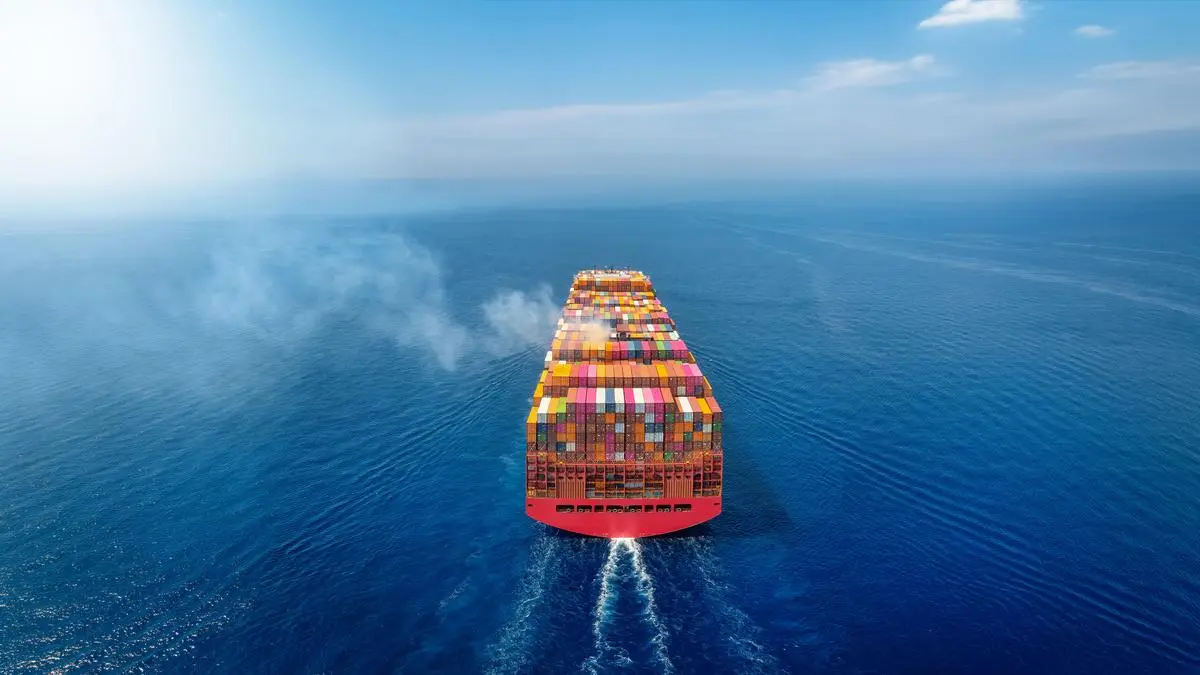
GTRI says the Red Sea crisis has made India-Europe trade slower and more expensive for 1,000 days, with freight rates 25-40% above normal and MSME exporters hit hardest.
The Red Sea shipping crisis has hit the 1,000-day mark with no durable solution in sight, and India needs to treat maritime insecurity as a permanent trade risk, economic think tank GTRI said Sunday.
The route between the Indian Ocean and the Mediterranean Sea remains severely disrupted. Major container lines still send much of their Asia-Europe and Asia-US East Coast traffic around Africa's Cape of Good Hope, adding thousands of nautical miles to each voyage.
Suez Canal traffic is running 60-70% below its pre-crisis level, GTRI said. The detour around Africa absorbs an estimated 5-7% of global container capacity and adds 10-14 days to many voyages. Freight rates remain about 25-40% above normal levels, with ships facing war-risk insurance charges on top.
"What began as a regional security problem has become a long-term disruption to global trade," GTRI said. The group said this two-route system – Suez for some ships and the Cape for others – could continue into 2027.
For India, the crisis has made trade with Europe, the UK, North Africa and the US East Coast slower and more expensive, the think tank said. Around 80% of India-Europe merchandise trade normally uses the Red Sea route. Markets served through this corridor account for about half of India's exports and 30% of imports.
The most exposed markets are the UK, Germany, the Netherlands, Belgium, France, Italy, Spain, Greece, Egypt, Israel, Jordan, North Africa and the US East Coast. The US West Coast is less affected because most cargo travels across the Pacific. Trade with the UAE, Oman and Qatar does not require the Suez Canal, but it still faces higher insurance costs and wider regional security risks, GTRI said.
"At the worst points of the crisis, freight rates on some India-Europe and India-US routes increased by 200-400 per cent," GTRI Founder Ajay Srivastava said. Longer voyages raised fuel, freight, insurance and inventory costs. They also delayed payments and blocked exporters' working capital for additional weeks.
MSME exporters suffered the most, Srivastava said. Goods such as garments, engineering goods, chemicals, leather, carpets, rice, spices, grapes and marine products often carry low profit margins and cannot easily absorb higher freight costs.
The disruption began in November 2023, when Yemen-based Houthi forces started attacking commercial cargo ships in the Red Sea and the Bab el-Mandeb Strait in support of Palestinians amid the Israel-Hamas war. The wider US-Israel-Iran conflict has since added to the uncertainty by threatening other important shipping routes in West Asia, GTRI said.
Military action can intercept missiles but cannot restore commercial confidence, the group said, arguing that the 1,000-day milestone shows shipping disruptions caused by wars can continue longer than business contracts, government support programs and normal inventory cycles.
Srivastava said India should treat maritime insecurity as a recurring risk to international trade, not as a temporary problem. He called for strengthening domestic shipping capacity, trade finance, naval protection and alternative transport corridors.
Drafted by a large language model from the source reporting linked above, then screened by automated publishing checks. It is not read by a journalist before publication. Some articles cite our Alpha Score. Verify prices and figures against the original source. Educational coverage, not personalized advice.