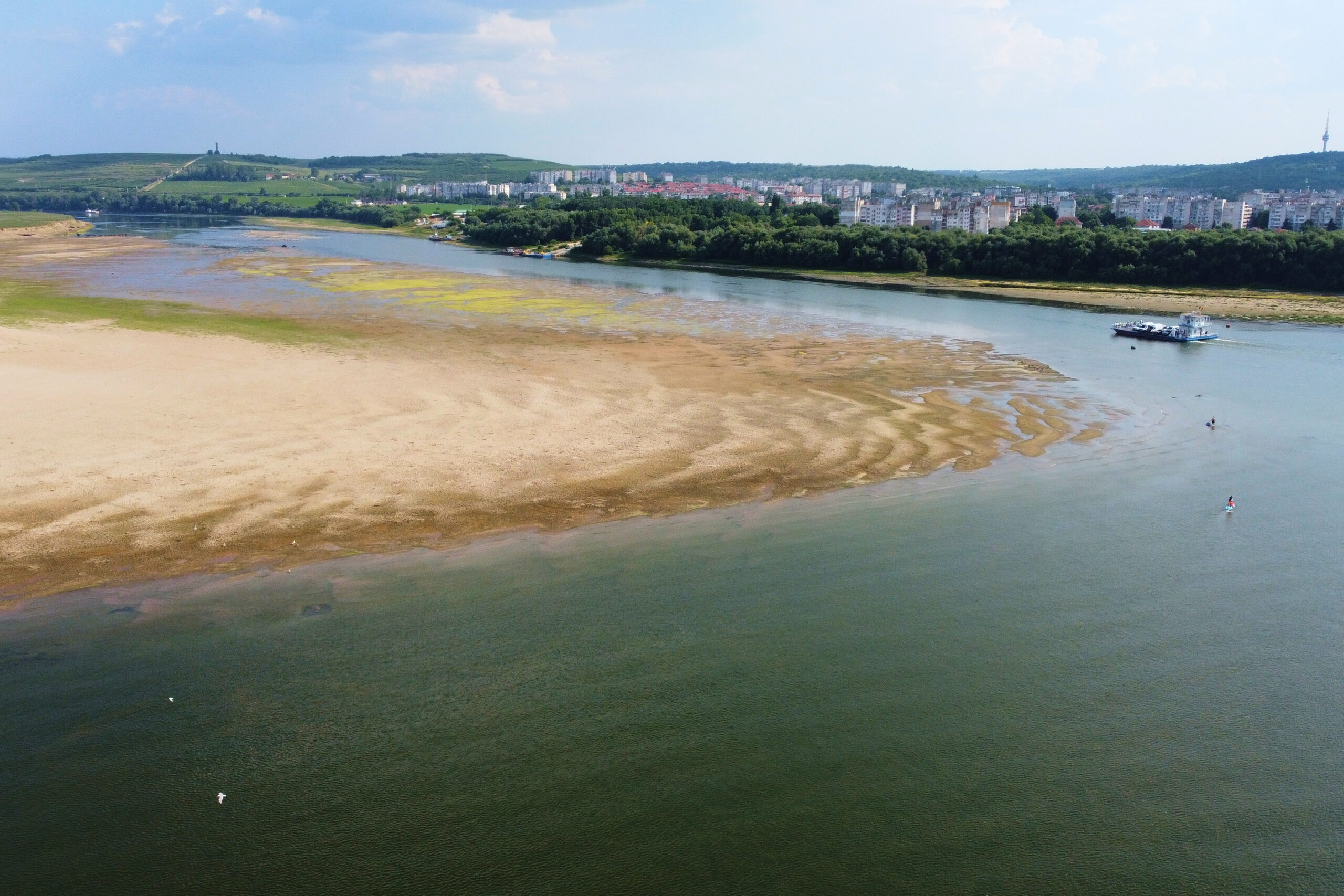
Danube levels fell to record lows this week in Croatia and Serbia, exposing hundreds of square kilometers of sand banks after a summer of prolonged heatwaves and drought across Europe. The drop stranded dozens of boats in a marina in Novi Sad, Serbia, where the river receded by several hundred meters, leaving a green slurry in its place.
Serbia's fuel imports fell to 25% of their monthly target for July, Energy Minister Dubravka Djedovic Handanovic said Wednesday. Barges and tankers on the Danube now operate at 30% to 40% of cargo capacity, she said, directly cutting the volume of oil and refined products reaching the country.
The low water also hit the navigable rivers Tisa and Sava, hampering fisheries and tourism. Vladimir Stakic, publisher of Serbia's Angling Magazine, said the drought and rising temperatures are to blame. "Because of the lack of rain and an increase in temperatures due to climate change, we have more evaporation and … we have extremely low, worryingly low water levels," Stakic said, standing on dry rocks that would normally be deep at the bottom of the Sava River in Belgrade.
Navigation hazards multiplied. Low water in Croatia exposed a freight ship that sank in 1937. In eastern Serbia, rusty hulks of a German river flotilla scuttled in 1944 emerged from the Danube, endangering passage for barges and tankers. A restaurant owner in Belgrade placed a table and chairs on a pile of rocks that appeared in the middle of the river.
Serbia's hydrometeorological department forecast a minimal rise in the Danube in the coming days due to rainfall upstream.