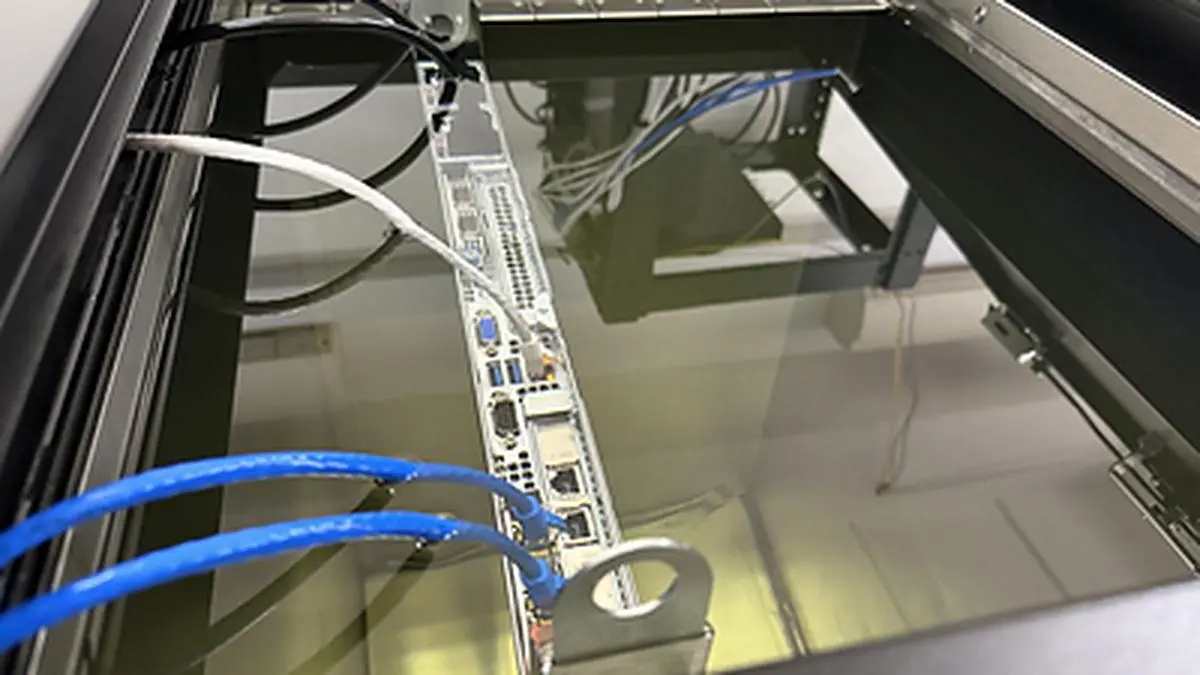
Singapore-based VPS provider Ready Server completed its first pilot of full-immersion liquid cooling at its Singapore data center, a step toward packing more compute into its existing facility for AI workloads. The company submerged production-grade AMD-based servers in a tank of non-conductive cooling fluid, using hardware from US-based cooling specialist GRC.
Ready Server built its own immersion setup rather than buying a fully packaged system. That reduces capital costs and builds in-house engineering capability, Director Alan Woo said. He personally oversaw the import and installation of the cooling tank and fluid.
"Everything comes with a risk, so we have to take some that will enable us to compete and deliver the performance needed in the future," Woo said.
The pilot targeted servers that had already run in racks for about two years, nearing the end of their manufacturer warranty. Immersion can void warranties, so the company used units already past their prime coverage period. Before submersion, the team removed cooling fans, swapped thermal paste for a thin metal foil suited to liquid-cooled operation, and took off paper labels and adhesive stickers that could degrade in the fluid.
Full-immersion cooling transfers heat away from components more efficiently than air. That allows higher rack densities and can cut cooling energy consumption. Ready Server previously trialled spray-based coolant jets. Woo said the full-immersion approach offers simpler maintenance, continuous 24/7 operation, and lower risk of coolant leaks compared with direct-to-chip liquid cooling.
Global demand for high-performance compute, driven by AI workloads, is pushing data center operators to pack more power into existing space and power budgets. Air cooling has limits. Liquid cooling is becoming a necessity for dense GPU and CPU clusters. Ready Server's move is a small-scale example of a trend reshaping data center infrastructure design.
AMD benefits from this shift. The servers used in the pilot are AMD-based, and the company's EPYC processors are increasingly chosen for AI inference and training workloads. AMD's Alpha Score is 38 out of 100, a "Mixed" rating that reflects competition from NVIDIA and execution risk in its data center roadmap. The broader move toward higher-density compute supports demand for AMD's server chips.
GRC, the cooling hardware supplier, is a private US company that competes with liquid cooling providers such as Submer, Iceotope, and CoolIT. The sector is seeing adoption accelerate as hyperscalers and colocation providers test immersion for specific use cases. Ready Server's self-built approach shows the technology is becoming accessible to smaller operators, not just the big cloud players.
Ready Server's decision to build its own immersion solution signals the technology is moving from experimental to operational. The company plans to apply the lessons from the pilot to future rack architectures and expand its portfolio of high-density hosting and AI-ready services.
"This journey into liquid cooling has taught us valuable lessons in designing our future racks and how we can deliver more compute-heavy services to customers," Woo said. "By investing in the technology and also the capabilities to run it, we are more ready to offer new services that the market is asking for."
The data center cooling market is projected to grow at roughly 15% annually over the next five years, according to industry estimates, with liquid cooling taking a larger share. Ready Server's pilot is a real-world test of the operational maturity of full-immersion systems. If the approach proves reliable and cost-effective, it could accelerate adoption among mid-tier hosting providers that lack the engineering resources of a hyperscaler.
For investors tracking the data center supply chain, the read-through is on cooling technology vendors and chipmakers that benefit from higher thermal density. AMD, NVIDIA, and Intel all have a stake in the compute density that liquid cooling enables. The success of pilots like this one will determine how quickly the industry moves away from traditional air-based systems.
Ready Server operates data centers in Singapore, Hong Kong, and Tokyo. The company offers per-hour billing and unmetered bandwidth, targeting developers and enterprises that need low-latency connectivity across Asian hubs. The immersion cooling pilot is part of a broader effort to remain competitive as AI workloads demand more from the physical infrastructure.
"We are more ready to offer new services that the market is asking for," Woo said.