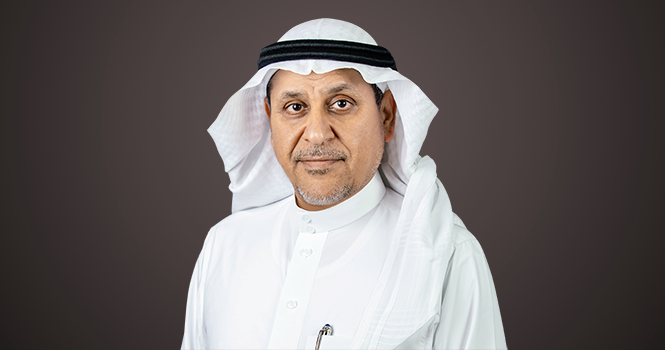
The Royal Commission for Jubail and Yanbu is holding discussions with investors over opportunities worth about SAR 500 billion, Chairman Khalid Al-Salem told Bloomberg Asharq. The commission now aims to reach SAR 2 trillion in investments within five years, a target originally set for 2045. Current investments in RCJY industrial cities have already exceeded SAR 1.5 trillion.
The headline math is stark: a 20-year horizon compressed into a five-year sprint. Investment growth reached 4% during 2025 against a 3% target, and RCJY expects that growth to continue this year. The accelerated target signals an urgency that could alter capital flows toward the industrial cities of Jubail, Yanbu, and Jazan.
RCJY Accelerates a 2045 Target to Five Years
Al-Salem’s disclosure reframes the investment case for the Saudi industrial city ecosystem. The original 2045 target of SAR 2 trillion reflected a multi-decade buildout. Pulling that target forward to 2030, roughly a five-year runway from today, implies an annualized investment pace far steeper than the current 4% growth rate.
The commission is in active discussions for SAR 500 billion in opportunities across multiple sectors. Those talks sit on top of a base of more than SAR 1.5 trillion in existing investments. The combination suggests that RCJY expects a wave of new capital commitments large enough to materially close the gap to SAR 2 trillion within the shortened window.
The Investment Growth Rate Already Tops the Target
RCJY’s 2025 investment growth of 4% exceeded its 3% target, providing a modest but real margin of execution. The commission expects growth to persist this year. A 4% annual clip alone would not reach SAR 2 trillion by 2030. The pipeline of SAR 500 billion in discussions indicates that lumpy project commitments, not organic growth alone, are intended to carry the number.
Traders in the broader Saudi equity market should note that the commission’s industrial cities host many publicly listed companies in petrochemicals, metals, and downstream manufacturing. The investment pipeline creates a demand signal for construction, services, and equipment providers even before the capital is fully deployed.
SAR 500B Pipeline Reshapes Sector Priorities
Al-Salem singled out mining as one of the key targeted sectors, citing transformations in the Saudi mining industry. The commission is working to attract major mining investments to its industrial cities. That aligns with the Kingdom’s broader push to develop mining as a third pillar of the economy alongside oil and petrochemicals.
The commission is focusing on sectors that were not previously among its priorities. Logistics and manufacturing now sit at the center of the conversation, built on the core industries already present in Jubail and Yanbu. This shift matters because logistics and manufacturing require infrastructure, warehousing, and transportation networks, all of which generate follow-on investment and employment.
Mining Investments and the Global Commodity Pull
The emphasis on mining comes at a time when Saudi Arabia is accelerating exploration and licensing. RCJY’s industrial cities offer pre-built infrastructure and access to energy at competitive rates. Al-Salem noted that the commission provides financial incentives and operating costs considered among the lowest in the region. For a capital-intensive mining project, that cost advantage can tilt location decisions.
The read-through for listed Saudi mining and metals companies is direct. Existing operators in Jubail and Yanbu may see an expanded supplier ecosystem and potentially new joint ventures. International miners looking to enter the Saudi market will likely anchor in RCJY cities, which could lift demand for local services and industrial real estate.
Government Support as the Underwriting Catalyst
Al-Salem described the Saudi government’s actions during the current crisis as a major factor in attracting high-quality investments to the Red Sea coast, especially in Yanbu and Jazan. The government’s support for market stability, across oil, fertilizers, and petrochemicals, is being marketed as a signal to international investors that state backing cushions cyclical sectors during downturns.
The quote reveals the pitch RCJY is making: a government willing to intervene to stabilize input and output markets lowers the risk premium for industrial investors. That pitch is particularly relevant for energy-intensive sectors and for investors evaluating projects in the Red Sea region where logistics and export access are central.
Clean Energy Projects as a Differentiator
Al-Salem pointed to joint investments with the Ministry of Energy in clean energy projects as a factor attracting investments. The presence of advanced infrastructure, combined with these co-investments, gives RCJY a proposition beyond cheap energy: a pathway to lower-carbon industrial production. For global companies with net-zero commitments, that infrastructure can be a prerequisite for capital allocation.
Traders tracking Saudi-listed renewable energy and utility names should note that RCJY’s industrial cities are both a large energy consumer and a potential host for green hydrogen and solar projects. The commission’s clean energy partnership with the Ministry of Energy may provide a long-term demand anchor for renewables capacity built near Jubail and Yanbu.
What the Compressed Target Means for Saudi Industrials
The accelerated SAR 2 trillion target functions as a macro catalyst for Saudi industrial stocks. The mechanism is not a direct earnings upgrade. It is a repricing of growth expectations. When a government body with a strong balance sheet and policy backing commits to pulling forward a 20-year investment goal, it signals that project approvals, land allocation, and infrastructure spending will all accelerate.
Practical rule: When a long-dated infrastructure target is compressed into a five-year window, the intermediate demand for engineering, construction, and materials tends to materialize before the final projects come online.
The SAR 500 billion pipeline of active discussions implies that several large-scale project announcements may be forthcoming. Traders should watch for formal investment agreements or memoranda of understanding as the next concrete catalysts. Sectors that would benefit include construction services, industrial gases, metals processing, and port logistics.
Confirmation and Risk Check
The confirmation for this setup would be a series of signed investment agreements that collectively move the needle toward the SAR 500 billion figure. Without signed deals, the pipeline remains aspirational. The risk is that global economic conditions or elevated interest rates slow the final investment decisions of international partners.
Another risk is execution. Compressing a 20-year target into five years demands bureaucratic efficiency and rapid contract awards. Delays in land allocation or permitting could push timelines out. Traders should also note that the investment growth rate of 4% in 2025, while above target, was achieved before the full weight of the accelerated program hits. Monitoring annual investment disclosures from RCJY will provide a reality check on whether the pipeline is converting into actual capital deployment.
The broader Saudi market has seen a flurry of activity, including the MGC IPO prospectus filing on the Saudi Exchange, a sign that the contracting and industrial sector is already testing public market appetite. The RCJY investment target adds another layer of fundamental support to that sectoral story. For traders building a watchlist of Saudi industrial names, the key question is which companies have existing exposure to Jubail, Yanbu, and Jazan, and which have the balance sheet capacity to capture new project work as the investment cycle accelerates.