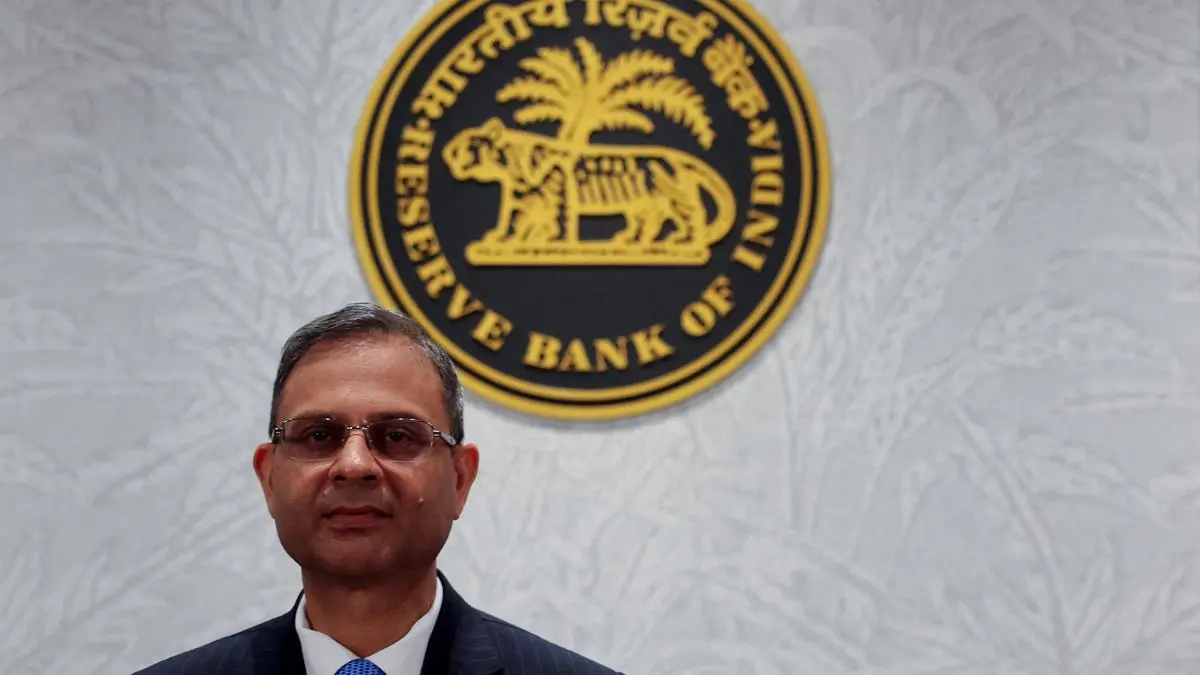
The Reserve Bank of India kept its benchmark rate at 5.25% on Wednesday, holding policy steady through the Iran conflict and the latest oil shock. Governor Sanjay Malhotra stressed a data-dependent approach after the decision. Inflation sits inside the central bank's 2%-6% target band, and officials see little evidence so far that higher fuel costs are feeding into broader price pressures. Regional central banks from Indonesia to Australia have shifted policy over the same stretch; the RBI has not.
Goldman Sachs Group Inc. read the decision as dovish. Santanu Sengupta, an economist at the bank, said Malhotra "struck a noticeably dovish tone," citing the governor's view that the recent pickup in inflation reflects temporary supply-side shocks. Goldman pushed back its call for a first rate hike to December from October. Sengupta said the start of the tightening cycle could be deferred to February 2027 if core inflation proves weaker than expected in coming months. The revision lines up Goldman's call with swap pricing, which also points to December.
India's swap curve shifted lower after the decision, led by the one-year tenor, the part of the curve that prices the most likely timing of the next move. Before the decision, the curve had leaned toward an October start. Traders moved their bets on the next rate increase to December from October. Pricing now implies about 50 basis points of tightening over the next year, down from roughly 75 basis points before Wednesday's announcement.
The benchmark has stood at 5.25% since February 2023, when the RBI last raised rates. Past tightening has come only after inflation stayed near the 6% ceiling for a sustained stretch and pressures became generalized. The post-pandemic episode fits that pattern. Citigroup economist Samiran Chakraborty puts the bar for the next hike at core inflation sustaining above 4.5% in a generalized way. "We expect that this condition is unlikely to be met soon and hence do not foresee a rate hike in 2026," he said.
Goldman Sachs and Citigroup both carry Moderate Alpha Scores on their AlphaScala stock pages, at 59 and 55. ICICI Bank is also Moderate, at 57.
The growth side of the RBI's calculus is intact. Auto sales and purchasing managers' indexes have held up, and bank credit growth has kept pace. Malhotra cited those high-frequency indicators in lifting the RBI's GDP estimate for the year through March 2027 to 6.7% from 6.6%.
India's festive season, which starts in September and culminates with Diwali in November, is the next scheduled test of the RBI's inflation view. The festival quarter is typically India's strongest stretch for consumer demand. A pickup in spending that does not lift underlying prices would support the central bank's reading that recent inflation flows from supply shocks rather than overheating demand.
The RBI's latest surveys, released after the policy decision, show softer sentiment. Urban consumer confidence has weakened, and households have grown less optimistic about the economy and employment. Rural confidence has declined steadily since the start of the year. Households expect inflation to stay broadly stable in the months ahead, and that mix of weaker optimism and stable price expectations supports the decision to hold.
The rupee's rebound since June has strengthened the RBI's case for patience. The currency is up nearly 2% from a record low, helped by easing oil prices and the central bank's measures to attract foreign capital. Malhotra said the rupee could strengthen further if geopolitical tensions recede, containing imported inflation. Economists at ICICI Bank said the central bank now has greater "degrees of freedom" after attracting about $41 billion through its swap scheme. "This has ensured that underlying pressure on the currency is reversed and the medium-term outlook is positive," they wrote.