Rare Earth Talent Scramble Lures 86-Year-Old From Retirement
At 86, Jack Lifton is the rare earth industry's most sought-after consultant as US firms race to rebuild supply chains and face a critical shortage of experienced metallurgists.
Alpha Score of 43 reflects weak overall profile with moderate momentum, weak value, weak quality. Based on 3 of 4 signals — score is capped at 90 until remaining data ingests.
Jack Lifton first retired from the mining industry more than a quarter century ago. At 86, he is busier than ever.
The engineer-turned-consultant is one of the few Americans with hands-on experience processing rare earth elements – an industry the US once led before it was outsourced to China. As trade tensions between Washington and Beijing escalated, the Trump administration poured billions of dollars into rebuilding domestic supply chains over the past year. That has made Lifton a coveted repository of knowledge for mining firms racing to build plants capable of refining the niche metals essential for consumer electronics, electric vehicles and military hardware.
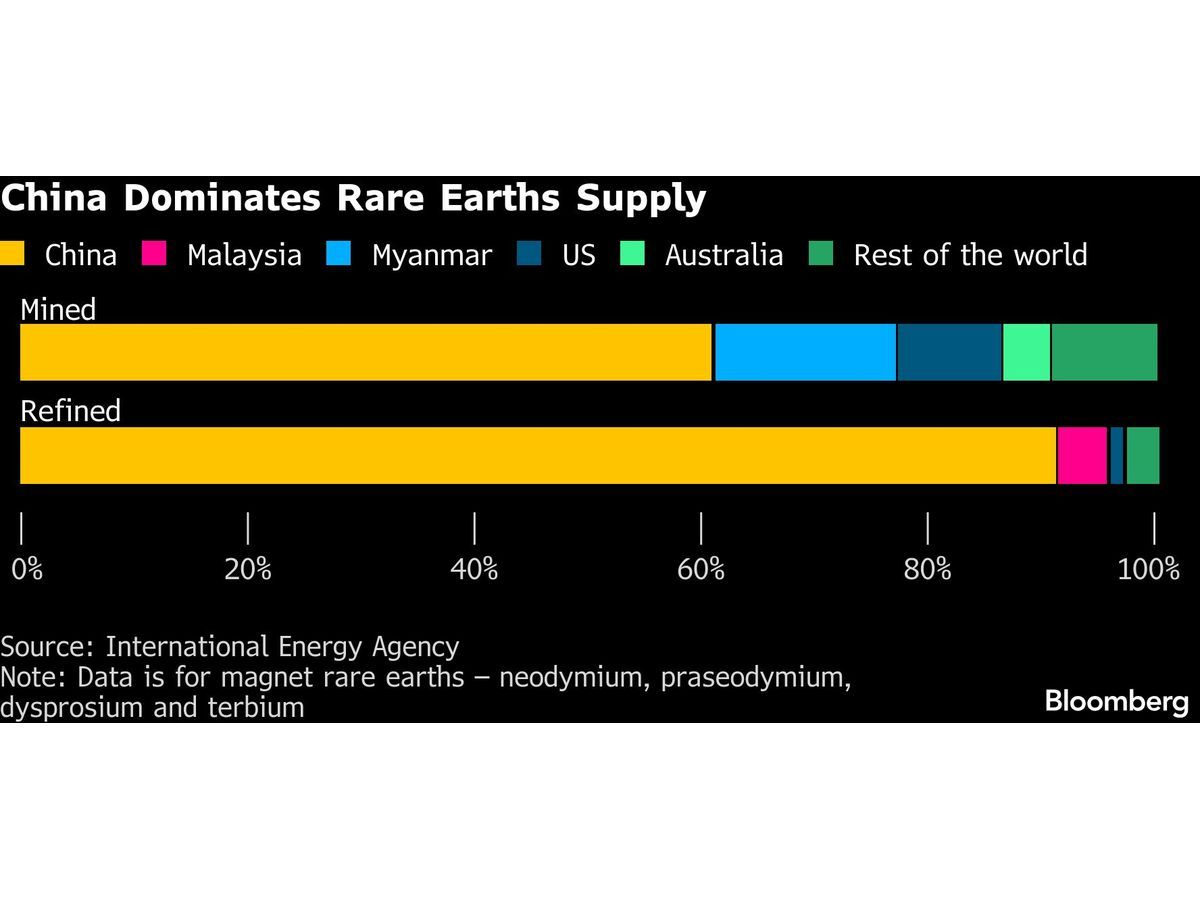
Rare earth plants are complicated and expensive to build, especially in the US where permitting timelines are far longer than in mining-friendly countries in Asia and South America. The biggest challenge, executives say, is finding talent to run the facilities. Even if Western companies secure enough raw materials to reduce reliance on China – which dominates every stage of the supply chain, from mining to magnets – chemical engineers and metallurgists experienced in rare earths have nearly gone extinct in America.
“When companies ask me where to find them, I say, ‘Start with the cemeteries, then check assisted care,’” said Lifton, whose clients include Energy Fuels Inc., one of the US’s most ambitious rare earth firms. “Anyone in the US with experience is either dead or, like me, very old.”
The work is extraordinarily specialized. Lifton, who lives in Michigan, advises miners on complex metallurgy: how to isolate soft, silvery rare earths used in high-performance magnets, and where to source the technology needed to prepare them at commercial scale. Unlike commodities such as gold or copper, rare earths require a multistage refining process the US has scarcely performed in decades. Separating the 17 elements can involve dozens of extraction stages and expertise taught at only a handful of universities or acquired through years in industry. Much of that know-how has migrated to China, now the world’s primary employer of specialists.
The Metallurgist Shortage
Some US companies are partnering with universities to recruit students in engineering, metallurgy and chemistry. Others are poaching employees from rivals. At one company in France, a key team of engineers are in their 80s and, like Lifton, have been lured from retirement to help troubleshoot mineral processing plants.
The race for talent spilled into court in May. MP Materials Corp., owner of the US’s only operating rare earth mine, sued USA Rare Earth Inc., accusing the rival of orchestrating a hiring raid. The lawsuit claims USA Rare Earth recruited a senior engineer and seven other employees along with proprietary information related to rare earth processing and magnet manufacturing. In a separate case, Ramaco Resources Inc. sued a former employee now working at USA Rare Earth, alleging he shared Ramaco’s proprietary research with the company.
This kind of competition has made companies especially protective of their engineers. “We know some of our guys have been approached about jobs,” said Ross Bhappu, the chief executive officer of Energy Fuels, which relies on workers with a background in uranium processing to help expand its rare earth facility in Utah. “It’s a scary proposition. There are just not a lot of people who study rare earth chemistry.”
The talent gap is the single biggest brake on the US rare earth revival, according to industry executives and the companies themselves. Without a pipeline of skilled metallurgists and chemical engineers, billions in government subsidies and private investment risk being slowed by a shortage of people who know how to operate the plants. Lifton, who has no plans to retire again, said the US needs to start training the next generation now – even as his own generation fades.
Drafted by a large language model from the source reporting linked above, then screened by automated publishing checks. It is not read by a journalist before publication. Some articles cite our Alpha Score. Verify prices and figures against the original source. Educational coverage, not personalized advice.