Stocks● Neutral
Rain deficit inches up even as monsoon eyes East and North-East India
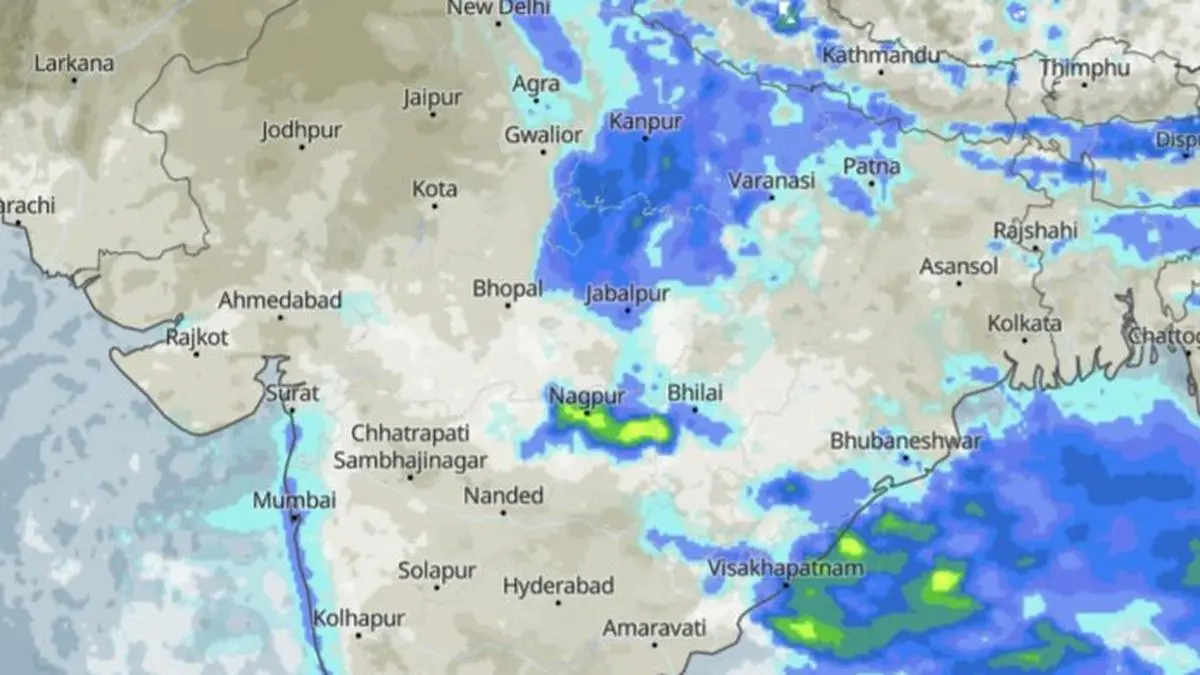
India's monsoon rain deficit widened to 13.2% for the season, with South Peninsula worst hit. IMD forecasts heavy rain in East and North-East, critical for kharif crops and edible oil import needs.
Continue with
The monsoon's rain deficit for the June-August season widened to 13.2%, the India Meteorological Department (IMD) said, as a low-pressure area over Madhya Pradesh sets the stage for heavy rain across East and North-East India over the next week. The August deficit alone stood at 15.2%, with South Peninsula logging the worst regional shortfall at 23.1%, followed by Central India at 16.5%, East and North-East India at 13.5%, and North-West India at 9.7%.
The current weather configuration is built around a low-pressure area over north-east Madhya Pradesh, a monsoon trough that runs from Amritsar to the Bay of Bengal, and a chain of cyclonic circulations over Myanmar, Haryana, West Bengal, and the Bay. The IMD flagged the possibility of a fresh low-pressure system forming from the coupling of circulations over the north Bay and the Andhra Pradesh-Odisha coast. If that happens, the weather influence would tilt toward eastern and north-eastern India, the IMD said in its extended-range outlook.
The forecast for the coming days is concentrated. Arunachal Pradesh could see isolated heavy rain for five days from Sunday, Assam and Meghalaya for six days, and Nagaland, Manipur, Mizoram and Tripura for three days. West Bengal and Sikkim may receive heavy rain for five days, Bihar for four days from Saturday, and Odisha on Saturday and Sunday. The heavy bursts are expected in pockets, not uniformly across the region.
For the kharif crop, the timing matters. Sowing of rice, soybean, groundnut, and cotton is under way, and the deficit in South Peninsula and Central India has raised concerns about yields. The current rain in East and North-East India could help rice planting in the Gangetic belt, but excess rain in the same region risks waterlogging in low-lying areas. The IMD's forecast for central India shows fairly widespread rain over Madhya Pradesh and Chhattisgarh, which could ease the deficit in the Soybean belt.